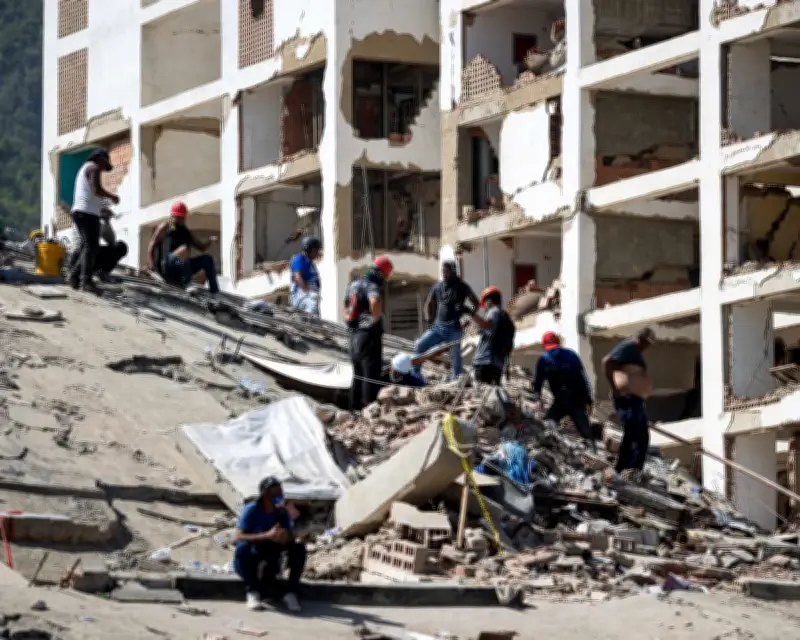
A powerful aftershock measuring 5.6 magnitude rattled Venezuela on Monday, June 29, 2026, sending panicked residents into the streets just days after twin earthquakes devastated parts of the country. The tremor, which struck at 10:47 a.m. local time, was centered near the coastal town of Cumaná, according to the United States Geological Survey (USGS).
Renewed Panic in Affected Areas
The aftershock triggered fresh terror among Venezuelans still reeling from the catastrophic quakes of June 25, which killed at least 15 people and injured more than 300. In Caracas, office workers fled buildings as alarms blared, while in Cumaná, residents already living in makeshift shelters scrambled for safety. Local authorities reported no immediate casualties from the aftershock, but several partially collapsed structures gave way, complicating rescue efforts.
"We were just starting to feel safe again, and then the earth moved once more," said María González, a resident of Cumaná, according to local media. "Many people are too scared to go back inside their homes."
Seismic Sequence and Response
The twin quakes on June 25 – a 7.1-magnitude event followed by a 6.8-magnitude tremor – struck within hours of each other, causing widespread damage in the states of Sucre and Anzoátegui. The USGS reported that the aftershock on Monday was part of an expected sequence of seismic activity, though its strength surprised many experts. "Aftershocks of this magnitude are not uncommon after major earthquakes, but they can still cause significant disruption," said Dr. Luis Rodríguez, a seismologist at the Central University of Venezuela.
Venezuelan President Nicolás Maduro declared a state of emergency in the affected regions and deployed military units to assist with search and rescue. The government has faced criticism for its slow response, with aid groups reporting delays in delivering food and medical supplies to remote villages. The aftershock has further strained resources, as relief workers must now reassess the stability of damaged buildings.
Impact on Infrastructure and Daily Life
Power outages and disrupted communications have hampered relief efforts. In the town of Barcelona, near the epicenter, officials reported that 60% of homes had been damaged or destroyed by the initial quakes. The aftershock caused additional cracks in roads and bridges, complicating access for emergency vehicles. Schools and businesses remain closed in many areas, and thousands of people are sleeping outdoors for fear of further collapses.
International aid has begun to arrive, with neighboring countries such as Colombia and Brazil offering supplies and personnel. The United Nations Office for the Coordination of Humanitarian Affairs (OCHA) said it was monitoring the situation closely. However, the ongoing political and economic crisis in Venezuela has hindered coordination, with fuel shortages affecting the transport of aid.
Expert Warnings and Precautions
Seismologists warn that more aftershocks are likely in the coming days and weeks. "Residents should remain vigilant and avoid entering structurally unsound buildings," said Dr. Rodríguez. The USGS has issued a yellow alert for the region, indicating a moderate probability of further seismic events. Local authorities have urged people to prepare emergency kits and identify safe evacuation routes.
For many Venezuelans, the quakes are yet another blow in a country already grappling with hyperinflation, food shortages, and political instability. "This is a tragedy on top of a tragedy," said Ana Martínez, a shopkeeper in Caracas. "We don't know when the ground will stop shaking or when our lives will return to normal."