Saharan Dust Cloud Triggers 'Blood Rain' Warning Across Spanish Resorts
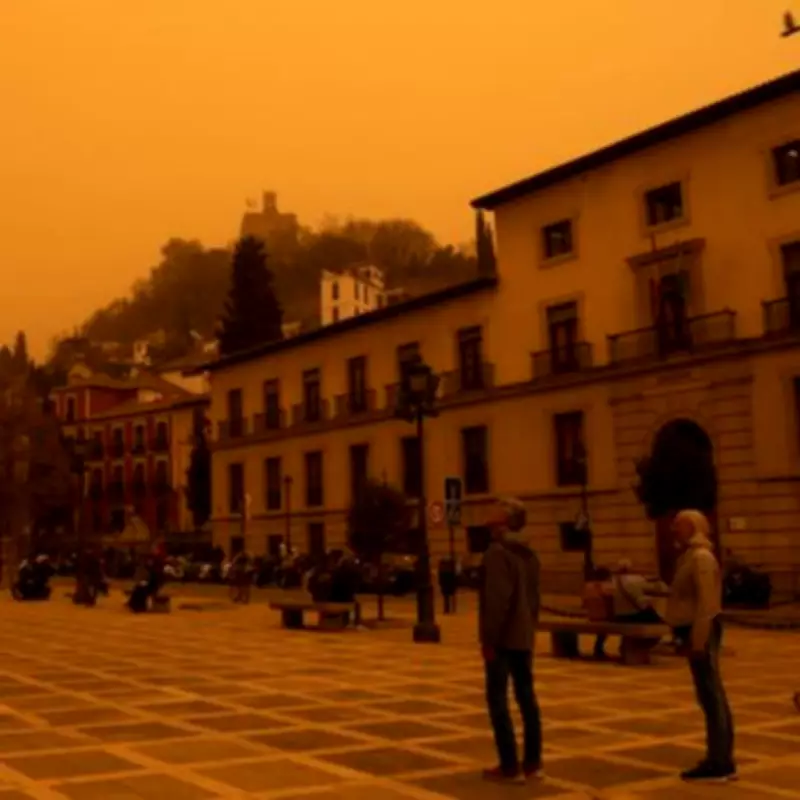
A rare meteorological event known as calima is poised to engulf several European holiday destinations, with Brits in Spanish hotspots facing the prospect of dramatic 'blood rain' and orange-tinted landscapes. The phenomenon, driven by a high-altitude isolated depression, is transporting vast quantities of Saharan sand from Morocco and Mauritania into southern Europe.
Holiday Havoc: Dust and Downpours Forecast
Popular tourist locations including Tenerife, Lanzarote, Gran Canaria, Majorca, Menorca, and Ibiza are expected to bear the brunt of the calima. Instead of clear skies and sunshine, visitors may encounter hazy conditions, significantly reduced visibility, and a fine layer of orange dust coating everything from vehicles to swimming pools. The Spanish State Meteorological Agency, AEMET, has issued alerts highlighting that the microscopic particles in the dust can degrade air quality and penetrate deep into the respiratory tract.
The term 'blood rain' refers to rainfall that mixes with the orange Saharan dust, creating a striking reddish precipitation. With heavy showers predicted for parts of Spain, this mixture could lead to surreal, dust-laden scenes across coastal and island resorts. The southeast of Spain, the Mediterranean coastline, and the Balearic Islands are anticipated to experience the most severe conditions.

Weather Warnings and Unseasonal Warmth
AEMET has activated weather warnings via social media, cautioning of very adverse conditions in the Canary Islands. These include intense, potentially stormy showers, powerful wind gusts, and rough seas. Despite the disruptive dust, the calima has also ushered in an unusually warm air mass, with temperatures soaring to around 25°C in southeastern regions and the Canary Islands. Remarkably, Bilbao recorded a blistering 27°C in February, underscoring the atypical nature of this weather pattern.
Calima events are not unheard of in the Canary Islands, particularly during winter months. This hot, oppressive wind arises when high pressure builds over the Sahara, propelling winds that carry both elevated temperatures and fine sand particles across vast distances. Local sources, such as Lanzarote Information, describe the air turning a white or yellowish hue during a calima, with a distinct sandy smell permeating the atmosphere.
Ecological and Visual Impacts
The reduced visibility and ethereal light quality create an otherworldly ambiance, often accompanied by unusual insect migrations. In recent years, locusts, ladybirds, and dragonflies have been blown onto islands like Lanzarote, though they typically do not survive long due to the arid environment. Occasionally, rare birds are also carried over by the strong winds, adding to the surreal experience for residents and tourists alike.
While AEMET has indicated that weather conditions are expected to improve shortly, the immediate forecast calls for vigilance. Holidaymakers and locals are advised to prepare for dusty surfaces, potential respiratory irritations, and the striking visual spectacle of 'blood rain' should precipitation coincide with the dust cloud. This event serves as a vivid reminder of the interconnectedness of global weather systems and their capacity to transform familiar holiday settings into dramatic, dust-shrouded landscapes.