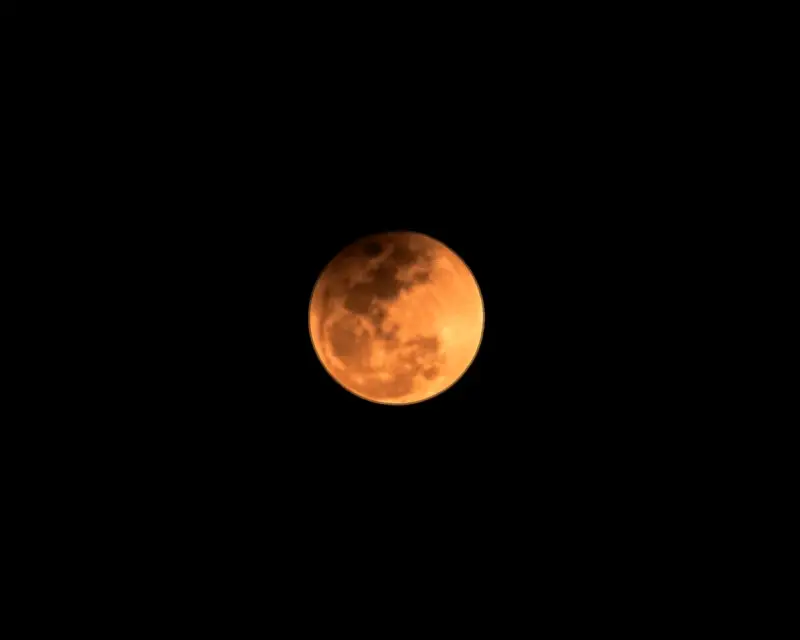
A total lunar eclipse will be visible across North and South America on August 27, 2026, according to astronomers. The event will see the Moon pass through Earth's shadow, turning it a deep red color.
When and where to watch
The eclipse will be visible in its entirety from both continents, with observers in the western parts of North America getting the best view. The total phase is expected to last for about 14 minutes, during which the Moon will be fully immersed in Earth's umbral shadow.
Unlike a solar eclipse, a lunar eclipse is safe to view with the naked eye, and no special equipment is required. Binoculars or a small telescope can enhance the experience.

What causes the red color
The red hue, often called a "blood moon," occurs because Earth's atmosphere scatters shorter wavelengths of light, allowing longer red wavelengths to reach the Moon. This effect is similar to what happens during sunsets on Earth.
The eclipse will be the first total lunar eclipse visible from the Americas since 2022, and the next one won't occur until 2028. Astronomers recommend finding a location with a clear view of the horizon and minimal light pollution for the best experience.