Groundhog Day 2026: The Centuries-Old Winter Tradition Explained
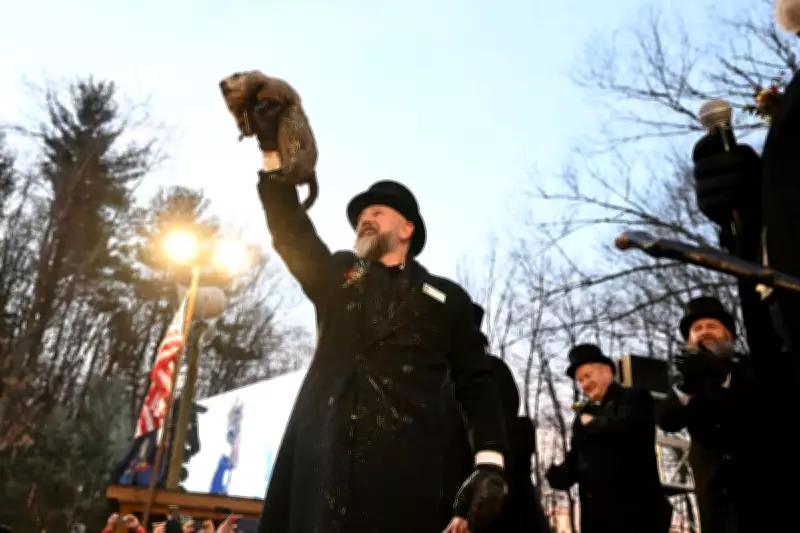
With much of the United States already experiencing a prolonged and severe winter season, attention turns to Punxsutawney Phil on Monday as his handlers prepare to reveal the famed groundhog's annual weather prediction. This peculiar tradition, observed on February 2nd each year, supposedly indicates whether six additional weeks of winter should be expected or if spring will arrive early.
The Ritual and Its Prediction Method
The long-standing custom dictates that if Phil casts a shadow upon emerging from his burrow in rural Pennsylvania, a further six weeks of winter are anticipated. Conversely, a shadow-free appearance is said to herald an early arrival of spring. Tens of thousands of spectators are expected to gather at Gobbler's Knob for this century-old ritual, which has its roots in ancient European farming traditions.
The event's profile has expanded significantly since the release of the 1993 film Groundhog Day starring Bill Murray, transforming it from a local curiosity to a nationally recognized phenomenon. Last year's prediction called for six more weeks of winter, which represents Phil's more common assessment and isn't particularly surprising during the first week of February.

Historical Origins and Evolution
Groundhog Day falls on February 2, precisely midway between the winter solstice (the shortest, darkest day of the year) and the spring equinox. This timing also features in the Celtic calendar and the Christian holiday of Candlemas.
The tradition can be traced directly to Candlemas Day, when Christians would take candles to church for blessing. When this custom reached Germany, animal lore was incorporated, suggesting that if a hedgehog saw its shadow on Candlemas Day, there would be a "Second Winter" or six more weeks of bad weather.
German settlers brought this tradition to what is now the United States, where the Pennsylvania Dutch and other German-speaking immigrants maintained the practice. With hedgehogs unavailable in their new homeland, they substituted woodchucks (groundhogs) instead.
Five Essential Groundhog Day Facts
- Punxsutawney Phil's Longevity: The legendary groundhog has reputedly been operating in the Pennsylvania town for more than 130 years. Despite groundhogs typically living less than six years, the Punxsutawney Groundhog Club's Inner Circle maintains they've been communicating with the same groundhog since 1887.
- Historical Documentation: Punxsutawney's first Groundhog Day at Gobbler's Knob occurred on February 2, 1887, when newspaper editor Clymer Freas informed readers about the event. The earliest known American reference dates to February 4, 1841, in a Morgantown shopkeeper's journal.
- Prediction Accuracy: According to records, Phil has seen his shadow 107 times and not seen it 20 times. The National Oceanic and Atmospheric Administration (NOAA) analysis reveals the groundhog's forecasts have been approximately 40 percent accurate over the past decade.
- Alternative Names: Groundhogs are also called "woodchucks," inspiring the famous tongue-twister: "How much wood would a woodchuck chuck if a woodchuck could chuck wood?"
- National and International Observance: Groundhog Day extends far beyond Pennsylvania. Throughout the United States, states and local towns host their own events featuring resident groundhogs like Milltown Mel in New Jersey and Staten Island Chuck in New York City. The holiday is also observed throughout Canada.
The Modern Celebration and Cultural Impact
Phil's top-hatted handlers in the Punxsutawney Groundhog Club insist they interpret Phil's "groundhogese"—a combination of winks, purrs, chatters, and nods—to relay the meteorological marmot's musings about the days ahead. While Phil remains the most famous prognosticator, numerous formal and informal Groundhog Day events occur across the United States, Canada, and beyond each February 2nd.
This unique blend of folklore, tradition, and popular culture continues to captivate audiences, blending ancient agricultural wisdom with modern spectacle in a celebration that marks the turning point toward spring.