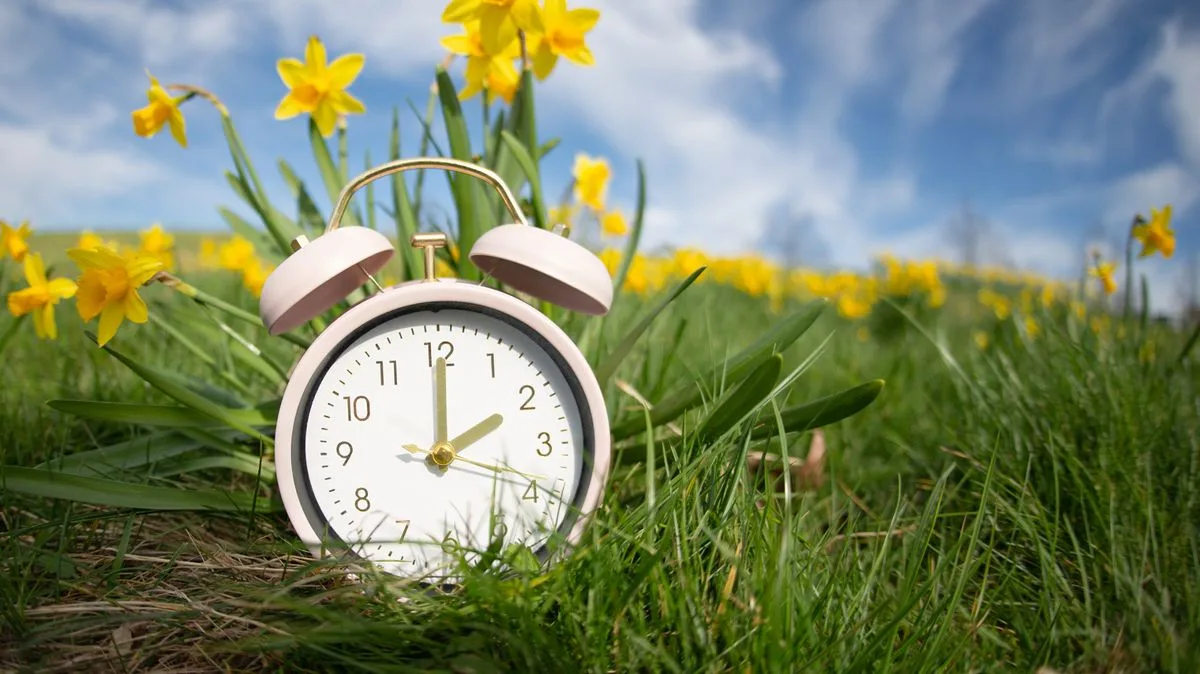
British Summer Time Commences in March 2026
Daylight saving time is nearly upon us, with the clocks scheduled to 'spring forward' in just a few days. This annual adjustment marks the transition to British Summer Time, bringing longer evenings and a shift in our daily routines.
Key Dates for the Clock Change
In the United Kingdom, clocks will go forward by one hour at 1am on Sunday, March 29, 2026. This means that 1am will instantly become 2am, resulting in most people losing an hour of sleep. The change is part of a long-standing tradition aimed at making better use of daylight during the summer months.
Later in the year, on Sunday, October 25, 2026, the clocks will 'fall back' by one hour at 2am, as we return to Greenwich Mean Time. This reversal grants an extra hour of sleep and brighter mornings, balancing out the earlier loss.
Historical Background of Daylight Saving Time
The concept of adjusting clocks dates back to the early 20th century. William Willett, the great-great-grandfather of Coldplay frontman Chris Martin, published a pamphlet in 1907 titled The Waste of Daylight. He proposed advancing clocks in spring and reversing them in autumn to optimise daylight usage.
Although Willett's original scheme suggested moving clocks forward by 80 minutes in four 20-minute increments, it was never fully implemented. After his death in 1915, Parliament passed the Summer Time Act in 1916, establishing the current system of shifting clocks an hour forward for summer.
Global Variations in Daylight Saving Time
While most of the UK and Europe observe daylight saving time, there are notable exceptions. Countries such as Iceland, Belarus, and Russia do not participate in this practice. Across the Atlantic, the United States and Canada began their daylight saving period earlier in 2026, with clocks moving forward on Sunday, March 8, and reverting on Sunday, November 1.
In the US, Hawaii and most of Arizona do not observe daylight saving time, though the Navajo Nation in northeastern Arizona follows the change. In Canada, most provinces adhere to DST, but parts of British Columbia, Nunavut, Ontario, Quebec, and Saskatchewan opt out. British Columbia has recently announced plans to adopt permanent daylight saving time.
Impacts and Debates Surrounding the Change
Daylight saving time is implemented in over 70 countries worldwide, primarily to reduce energy consumption and maximise evening daylight for leisure and commerce. Proponents argue that it enhances outdoor activities and boosts economic activity during longer summer evenings.
However, opponents highlight potential drawbacks, including disruptions to sleep patterns and health issues linked to circadian rhythm disturbances. In the United States, campaigns to make daylight saving time permanent persist, with twenty states having enacted legislation or resolutions in support, though any national change would require Congressional approval.
Defining Spring in the UK
Spring in the United Kingdom is defined in two ways. Meteorological spring runs from March 1 to May 31, providing a consistent framework for weather forecasting. Astronomical spring, based on Earth's orbit and axial tilt, begins at the vernal equinox on March 20, 2026, and ends at the summer solstice on June 21, 2026.
As we approach the clock change, remember to adjust your timepieces accordingly and prepare for the shift in daylight patterns. While the initial loss of sleep might be challenging, the extended evenings offer a welcome respite after a gloomy winter.