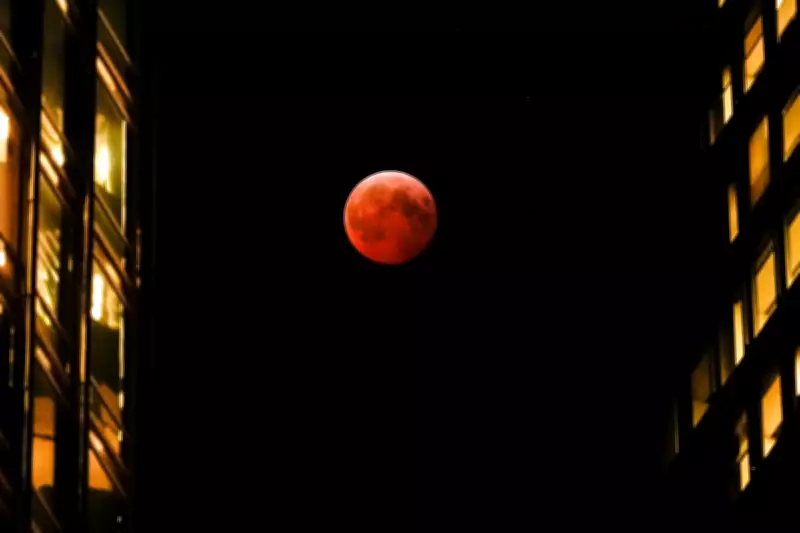
A total lunar eclipse, set to deliver a breathtaking 'blood-red' moon, is scheduled for this week, representing the final occurrence of this celestial phenomenon until late 2028. The event will captivate viewers across multiple continents, offering a rare astronomical spectacle that requires no special equipment for observation.
Visibility and Timing of the Eclipse
The eclipse will be visible on Tuesday morning throughout North America, Central America, and the western regions of South America. Simultaneously, on Tuesday night, observers in Australia and eastern Asia will have the opportunity to witness the moon's dramatic transformation. This alignment provides a unique viewing window for diverse global audiences, highlighting the universal appeal of such natural events.
Mechanics Behind the Blood Moon
The phenomenon occurs when the Earth positions itself directly between the sun and a full moon, casting a shadow that envelops the lunar surface. As sunlight passes through Earth's atmosphere, it is filtered and scattered, resulting in the moon taking on a reddish hue. This effect, often referred to as a 'blood moon,' is caused by the same atmospheric processes that create vivid sunrises and sunsets, making it a visually striking display.

Duration and Viewing Conditions
The eclipse will unfold over a period of several hours, with the total phase—when the moon is fully immersed in Earth's shadow—lasting approximately one hour. To enjoy the event, viewers need only a clear, cloudless view of the sky; no telescopes or binoculars are necessary, making it accessible to all. This ease of observation encourages widespread public engagement with astronomy and natural science.
Significance and Future Occurrences
This week's eclipse marks a significant moment for skywatchers, as it will be the last total lunar eclipse visible until late 2028. Such events are relatively infrequent, adding to their allure and prompting increased interest from both amateur enthusiasts and professional astronomers. The extended gap until the next occurrence underscores the importance of seizing this viewing opportunity.
In summary, the upcoming total lunar eclipse offers a captivating display of celestial mechanics, with its blood-red appearance and broad visibility. As the final event of its kind for several years, it serves as a reminder of the wonders of our solar system and the importance of preserving dark skies for future observations.