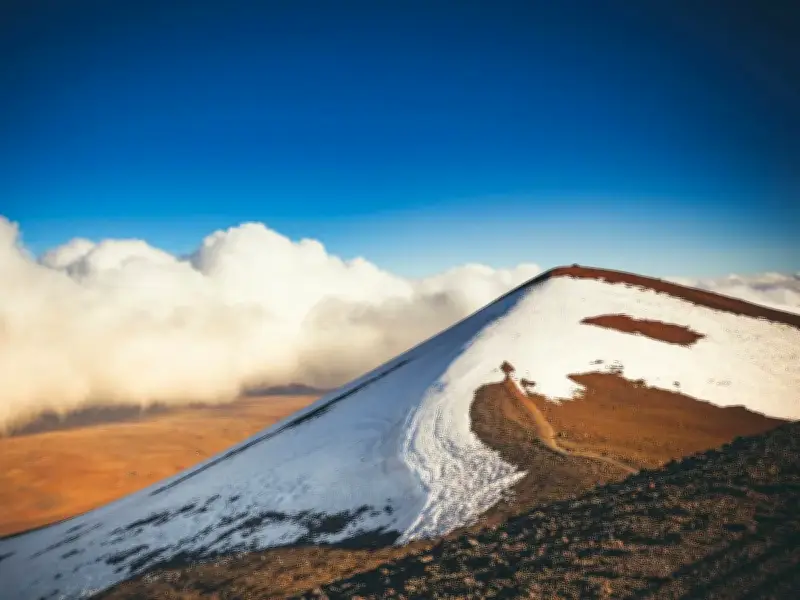
The world's tallest mountain is Mauna Kea in Hawaii, which measures 10,205 metres (33,481 feet, or 10.25km) from base to peak, making it approximately 1.4 kilometres taller than Mount Everest, according to BBC Science Focus.
Most people have grown up hearing that Mt Everest in Nepal is the tallest mountain in the world, but the truth is more complicated, with three contenders for the title depending on the measurement reference used.
How Mauna Kea beats Everest
While Mt Everest stands at 8,848.86 metres (29,031.69 feet) above sea level, making it the highest mountain above the ocean, Mauna Kea is taller when measured from base to peak. Only 4,205 metres of the Hawaiian mountain juts out above sea level, with roughly 6,000 metres hidden under the Pacific Ocean.

Mauna Kea, which translates to 'White Mountain' owing to its frequently snow-covered peak, is a long-dormant volcano. Although it has been inactive for around 4,500 years, the United States Geological Survey (USGS) claims it is 'likely to erupt again'.
Other contenders for the title
Using the same base-to-summit measurement, the second tallest mountain in the world would also be in Hawaii. Mauna Loa clocks in at a total height of 9.17 kilometres, with 5 kilometres of the massive mountain hidden underwater.
Mount Chimborazo in Ecuador is considered the Earth peak closest to the sun, thanks to the Earth being an oblate spheroid that bulges at the equator. Located in the Andes, this inactive volcano has a peak measuring 6,310 metres above sea level and sits just one degree south of the equator.
Historic ascents
Mt Everest was first summited on May 29, 1953, by Sir Edmund Hillary and Sherpa Tenzing Norgay. Mauna Kea saw its first full ascent from base to summit in February 2021 by American adventurer and retired US Navy officer Victor Vescovo, with Hawaiian marine scientist Dr Clifford Kapono.
The Guinness World Record-setting pair used the two-person submersible Limiting Factor for the underwater portion, followed by rowing towards Big Island in a three-person outrigger canoe. Over three days, they then cycled, hiked, and skied to reach the summit of Mauna Kea.