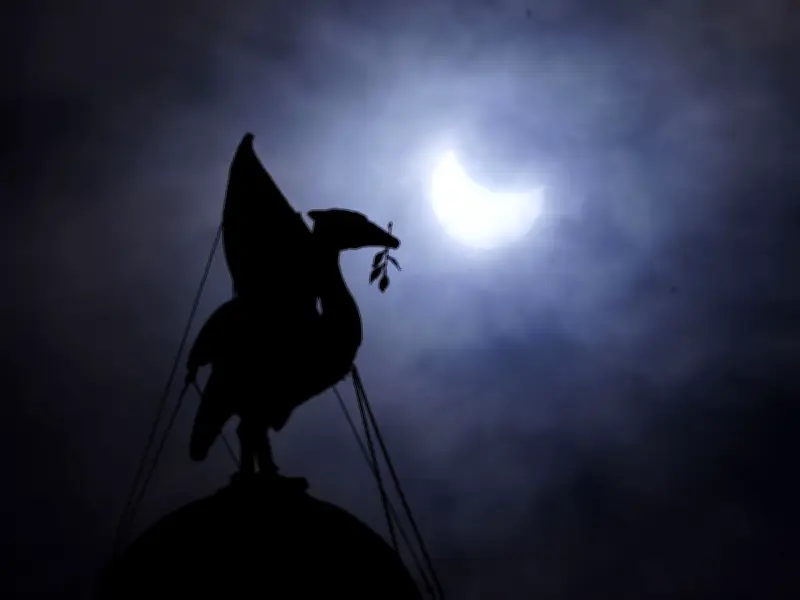
People across Merseyside will be able to watch a once-in-a-generation event in the coming days as the moon is set to almost entirely cover the sun on the evening of Wednesday August 12. Astronomers say that the event will be the last of its kind for decades.
First time since 1999
The last time the UK witnessed a solar eclipse of this magnitude was on August 11 1999, with thousands taking in the sight across Merseyside. While there have been solar eclipses since then, including a partial one in March last year, next Wednesday will see a far bigger portion of the Sun covered. We won't see another solar eclipse of this scale happening again until 2090.
Timing and visibility
Between approximately 6pm and 8pm on Wednesday the moon will pass directly in front of the Sun, resulting in a partial solar eclipse that will see up to 96% of the Sun covered in the UK. BBC Sky at Night Magazine has said Liverpool will see the partial solar eclipse from 6.13pm and 8.04pm, with it expected to be at its peak at 7.10pm.
While the UK is set to see the majority of the Sun covered, the event will be even more dramatic for those living in Greenland, Iceland, northern Russia, Spain and a small part of Portugal, as they will experience a full solar eclipse, meaning people in those countries will be able to see the moon cover the Sun completely.
How to watch safely
There will be live streams broadcast of the solar eclipse in the UK, but for those wanting to catch a glimpse in-person there are a number of ways to do so safely. One of the most common ways is to use special eclipse glasses that block out the harmful rays. Another way to get a good view is via pinhole projection, which will provide a good view of the Moon without actually looking at the Sun directly.
Easily made at home, pinhole projection works by using a small opening to project an image of a bright object onto a surface. They can be made using everyday items like a cardboard box, aluminium foil, paper and tape.