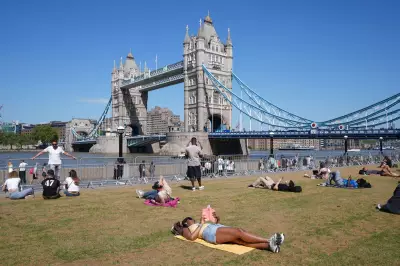
Blistering Britain is facing its first-ever May 'tropical night' as the month is officially on track to be the warmest on record. Beaches, parks, and beauty spots were again packed today as maximum temperatures soared above 30°C for a second consecutive day, surpassing parts of North Africa.
Record-Breaking Temperatures
The mercury could reach 34°C (93.2°F) tomorrow and Tuesday in the sticky South East, beating the previous May record of 32.8°C (91.04°F) dating from 1944. Even places as far north as Middlesbrough are predicted to reach 30°C tomorrow, on a par with Barbados and Cairo, Egypt.
A tropical night is defined as a 24-hour period where the overnight minimum temperature does not drop below 20°C (68°F). This is set to occur in London and the South East for the first time ever through tonight and again tomorrow night. Such events are more common in Mediterranean regions or the tropics and typically only happen in the UK for a few days during summer heatwaves, not in a month still classed as spring.

Health and Wildlife Impacts
According to the Met Office, hot temperatures at night can interfere with the body's recovery processes, 'potentially leading to increased cardiovascular stress and sleep disturbances.' Animals at London Zoo, accustomed to milder temperatures, have been given ice lollipops to keep cool. At Chester Zoo, Andean bears have been fed ice blocks to ensure they stay hydrated and cool.
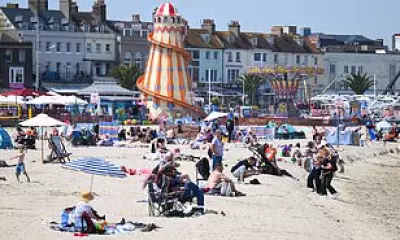
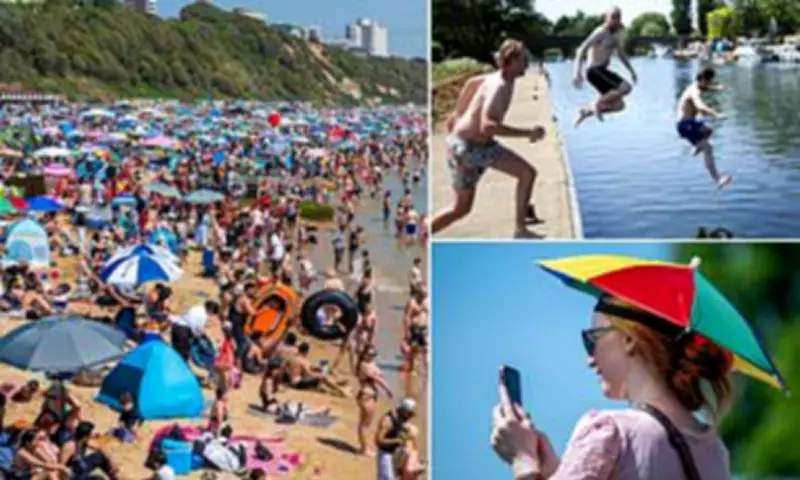
Crowded scenes were reported today as thousands flocked to beaches including Brighton and Weymouth, while sunbathers cooled off by diving into the River Great Ouse in Bedfordshire. Amid the warm weather yesterday, youths were apparently pictured inhaling so-called 'hippy crack' among thousands at Bournemouth beach.
Historical Context
The current heatwave is the first time UK temperatures have hit the thirties since 2012. In its blog, the Met Office stated: 'While reaching 30°C in May is rare, the UK has experienced some high temperatures during the month. The highest temperature recorded in May is 32.8°C, with several notable occurrences, including readings at Camden Square and Greenwich in Greater London during May 1922, as well as across parts of southeast England including Tunbridge Wells and Horsham during late May 1944.'
Met Office Deputy Chief Forecaster Steve Kocher said: 'It is likely that the May and Spring UK temperature records will be broken over the Bank Holiday weekend, with forecast temperatures surpassing the existing record.' Forecasters added that prior to 2012 and another spell when 30°C temperatures were reached in May 2005, 'early-season warm spells have occurred intermittently across the 20th century.'
Among the closest-together years with very hot May months exceeding 30°C were 1944, 1945, 1947, and 1953. Forecasters said 'May 30°C events are sporadic rather than regular, typically separated by many years.' However, the Met Office predicted they may become 'more common in the UK as the summers get increasingly hot.'
Forecast and Alerts
Fine weather is predicted for the whole week ahead, continuing into the weekend for most areas, bringing sunny skies for families enjoying half-term staycations. The only exceptions are set to be on Wednesday, when it could be cloudier for a time, and in the far west on Friday and Saturday where cloud could again build up. Forecasters also noted that with 'relatively low sea surface temperatures there is also likely to be some low cloud and sea fog clinging closely to western coasts.'
The warm weather was officially declared a heatwave in the South East this afternoon after weather stations in London, Oxfordshire, Essex, and Suffolk passed the benchmark of hitting 27°C on three consecutive days. The UK Health Security Agency said its heat health alert would continue to apply until 5pm on Wednesday, with an amber alert covering the East Midlands, East of England, London, South East, and West Midlands. The North West, North East, South West, and Yorkshire and the Humber are encompassed by a yellow alert. The alert is intended as an 'early warning to the health and social care sector, the responder community, the voluntary and community sector, and government departments' dealing with groups of people more vulnerable to hot weather.