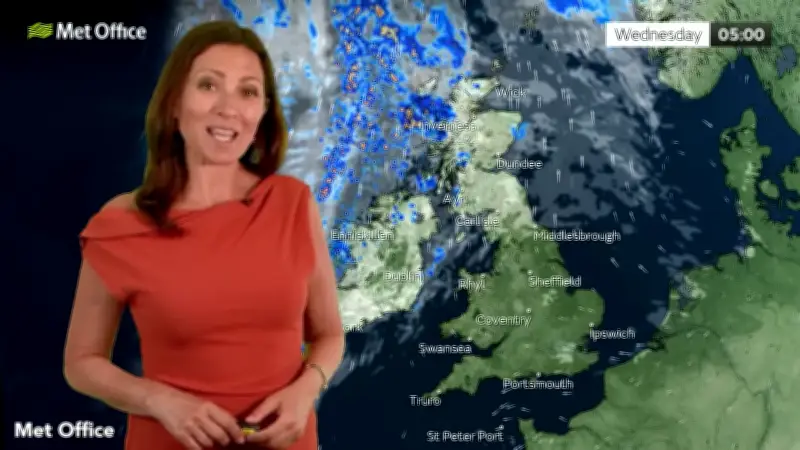
The Met Office has released a map showing which parts of the UK will have the best view of tomorrow's solar eclipse. Although the eclipse should be visible across the UK, cloud cover could obstruct the view for people in some regions.
A weather front is expected to push into the northwest tomorrow, with rain on the cards in Northern Ireland and Scotland. The Met Office has published a map showing where is likely to have clear skies between 6pm and 8pm, when the eclipse is due to take place. The event will peak at just after 7pm, although the exact timings vary depending on location.
Best viewing areas
The map shows southern parts of England and Wales should have an “excellent” view of the eclipse. North Wales, northern England and southern Scotland can expect “good” conditions, whereas visibility will likely be “low to moderate” in Northern Ireland and the rest of Scotland.
In total, there are 23 counties in the “excellent” region. They are all in either England or Wales.
Counties with 'excellent' view
Norfolk, Suffolk, Essex, Cambridgeshire, Northamptonshire, Warwickshire, Worcestershire, Herefordshire, Gloucestershire, Oxfordshire, Buckinghamshire, Bedfordshire, Hertfordshire, Berkshire, Wiltshire, Somerset, Devon, Cornwall, Dorset, Hampshire, Surrey, Sussex and Kent.
BBC forecast and safety warning
BBC Weather forecasters say there should be "very little cloud" for most tomorrow. However, the BBC forecast does identify northern areas as where showers and "patchy cloud" could come. It states: "Dry and sunny for most with very little cloud around. Patchy cloud and a few showers for northern England and Northern Ireland. Heavier spells of rain for north-western Scotland, possibly thundery."
Wednesday will bring the first near-total eclipse to the UK since 1999, and will be the last chance to see one until 2081. Safety-approved solar eclipse glasses have been selling out online. And consumers have been warned against using “knock-off” glasses instead. Eye doctors have also urged people to avoid looking directly at the Sun, with even brief exposure causing lasting vision damage.
Only special solar eclipse glasses that are ISO 12312-2 certified for the safest eye protection should be used, experts say. Glasses that do not carry the safety standards, or ordinary sunglasses, should never be used as they reduce glare, making it feel more comfortable to look at the Sun for longer, but still allowing harmful solar radiation to reach the retina.