Stargazers can catch a series of stunning events in the September skies - with some easier to see than others. Some of the events have already started while others are coming up over the next few days and weeks.
Autumnal equinox and equilux
On September 23 the autumnal equinox will see the sun cross the celestial equator, moving from the northern to southern half of the sky and marking the beginning of autumn in the Northern Hemisphere.
According to Royal Museums Greenwich this doesn't happen straight away for those in the UK. Its Astronomy Education Officer, Jessica Lee, explained: "We receive approximately 12 hours of daylight and 12 hours of darkness on the equinox, but not exactly.

"In London, for example, the Sun will rise at 6.48am and set at 6.56pm on the 23rd, meaning we get 12 hours and 8 minutes of daylight. The day when daylight and nighttime hours are equal occurs a few days after the equinox and is known as the equilux. The day on which the equilux falls depends on the latitude of a particular region, and for us in the UK it will be September 25."
Two meteor showers, one with the 'Demon Star'
The expert shared a number of events taking place in the skies this month including one which is already underway. She said: "September will bring us two minor meteor showers. Neither are favourable to view this year, with the moon's light washing out the sky at the start of the month and a very low hourly meteor rate for both."
The first is the Aurigids meteor shower which became active on August 28. It peaked on September 1 and will end on September 5.
The second is the Epsilon Perseids meteor shower, which is active for much longer, from September 5 until September 21, peaking on the 9. The shower's radiant point is located within the constellation Perseus, near the star Algol which is nicknamed 'The Demon Star' because it regularly dims and brightens again, similar to a winking eye.
Neptune at opposition and lunar occultation
On September 26, Neptune will be at a point in its orbit where Earth will be positioned directly between it and the Sun, known as opposition. This will make it easier to see Neptune because it is at its closest and brightest, said the expert.
But she warned: "However, due to Neptune's distance, it will still not be visible with the naked eye, and must instead be viewed through a telescope. Have a look in the constellation of Pisces to find it."
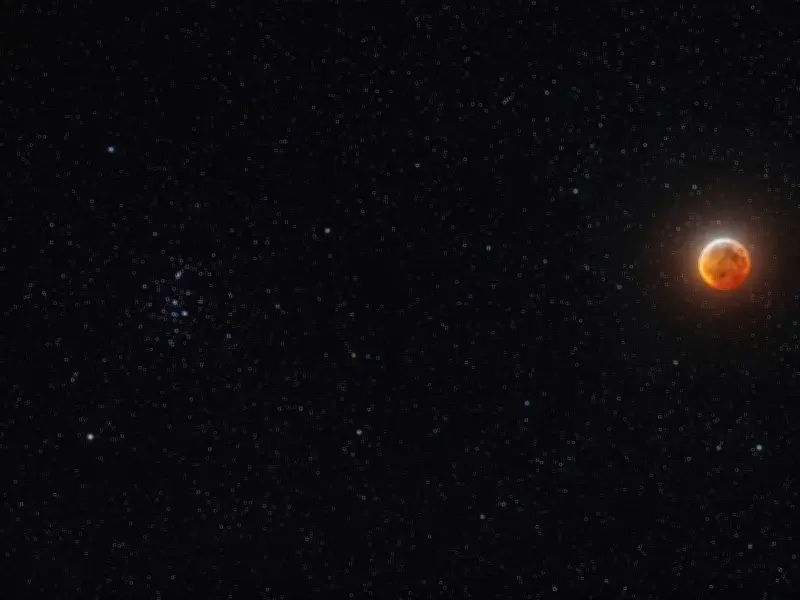
But for many the highlight will come in days. On September 8, a lunar occultation of M44, otherwise known as the Beehive Cluster, will take place. This will last from roughly 4am until sunrise.
Jessica said: "If you happen to be awake, look towards the east, ideally with a pair of binoculars. You'll see a thin crescent Moon moving in front of this beautiful open star cluster."
The Beehive Cluster is a group of roughly 1,000 stars loosely bound together, located in the constellation of Cancer. The name M44 indicates that the cluster is part of the Messier catalogue, a catalogue of astronomical objects created by French astronomer Charles Messier.
"Messier was hoping to observe and track comets, but he would sometimes come across fuzzy, distant objects. As telescopes at the time were not powerful enough for him to understand what these objects were, Messier catalogued them so time would not be wasted observing them. This list is today known as the Messier catalogue, and M44 is the 44th entry."
Harvest Moon and viewing tips
September's full moon is on September 26 at 5.49pm when the Harvest, or Corn Moon will be visible. This gets its name because it is when crops are gathered at the end of the summer season. At this time, the Moon appears bright and rises early, allowing farmers to continue harvesting into the night. This moon is also sometimes named the barley moon, and it is often the nearest full moon to the autumnal equinox, earning the title of harvest moon.
The RMG has advice for people wanting to have the best chance of a good night view. It advises: "When looking at faint objects such as stars, nebulae, the Milky Way and other galaxies, it is important to allow your eyes to adapt to the dark so that you can achieve better night vision.

"Allow 15 minutes for your eyes to become sensitive in the dark, and remember not to look at your mobile phone or any other bright device when stargazing. If you're using a stargazing app on your phone, switch on the red night vision mode."