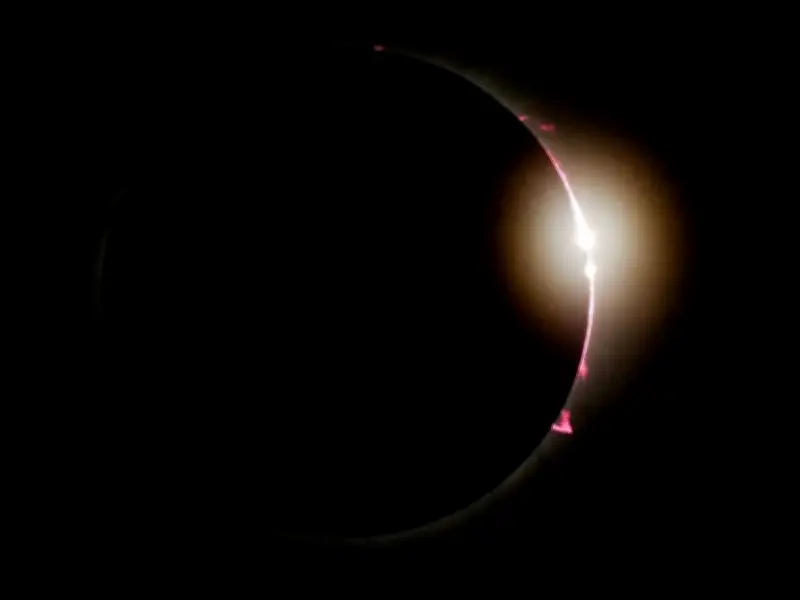
Scotland is set to experience the deepest solar eclipse visible from the UK since 1999 on Wednesday, August 12, when the Moon passes directly between the Earth and the Sun, blocking much of the Sun's light.
While a total solar eclipse will only be visible from a narrow path across Greenland, Iceland, Spain, northern Russia, and a small part of northern Portugal, observers in Scotland will still see around 90% or more of the Sun obscured.
Best places to watch in Scotland
The Isle of Barra in the Outer Hebrides is expected to offer Scotland's best view, with around 93% coverage due to its western location and proximity to the path of totality. The eclipse occurs shortly before sunset, so an elevated position or an uninterrupted view towards the west or north-west is recommended.
Other excellent locations include the west coast and islands, where coverage is greatest. The Outer Hebrides and Isle of Skye provide coastal viewpoints, and the Ayrshire coast offers wide-open sea views across the Firth of Clyde.
City viewpoints
Edinburgh will see around 90.7% coverage, with prime spots including Arthur's Seat, Calton Hill, and Blackford Hill. Glasgow is forecast to enjoy around 91.4% coverage, with recommended spots at Cathkin Braes, Loch Lomond Shores, and Queen's Park.
Timings and safety
Timings vary slightly across the country, but the eclipse follows a similar pattern throughout Scotland. A solar eclipse occurs when the Moon moves between the Earth and the Sun, casting a shadow on Earth. There are between two and five solar eclipses each year, with a total solar eclipse roughly every 18 months.
The UK Health Security Agency (UKHSA) warns that people should never look directly at the Sun without proper eye protection. Use eclipse glasses or handheld solar viewers meeting the ISO 12312-2:2015(E) standard, and ensure they are not scratched or damaged. Alternatively, create a simple pinhole projector to view the eclipse indirectly.
Bonus: Perseid meteor shower
The eclipse coincides with the peak of the Perseid meteor shower, so after darkness falls, Scots could see dozens of shooting stars if cloud conditions are favourable.