Rescuers Battle Winter Storm to Save Six from California Avalanche, Nine Remain Missing
Crews have pushed through a mountainous wilderness in California near Lake Tahoe during a fierce snowstorm to rescue six backcountry skiers who survived an avalanche but were trapped by its snow and ice. Nine others from their tour group remain missing, according to authorities.
Dangerous Rescue Operation in Extreme Conditions
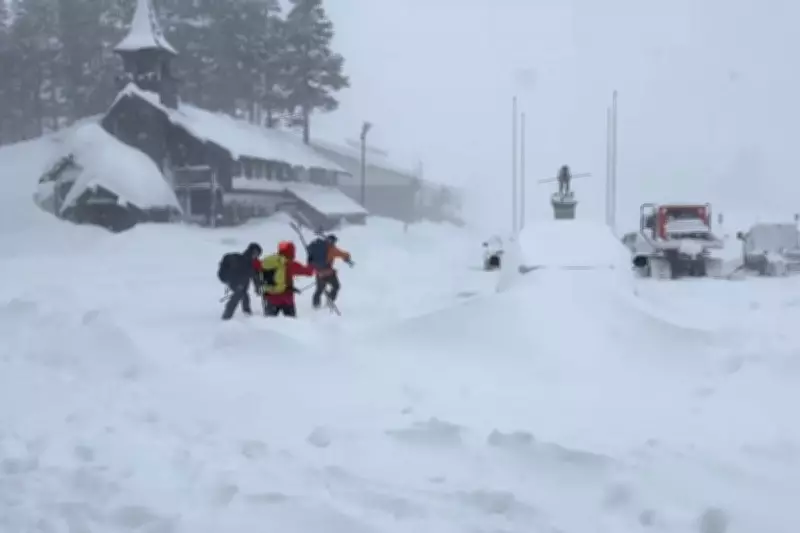
The rescue effort was launched after a 911 call reported an avalanche and people buried near Frog Lake in the Castle Peak area, northwest of Lake Tahoe. A powerful winter storm was moving through California at the time, with extreme conditions in the Northern California mountains slowing the response. It took crews several hours to reach the skiers and bring them to safety, where they were evaluated by the Truckee Fire Department.
Two of the six rescued skiers were taken to a hospital for treatment, said Ashley Quadros, a spokesperson for the Nevada County Sheriff's Office. The sheriff’s office clarified on Tuesday night that there were 15 skiers on the trip, not 16 as initially believed. Search and rescue crews were dispatched to the scene, and authorities planned to provide another update on rescue efforts at a news conference Wednesday morning.

Details of the Ski Trip and Avalanche Incident
The skiers were on the last day of a three-day backcountry skiing trek, according to Steve Reynaud, a Tahoe National Forest avalanche forecaster with the Sierra Avalanche Center. He noted that the group had spent two nights at huts on a trip that required navigating rugged mountainous terrain for up to 4 miles while carrying all food and supplies.
Nevada County Sheriff Capt. Russell Greene said authorities were notified about the avalanche by the ski tour company that led the expedition, Blackbird Mountain Guides, and by emergency beacons the skiers were carrying. Rescuers made their way cautiously toward the scene due to the danger of more avalanches. Blackbird Mountain Guides stated on its website that it was coordinating with authorities on the rescue operation.
Treacherous Backcountry Conditions and Avalanche Warnings
California is being hit by a powerful winter storm this week, bringing treacherous thunderstorms, high winds, and heavy snow in mountain areas. Brandon Schwartz, Tahoe National Forest lead avalanche forecaster at the Sierra Avalanche Center, warned that it is particularly dangerous in the backcountry right now because the storm is at its height.
The center issued an avalanche warning for the area in the Central Sierra Nevada, including the Greater Lake Tahoe region, starting at 5 a.m. Tuesday, with large slides expected into Wednesday. The town of Soda Springs, near where the avalanche occurred, recorded at least 30 inches of snow during a 24-hour period, according to the Soda Springs Mountain Resort. The dangerous conditions were caused by rapidly accumulating snow piling on fragile snowpack layers coupled with gale-force winds.
The storm has wreaked havoc on roads from the Sierra Nevada to Sonoma County. Traffic was halted temporarily in both directions on I-80 over and around Donner Summit due to spinouts and crashes. Several Tahoe ski resorts were fully or partially closed due to the weather. While resorts along highways have avalanche mitigation programs and are not at as high a risk, travel in, near, or below avalanche terrain in the backcountry was strongly discouraged.
Historical Context and Avalanche Risks
Castle Peak, a 9,110-foot mountain north of Donner Summit, is a popular backcountry skiing destination. The summit, which can be perilous in snow, is named for the infamous Donner Party, a group of pioneers who resorted to cannibalism after getting trapped there in the winter of 1846-1847.
In January, an avalanche in the region buried a snowmobiler in snow and killed him, authorities said. Each winter, 25 to 30 people die in avalanches in the U.S., according to the National Avalanche Center. Training in avalanche assessment and rescue, along with safety equipment, is highly recommended for backcountry skiing, which involves venturing deep into the wilderness far outside resort confines. Backcountry skis are wider and heavier, designed for ungroomed terrain, unlike cross-country skis for flat trails.