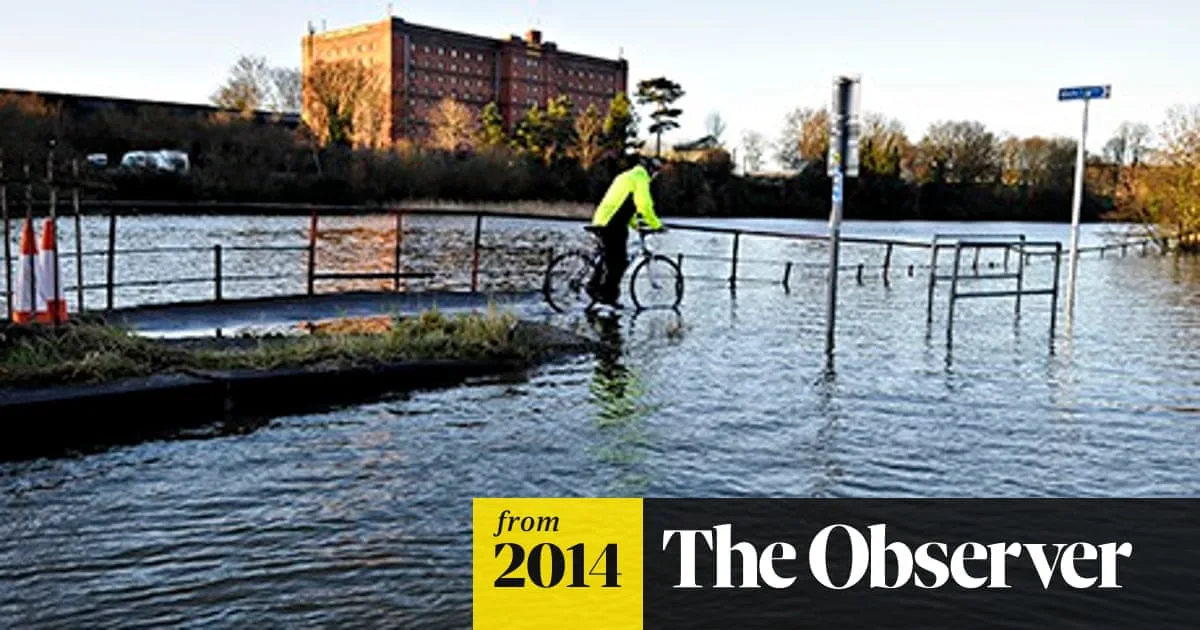
An "exceptional" volume of rainfall has transformed January 2026 into one of the wettest months on record for numerous regions across the United Kingdom, according to newly released provisional figures from the Met Office. The persistent deluge has resulted in significant flooding incidents and widespread travel disruption, with meteorological data confirming the extraordinary nature of last month's weather patterns.
Record-Breaking Rainfall Statistics
Provisional data from the Met Office paints a striking picture of January's precipitation. Northern Ireland experienced a staggering 70% more rainfall than its long-term average, with 195.6mm recorded throughout the month. This substantial volume makes it the wettest January since 1877, when 197.1mm was measured, and officially ranks as the second wettest January since comparable records began in 1836.
Southern England similarly endured significantly above-average rainfall, receiving 74% more precipitation than typical for January. The region recorded 136.8mm of rain, securing its position as the sixth wettest January on record for the area. England as a whole saw 50% more rainfall than average, with 124.2mm measured, ranking as the 15th wettest January in recorded history.
Geographical Impact and Local Records
At a county level, Cornwall in south-west England and County Down in Northern Ireland both experienced their absolute wettest January on record. The relentless rainfall led to numerous localised flooding events, including significant inundation in St Ives, Cambridgeshire, after the River Great Ouse burst its banks following Storm Chandra.
January 26th proved particularly remarkable, with Storm Chandra delivering unprecedented daily rainfall totals. Katesbridge in County Down measured 100.8mm, dramatically surpassing the previous site record of 38.2mm set in January 2005. The same day saw multiple locations exceed their previous daily rainfall records for January, including Cardinham in Cornwall, Hurn in Dorset, and both Dunkeswell Aerodrome and Plymouth Mountbatten in Devon.
Meteorological Causes and Expert Analysis
The extraordinary rainfall resulted from a persistent Atlantic weather pattern that dominated throughout January. A succession of low-pressure weather systems moved across the UK from the Atlantic, bringing repeated outbreaks of wet and windy conditions. Three named storms – Goretti, Ingrid and Chandra – all contributed significant downpours to various regions.
Met Office science manager Dr Amy Doherty provided expert analysis of the situation: "January has been exceptionally wet because we've seen a very persistent Atlantic weather pattern. A strong jet stream has repeatedly steered low-pressure systems towards the UK, bringing frequent spells of rain and wind."
Dr Doherty further explained: "With little opportunity for drier conditions in between, the ground has become saturated, so even moderate rainfall has had a greater impact. This succession of Atlantic systems is the main reason rainfall totals this month are well above average for many areas."
Broader Implications and Future Considerations
The sustained rainfall has created challenging conditions across multiple sectors, with transportation networks experiencing significant disruption and numerous communities dealing with flood damage. The saturation of ground conditions means that even moderate future rainfall could continue to cause problems, as drainage systems struggle to cope with the excess water.
These record-breaking figures contribute to ongoing discussions about changing weather patterns and climate resilience across the United Kingdom. The exceptional nature of January's rainfall serves as a reminder of the increasing volatility in weather systems and the importance of robust infrastructure and emergency planning to manage such extreme meteorological events.