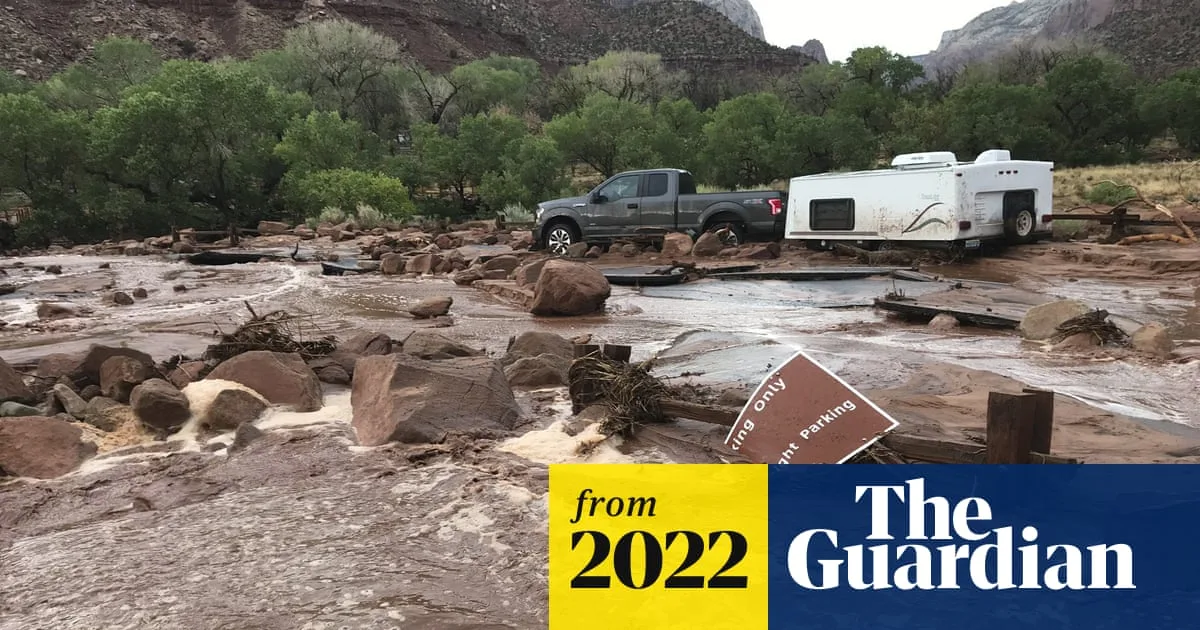
Flash floods have wreaked havoc across the US south-west in recent days, shutting parts of national parks, closing highways, submerging cars, and trapping tourists. A young woman remains missing after being swept away while hiking in Zion National Park on Friday. The destructive deluges, however, have not been enough to relieve the region's severe drought, experts say.
Summer monsoons are a natural feature of the south-west, but the intensity between wet and dry extremes is increasing. Dr Andrew Hoell, a meteorologist at NOAA, noted that heavy rains and underlying drought exist on separate time scales. Dried soils are less able to absorb added moisture, and it will take a sustained rainy season over winter to alleviate the crisis.
Authorities have been searching for Jetal Agnihotri, 29, of Tucson, who was swept away in Zion National Park. Her body was discovered Monday about six miles south of where she was swept away, ending a four-day search. In New Mexico, about 150 tourists were evacuated from Carlsbad Caverns after being stranded by rising water. In Arizona, emergency crews rescued four hikers and 41 students and staff from school buses stuck in high water.
A slow-moving storm dumped record rain on the Dallas-Fort Worth area, prompting rescues and a disaster declaration in Dallas County. Texas officials reported a fatality after an unidentified woman died when her car was swept off a flooded road. The severe storms follow major flash floods from Death Valley earlier this month and a state of emergency on the Navajo Nation.
Despite the damage, the rains have offered some benefits, with the US Drought Monitor noting broadscale improvement in monsoon-affected areas, including a boost in reservoir levels. However, experts warn that temporary increases will not mitigate a crisis years in the making.