The UK is currently likely experiencing its hottest summer ever recorded, with the Met Office saying that only average temperatures are required for the rest of August to surpass last year's record. Several regions are bracing for a fifth heatwave this summer, as amber "extreme heat" warnings have been issued for parts of England, with temperatures potentially soaring to 38°C in some areas on Thursday.
Record-breaking temperatures
Provisional statistics from the Met Office show that the mean temperature for the summer so far, from June 1, stands at 16.48°C – which is 1.88°C above the 1991 to 2020 average. To equal the 16.12°C in 2025, the UK's warmest summer on record, the rest of August would only need to be 0.21°C below the long-term average, and any warmer than this would establish a new record for the country, the Met Office said.
For England and Wales, which have seen temperatures more than 2°C above average so far this summer, it is even more likely that June to August 2026 will be record-breaking. In a summer marked by extreme weather, temperatures are set to spike again this week.
Heat warnings and health alerts
The Met Office has issued a rare amber warning for extreme heat for London and parts of the South East, East Midlands, East of England, West Midlands and South Yorkshire from 9am to midnight on Thursday as temperatures are to climb to 37°C or 38°C in some places. Met Office chief forecaster Chris Bulmer said: "While the peak heat will be more short-lived than recent heatwaves, temperatures widely into the mid-30s Celsius on Thursday brings the potential for impacts for some, which is why a Met Office warning has been issued. High pressure is now becoming dominant and temperatures will build day by day."
"Southerly and south-easterly winds will also tap into the hot conditions over Europe which helps develop this further notable heat in what has been a hot and dry summer so far for many in the south of the UK." Amber health heat alerts are already in place for most of England including the Midlands, South East, North West and South West, and a yellow alert is in force for the North East from Tuesday morning until Friday evening. Officials have urged people to take simple steps to stay safe, such as drinking plenty of water, checking on vulnerable friends and family, and avoiding the sun at the hottest part of the day.
Drought and wildfire risk
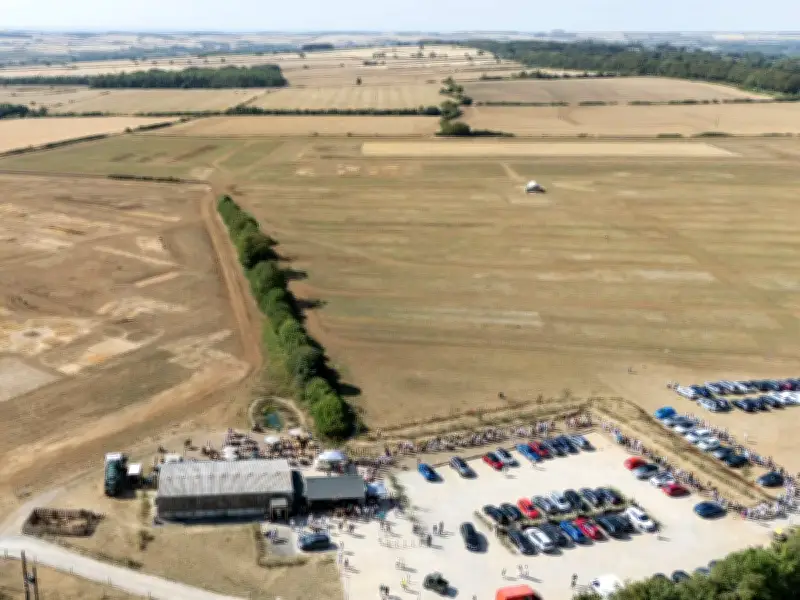
Nearly three-quarters of England and all of Wales are under drought conditions, following a record dry July and a very dry beginning to August, compounded by soaring temperatures. This is putting significant strain on water supplies for households, agriculture, and the environment. The Environment Agency said 71.3% of England is now experiencing "flash drought", which develops very quickly because of a combination of very low rainfall and high temperatures.
Fire chiefs have warned of sustained fire risk in the hot, dry conditions, with July the busiest on record for wildfires and firefighters responding to 185 wildfires in the first 10 days of August. Firefighters have responded to 966 wildfires across England and Wales this year, while July was the busiest month on record with 458 incidents, the National Fire Chiefs Council (NFCC) said. The NFCC urged people to take steps such as avoiding disposable barbecues, taking litter home, and disposing of cigarettes safely to reduce fire risk.
Crews from Hampshire and Isle of Wight Fire and Rescue Service have battled a fire in the New Forest for two days, which started after a van caught fire on the A31 near Ringwood on Sunday. The area hit by the blaze is protected heathland and home to a number of rare species, according to the New Forest National Park Authority.