The UK's most dramatic solar eclipse since 1999 is now just days away, and people across Greater Manchester are set to enjoy an impressive celestial display.
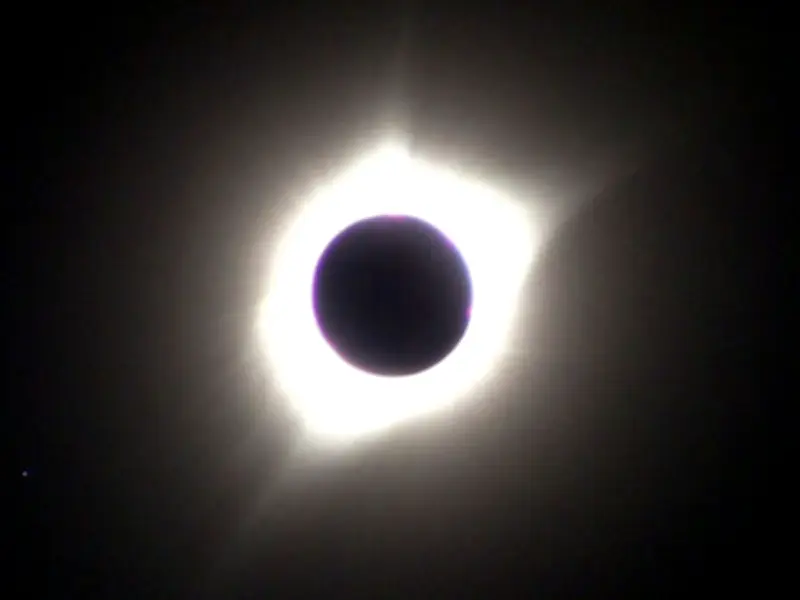
On Wednesday, August 12, the Moon will pass directly between the Earth and the Sun, blocking much of its light and creating a deep partial solar eclipse across the UK. While a total eclipse will only be visible from parts of Greenland, Iceland, Spain, northern Russia and a small area of Portugal, Manchester will see more than 90% of the Sun covered.
The eclipse will be the deepest visible from the UK since August 11, 1999, when a total solar eclipse crossed parts of Cornwall and Devon.
What causes a solar eclipse?
A solar eclipse occurs when the Moon moves directly between the Sun and the Earth, causing the Earth to pass through the Moon's shadow. Because the Moon's shadow covers only a small part of the Earth's surface, eclipses are only visible from certain locations. There are usually between two and five solar eclipses every year, while a total solar eclipse occurs somewhere on Earth roughly every 18 months.
Manchester eclipse timings
People across Greater Manchester will see the eclipse begin at 6.13pm BST, with the Moon first appearing to take a bite out of the Sun.
The eclipse will reach its maximum at 7.10pm, when around 91.3% of the Sun will be obscured. The event will end at 8.03pm, lasting around one hour and 50 minutes.
Because the eclipse takes place shortly before sunset, the Sun will be only around 12 degrees above the west-northwest horizon at maximum coverage. Finding an open location with a clear view towards the west will be key.
Best places to watch the eclipse in Manchester
One of the best places to watch the eclipse will be Platt Fields Park in Fallowfield.
The park is hosting a free public viewing event from 5pm, with certified ISO 12312-2 eclipse glasses being distributed free of charge at the Wilmslow Road entrance while supplies last.
For those unable to make the event, any large open park or elevated area with an uninterrupted view towards the west-northwest should provide excellent viewing conditions. The key is to avoid buildings and trees that could block the low evening Sun.
A bonus for stargazers
The eclipse coincides with the peak of the annual Perseid meteor shower. Once darkness falls later in the evening, those who remain outdoors may be rewarded with one of the year's best displays of shooting stars under a largely moonless sky.
How to watch safely
Even with more than 91% of the Sun covered, it is never safe to look directly at a partial eclipse without proper eye protection.
The UK Health Security Agency recommends using genuine eclipse glasses or handheld solar viewers that meet the international safety standard ISO 12312-2:2015(E). Ordinary sunglasses are not safe for viewing the Sun.
People using cameras, telescopes or binoculars should ensure they are fitted with specialist solar filters. Alternatively, a simple pinhole projector made from a piece of card allows the eclipse to be viewed safely without looking directly at the Sun.