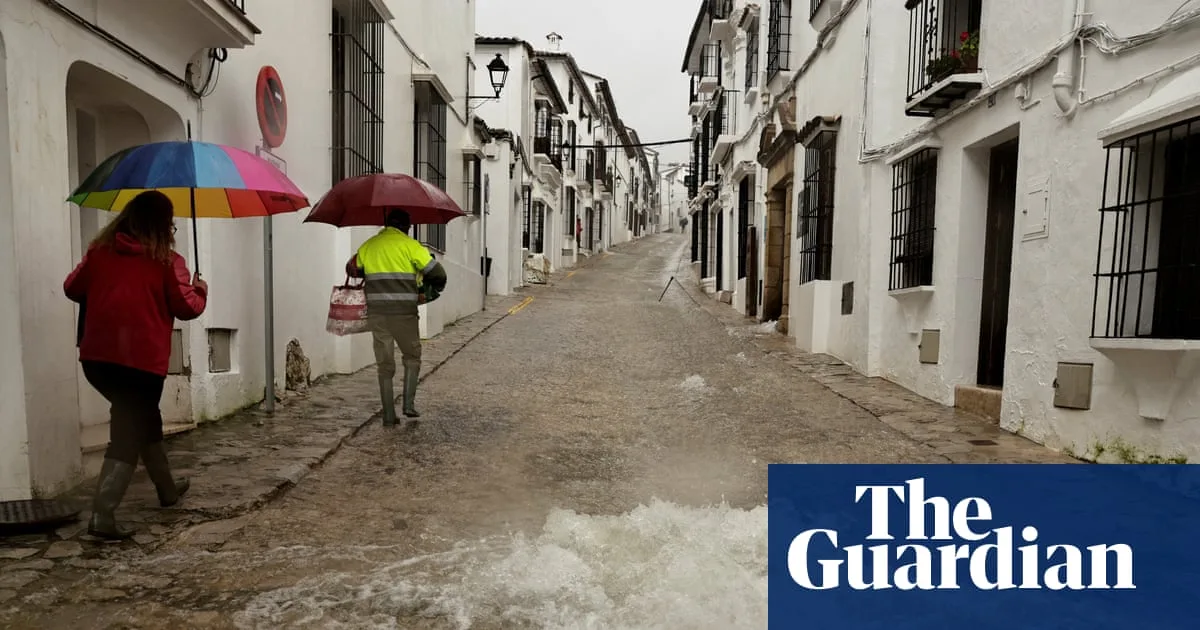
Fresh storms have lashed Spain and Portugal, causing widespread destruction and injuries. In Grazalema, Spain's wettest town, a year's worth of rain fell in a fortnight, overwhelming the karst aquifer and forcing evacuations. Water surged into homes through floors, walls and electricity sockets, leaving residents like guesthouse owner Andrés Sánchez Barea terrified. 'At first we tried to get rid of the water, but we realised it was impossible,' he said.
In Portugal's Leiria region, Storm Kristin brought extreme rain and record winds of up to 109mph (176km/h) at Monte Real airbase. The storm cut power, internet, and telephone services, and beekeeper Nelson Duarte lost half his hives. 'The wind became deafening and relentless, mixed with the sound of collapsing structures,' he recalled. Two people died in the Carvide-Leiria area, including an industrial painter who was trapped when a garage roof collapsed on him.
The western Mediterranean has been hit by 16 rapid-fire storms this season due to a shift in atmospheric currents. Scientists say climate change may have made the storms more intense. A study by World Weather Attribution found that carbon pollution made rains stronger and floods worse, with extreme rainfall days in Spain, Portugal, and Morocco unleashing one-third more water than in the 1950s.
In Morocco, storms have killed 43 people since mid-December, many in the narrow streets of medinas where flash floods swept through. Hotel owner Amal Essuide described the horror of seeing a corpse pulled from a boat in Safi's flooded medina. The storms have caused immense damage across the region, with firefighters in Portugal responding to 50 storm-related events in a single day.