Europe's Avalanche Crisis Reaches Critical Levels
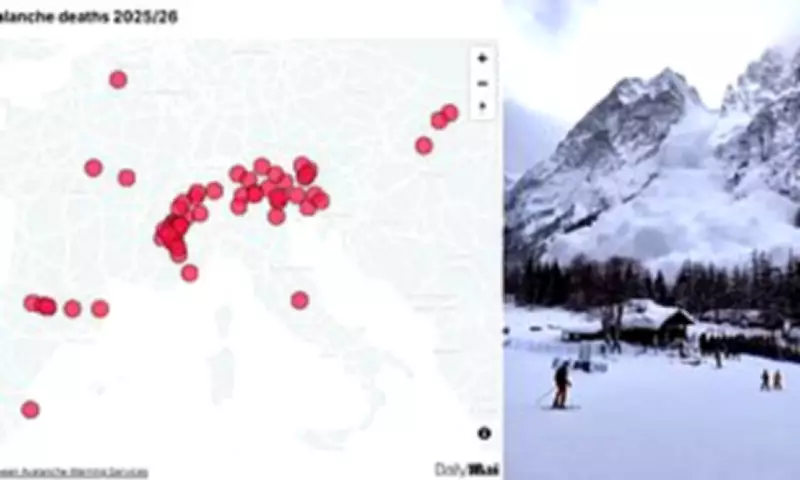
Europe's mountain regions are facing an escalating avalanche crisis, with 86 people killed this season including at least four British nationals. Severe snowfall and dangerously unstable mountain conditions have created havoc across the Alps and surrounding areas, marking one of the deadliest winter seasons in recent memory.
Nation-by-Nation Fatality Breakdown
France has recorded the highest death toll with 25 fatalities, followed closely by Italy with 21 deaths. Austria has reported 14 avalanche-related deaths, while Switzerland has lost nine people and Spain eight. Slovakia has confirmed four fatalities, Slovenia three, and the principality of Andorra one death.
The vast majority of victims were caught in wind slab avalanches or collapses linked to persistent weak layers buried deep within the snowpack. These dangerous conditions are often triggered by fresh snowfall, creating unpredictable and deadly scenarios for mountain travelers.

British Nationals Among the Victims
At least four British nationals have perished in avalanches this season. The most recent tragedy occurred on Tuesday when a British man died in the Alps after an avalanche struck a group of five off-piste skiers and their guide near a French resort. The slide hit the Côte Fine couloir in La Grave during the morning hours.
According to Marion Lozac'Hmeur, Public Prosecutor of Gap, two skiers were found in cardiorespiratory arrest and later pronounced dead. This incident followed closely on another deadly avalanche in Val d'Isere that swept away six skiers in an off-piste area, killing one French national and two British citizens.
The British victims in Val d'Isere were identified as Stuart Leslie, 46, and 51-year-old Shaun Overy. Emergency services responded quickly but could not save their lives despite all victims wearing avalanche transceivers. One of the deceased was a British national originally from Poland who lived in Switzerland, born in 1989, while another victim was Polish, born in 1987.
Unprecedented Warning Levels and Conditions
These tragedies unfolded less than 24 hours after the Savoie region was placed on a rare red avalanche alert - a warning level issued only twice before in the 25 years since its introduction. Although the alert had been lifted by Friday morning, the risk remained at four out of five, officially classified as 'high.'
Current conditions mean avalanches are 'easily triggered by skiers or hikers' and capable of mobilising 'very large volumes of snow.' The Alpine rescue service reported a record 13 backcountry skiers, climbers and hikers died in the Italian mountains during the first week of February alone, including 10 in avalanches triggered by exceptionally unstable snowpack.
Multiple Incidents Across the Region
Two skiers died over the weekend after being buried in snow following an off-trail avalanche in Italy, close to the borders with France and Switzerland. At least three skiers were caught in Sunday morning's avalanche on the Mont Blanc massif in the Couloir Vesses, a well-known freeride route in Courmayeur.
Earlier this month on February 7, three people were killed by avalanches while skiing off-piste in mountains close to where the Milano Cortina Winter Olympic Games are taking place. The Alpine rescue service recovered a man's body after two avalanches hit the Marmolada area in the Dolomites, not far from Cortina d'Ampezzo.
Another two off-piste skiers died in Albosaggia, a village in the lower Valtellina valley approximately 40 miles east of Bormio. These deaths came just days after another avalanche in the Trentino Alto Adige region killed two Finnish skiers.
Earlier Season Tragedies
Last month, an Englishman believed to be in his 50s was reportedly among six skiers killed in avalanches over the weekend of January 11th after skiing off-piste at the La Plagne resort in south-eastern France. Rescue teams received an avalanche alert at 1.57pm on Sunday and immediately went to the site, locating the man after 50 minutes buried under eight feet of snow, but could not revive him.

His death came during a weekend marked by several avalanches across the Alps following several days of heavy snow. Among other victims that weekend were three skiers killed in the Savoie region after being caught in avalanches in Val-d'Isère and the Arêches-Beaufort resort.
A female skier died in Austria on January 11 after being buried by an avalanche on Weerberg mountain in the Schwaz district of Tyrol, while a man in Italy was killed by an avalanche above the northern city of Aosta on January 10. On January 13, a Czech child was tragically killed by an avalanche while skiing off-piste in the Austrian alpine resort of Bad Gastein.
On January 18, eight skiers died after three avalanches struck across Austria in the space of just four hours, highlighting the rapid and widespread nature of the danger.
Current Emergency Measures
Beginning this week, severe snowfall across Switzerland and parts of northern Italy has created mounting emergency situations. Tourists have been ordered to leave parts of the Italian and Swiss Alps after extreme snowfall and increasing avalanche risks forced authorities to evacuate villages and shut down entire areas.
Regional media report that up to 40 centimetres of fresh snow has fallen, significantly increasing the danger of avalanches. The second highest warning level is now in effect across the region, with heavy snowfall forecast to continue.
The situation is especially serious in Italy's Piedmont region, leading the regional government to issue a municipal decree ordering the prompt evacuation of Rochemolles, a tourism-dependent town. Approximately 40 people, including both residents and tourists, were told to leave, with some finding their own accommodation while others were placed in nearby hotels.
An access ban was imposed on the Rochemolles section of Bardonecchia due to heavy snowfall, with the area being evacuated as a precautionary measure. Alongside the dangerous snowfall, severe winds approaching hurricane-level force have compounded the crisis.
According to the regional environmental agency ARPA Piemont, gusts of up to 189 kilometres per hour were recorded at the Gran Vaudala weather station in Ceresole Reale, Italy, which sits at an altitude of 3,272 meters. Forecasters have warned that conditions may worsen further, creating ongoing challenges for rescue services and mountain communities across the Alpine region.