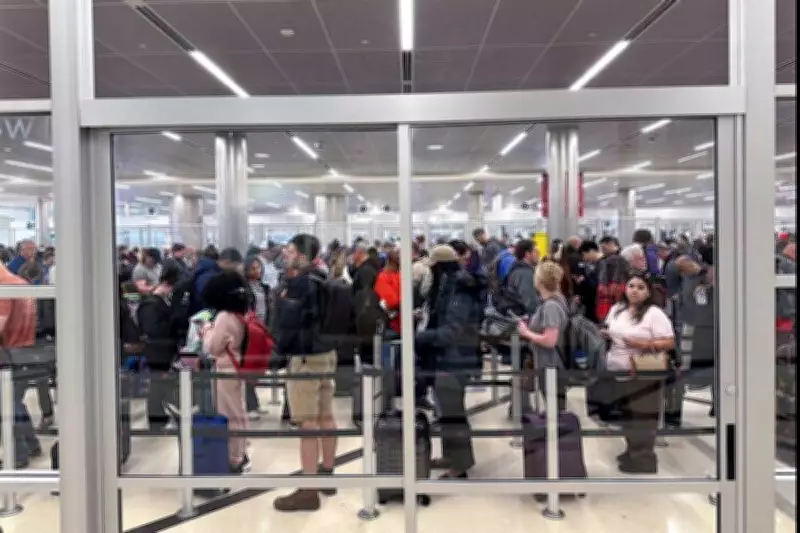
Air travel across the United States descended into chaos on Monday as severe storms and an ongoing partial government shutdown combined to create a perfect storm of disruption. More than 3,600 flights were canceled nationwide, with thousands more delayed, leaving passengers stranded and forced to sleep on airport floors.
Weather and Staffing Crisis Collide
The powerful storm system that swept across the eastern half of the country triggered mass cancellations at major airports including New York's JFK, Chicago O'Hare, and Atlanta's Hartsfield-Jackson International. The National Weather Service warned of dangerously high winds and potential for "strong and long track tornadoes" as the system barreled toward the East Coast.
This weather crisis unfolded against the backdrop of a partial government shutdown that entered its second month, specifically affecting the Department of Homeland Security and its Transportation Security Administration component. The shutdown has strained staffing at security checkpoints, with TSA reporting wait times of up to three hours at some airports.

Passenger Nightmares Unfold
Travelers found themselves in increasingly desperate situations as flights were canceled with little notice. Kelly Price, attempting to return to Colorado after a family vacation in Orlando, described how her Sunday night flight wasn't canceled until early Monday morning.
"By that time the only place for us to sleep was the airport floor. So we're all tired and frustrated," she explained, noting that the soonest available rebooking wouldn't depart until Tuesday afternoon.
Danielle Cash experienced similar disruption while trying to return home to Tampa, Florida, after a weekend trip to Las Vegas. Stranded in snowy St. Louis without appropriate clothing, she faced unexpected hotel expenses running "several hundred dollars more than planned."
Airport Operations Severely Impacted
According to flight-tracking data from FlightAware, the cancellations included nearly 500 flights at Chicago O'Hare International, over 300 at Atlanta's Hartsfield-Jackson, and more than 230 at John F. Kennedy International Airport. Roughly 6,800 additional U.S. flights experienced delays throughout the day.
The Federal Aviation Administration implemented ground stops at Hartsfield-Jackson and Charlotte Douglas International Airport, along with ground delays at JFK and Newark Liberty International Airport, citing severe weather conditions.
TSA Staffing Crisis Deepens
The timing of these disruptions proved particularly challenging as TSA workers missed their first full paycheck over the weekend. This marks the third government shutdown in less than a year to leave aviation security personnel temporarily without pay.
Homeland Security reported on social media platform X that more than 300 TSA agents have quit since the shutdown began on February 14. Airports have experienced longer security lines as remaining staff face increased pressure, with some workers taking second jobs, struggling to afford transportation to work, or leaving the profession entirely.
Political Standoff Continues
Democrats in Congress have stated that Homeland Security funding won't be restored until new restrictions are placed on federal immigration operations. This political impasse follows the fatal shootings of Alex Pretti and Renee Good in Minneapolis earlier this year.
The situation has prompted intervention from airline industry leadership. Over the weekend, the CEOs of major carriers including Delta, American, United, and Southwest issued an open letter to Congress imploring restoration of Homeland Security funding.
"It's difficult, if not impossible, to put food on the table, put gas in the car and pay rent when you are not getting paid," the executives wrote, advocating for a bipartisan solution that would ensure pay for federal aviation workers during future government shutdowns.
The combination of spring break travel, March Madness basketball tournaments, severe weather, and staffing shortages has created unprecedented challenges for the U.S. aviation system, with no immediate resolution in sight as both natural and political storms continue to rage.