
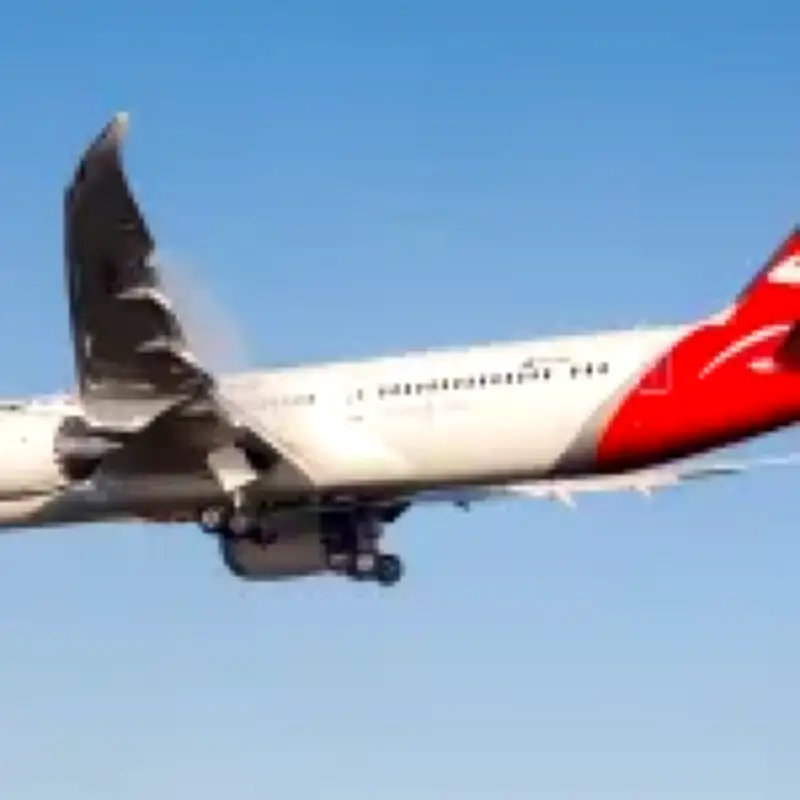
Passengers on a Qantas flight from Perth to Rome were left with bite marks after a bedbug infestation was discovered on board. The long-haul flight, QF5, was in the air for nearly 17 hours on Friday when travellers raised the alarm after complaining of being bitten.
Medical treatment and flight cancellation
Following medical advice, passengers were handed antihistamines as treatment, but the medication reportedly ran out, according to the Sydney Morning Herald. The Boeing 787 Dreamliner was pulled from service the next day for a deep cleaning, which cancelled the return flight QF6 from Rome to Perth.
The airline said passengers were booked accommodation and alternative flights within 48 hours of the original departure time. Qantas stated that its cabins undergo regular cleaning to an extremely high standard and are treated with disinfectant every 50 days as a standard precautionary measure.
Airline apology and expert insight
A Qantas spokesperson told the Morning Herald: ‘We sincerely apologise to customers for the cancellation of Saturday’s Rome to Perth service, which allowed our engineers and maintenance teams to carry out a deep clean of the aircraft after an issue was identified on a small number of economy seats.’
Parasite experts say bedbugs can travel onto a plane inside luggage or latched onto clothes. While their bites are not dangerous, they can be itchy and uncomfortable. If bedbugs slip into a home, getting rid of them using professional pest control in cities like London can also be costly.
Aircraft details and recent UK incidents
Plane tracking information shows the Boeing plane, nicknamed Kookaburra, entered service almost seven years ago. It features 42 business, 28 premium economy and 166 economy seats. Round-trip tickets between Sydney and Rome range from £950 to £2,500.
In the UK, bedbugs were discovered on board trains in southern England earlier this month, forcing services to be cancelled. One train between London and Kent was nicknamed the Bedbug Express, and drivers reportedly refused to board affected carriages after the pests were found crawling on their belongings. London has seen a surge in bedbug cases since 2025, with one borough reporting a 40% increase during the first half of 2026. In 2023, Eurostar and Transport for London were left on high alert after a bedbug outbreak in Paris, where pests were spotted in cinemas, public transport and schools.
What are bedbugs?
Bedbugs, from the family Cimicidae, primarily the genus Cimex, feed on blood from their victim, piercing through with their needle-sharp beak. Once latched onto their unassuming prey, they insert two tubes, one for saliva with numbing properties so the victim doesn’t notice the bite, and another for an anticoagulant to keep blood flowing. They typically feed at night around every five to seven days, although they can survive up to 70 days without feeding. These reddish-brown parasitic insects — which typically grow to about the size of an apple seed — hide in mattresses, bed frames, furniture and cracks around the home, making them difficult to spot and remove. Their bites can cause itchy red marks, although some people have no reaction at all. Female common bed bugs can lay up to 10 eggs per day and between 200 and 500 eggs in their lifetime.




