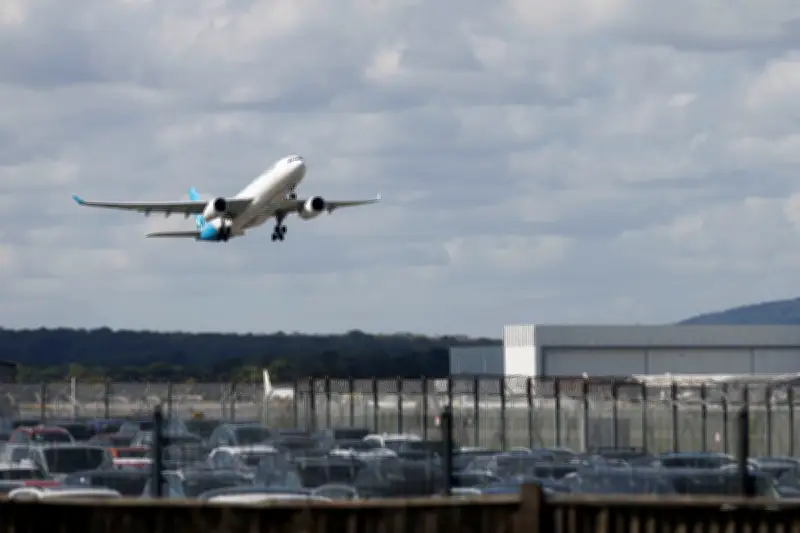
A pilot reported seeing a disc-like object described as a “flying saucer” while an Airbus A319 was coming in to land at Gatwick Airport in April.
The incident was highlighted in a UK Airprox Board report into the event, which was reported by The Sun. The pilot’s account said the suspected drone passed very close to the aircraft, in the opposite direction and at the same level.
The report quoted the pilot as saying: “The A319 pilot reports that descending, turning left, a disc or ‘flying saucer’ type suspected drone was seen flying very close in the opposite direction, at the same level to them, past their right wing. Approximately 100-300ft from their aircraft wing. The object looked like a disc with darker markings on the rim, a suspected possible drone but not sure. It was very close to the aircraft, but no evasive action was required as they were in a turn already.”
Airprox review
An “airprox” is defined as a situation in which, in the opinion of a pilot or air traffic services personnel, the distance between aircraft and their relative positions and speed may have compromised safety. The UK Airprox Board reviews such incidents to help improve air safety.
In this case, the board ruled that the safety of the aircraft had been “reduced”.
Second drone incident at Heathrow
A separate drone incident also occurred in April at Heathrow Airport. The board reported: “The A321 pilot reports that, whilst in a left turn on to base leg at LHR (over Marlow), a drone was witnessed to fly down the left-hand-side of the aircraft at close enough proximity to see details such as the colour, shape and individual props spinning.”
Airprox officials ruled: “The board considered that providence had played a major part in the incident and/or a definite risk of collision had existed.”
Drone disruption at UK airports
Civilian drone incursions continue to be a major issue for UK airports. In 2018, an unidentified drone above Gatwick forced the suspension of operations for more than 36 hours. More than 1,000 flights were grounded, cancelled or diverted, and around 140,000 passengers were left stranded. The disruption cost an estimated £50 million.