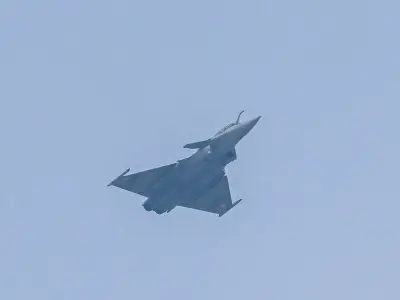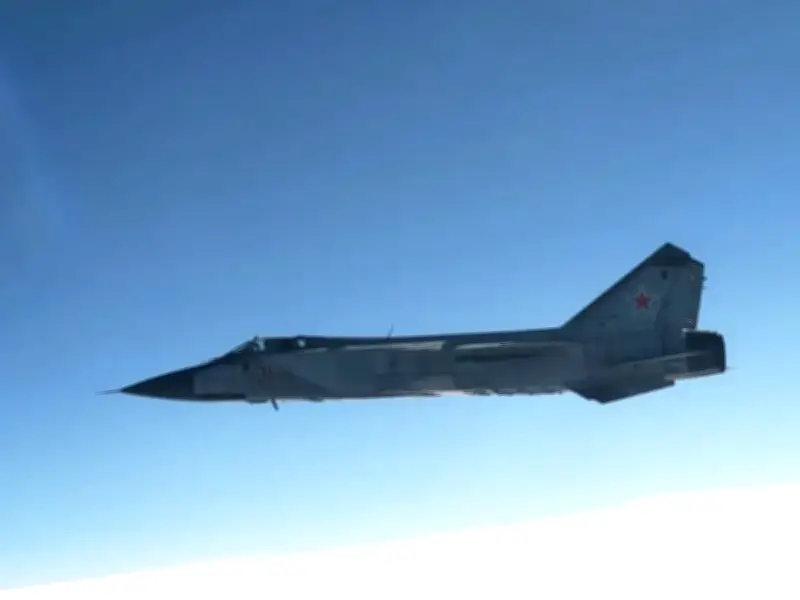
NATO fighter jets were scrambled to intercept Russian planes over the Gulf of Finland on Thursday. A group of Russian aircraft, including a Tu-134 transport plane, several MiG-31s and Su-30 fighter jets, was tracked in international airspace by NATO jets from Sweden and Finland.
First use of Quick Reaction Alert agreement
Swedish Prime Minister Ulf Kristersson said it was the first time the two countries have used their Quick Reaction Alert cooperation agreement, which permits military aircraft to operate from each other's bases.
“It is a concrete expression of the readiness and trust we have built together – and an expression of the strength in the Nordic, Nordic-Baltic, and broader NATO cooperation in our part of the world,” Kristersson said on X. “The Baltic Sea has never been as vulnerable as it is now – but it has also never been better protected than it is right now.”
Rising tensions in the Baltic region
Tensions have been steadily rising in the Baltic region, with Russian airspace violations by planes and drones, where Vladimir Putin appears to be testing NATO's responses in a type of hybrid warfare. Hybrid attacks aim to destabilise a country, test its defences, strain resources, or influence public opinion, often in a way that makes it hard to identify those responsible.
The Baltic area, a key route for Moscow's shadow fleet, is on high alert, especially with the Danish Defence Intelligence Service saying there is a possibility that Russia will step up its testing of NATO by launching an actual attack.
Risk of limited military attack
The Danish agency said of hybrid tactics: “This could include destructive cyberattacks that cripple critical societal functions as well as sabotage attacks that carry a high risk of casualties. Russia has become more willing to take risks.”
The agency stated there is “a low but growing risk that Russia will launch a limited military attack against one or several NATO countries bordering Russia,” but that this “could potentially take place in the coming months.” The aim would be to divert European resources away from supporting Ukraine and sow division in NATO, the service said. At the same time, it noted there are “no indications that Russia will launch an outright invasion of one or several NATO countries.”
NATO and European Union officials have played down this concern, saying Russia's armed forces are too tied up in Ukraine and that no unusual military activity has been noted near European countries close to Russia.