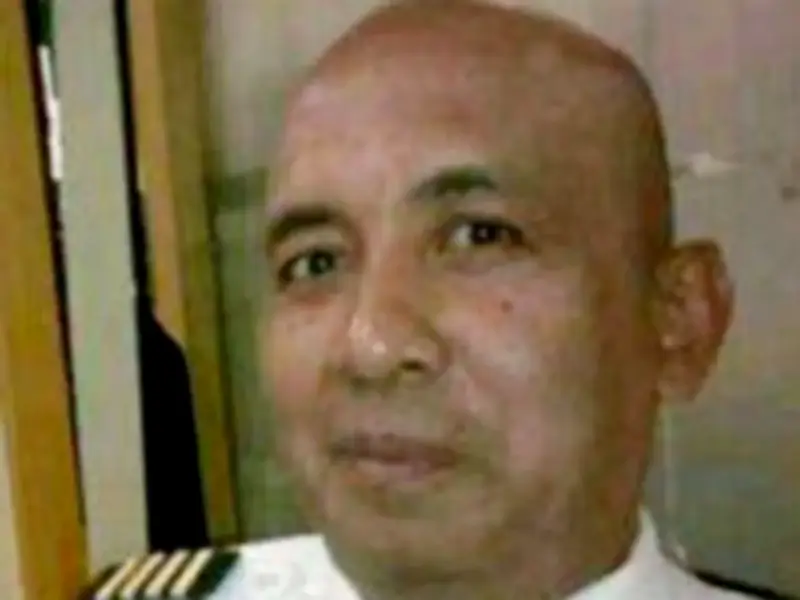
The last words from the cockpit of Malaysia Airlines Flight MH370 were "Goodnight Malaysia three seven zero," spoken by pilot Zaharie Ahmad Shah as the aircraft prepared to leave Malaysian airspace. The Boeing 777 vanished in 2014 with 239 people on board and has never been found.
Final transmission and disappearance
The flight from Kuala Lumpur to Beijing transmitted its final message two hours after departure. Shah radioed air traffic control as he prepared to enter Vietnamese airspace. Those words proved to be the last ever heard from the cockpit.
The aircraft then "went dark" upon entering Vietnamese airspace, prompting speculation that its onboard systems were intentionally switched off from inside the cockpit. The silence sparked controversy and theories, with some suggesting the aircraft may have been brought down by bad actors, with accusations levelled variously at the Chinese, Americans, and Russians.
Data and search efforts
Despite the failure of its operating system, a considerable volume of data remains, including Automatic Dependent Surveillance-Broadcast (ADS-B) data, radar data, Aircraft Communications Addressing and Reporting System (ACARS) data, and Inmarsat satellite data. This data consistently suggests that the aircraft continued flying for more than seven hours over the Southern Indian Ocean before it finally disappeared, most likely plunging into the ocean's depths.
The Malaysian government has approved multiple fresh searches for the missing aircraft, joining forces with Ocean Infinity, a British search firm that works on a "no find, no fee" arrangement. The hunt has concentrated on the Southern Indian Ocean, widely believed to be where the plane crashed.
Research and theories
Simon Maskell, a distinguished professor in autonomous systems at the University of Liverpool, revealed to The Diplomat details of pioneering research his team undertook on MH370. Employing data referred to as Weak Signal Propagation Reporter (WSPR), which harnesses low-frequency signals monitored by amateur radio operators over considerable distances, the team succeeded in dismissing numerous implausible theories.
Maskell explained that, according to their findings, three credible scenarios exist. He said: "The analysis we did indicated that there are three explanations that appear to be approximately equally consistent with the information we had at the time: there is a chance that a freak accident occurred and the crew were unable to communicate or land the aircraft elsewhere," he stated.
"[Or] it was a murder-suicide with the murderer alive when the descent occurred, [or] a murder-suicide with the murderer no longer alive when the descent occurred."
This emerges amid increased theories surrounding the murder-suicide hypothesis, which gathered momentum after Malaysian officials uncovered a flight simulator at pilot Shah's home containing a route strikingly similar to MH370's final known path over the Indian Ocean. There is no concrete evidence or indication to suggest that Shah, or his co-pilot, had any premeditated intentions to hijack the aircraft and deliberately crash it.
Maskell highlighted that alternative theories were less consistent with the available data. Many searches have been undertaken over the years, including a three-year operation by Australian authorities covering more than 120 square kilometres of the Southern Indian Ocean, all without success.
"Given the plane has not been found and the area that has been searched is underpinned by assumptions that involve there being no human intervention during the descent, it now seems more plausible that there was human intervention during the descent," Maskell said.
"That therefore slightly nudges up the probability that there was someone alive in the cockpit during the descent. However, all three explanations remain commensurately likely."
Whether the fresh search will yield any results remains to be seen, but the absence of definitive answers 11 years after the aircraft's disappearance highlights the profound complexity of the case.
"While it transpires that our calculations indicate that an accident would be a commensurately rare event to there being a successful attempt at murder-suicide," Maskell said, "all the explanations imply that something like this happens very rarely indeed."