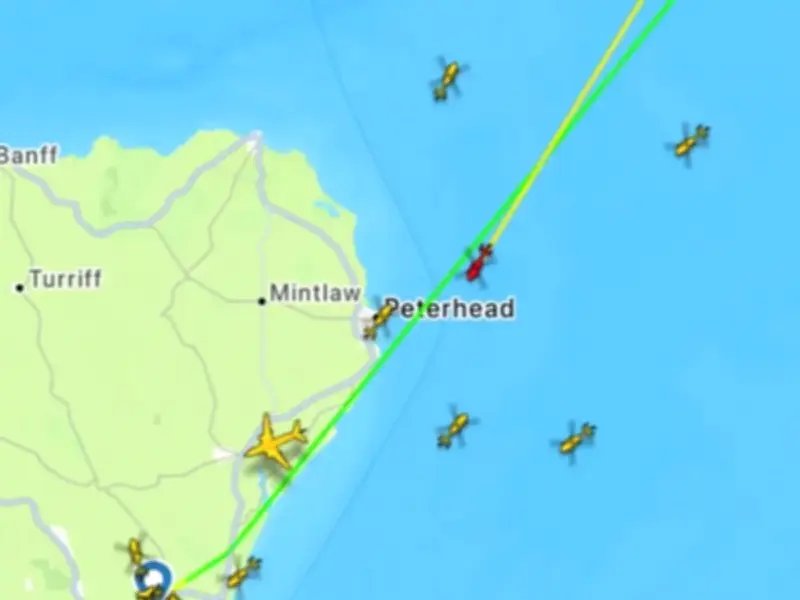
An Airbus H175 helicopter travelling to a North Sea platform was forced to make an urgent landing after declaring a mid-air emergency this morning. The aircraft, operated by Offshore Helicopter Services, took off from Aberdeen heliport shortly before 8am and headed north-east over the North Sea.
Emergency squawk code issued
Just minutes into the flight, the helicopter crew issued a 7700 squawk code, the air traffic control code of a general emergency. The aircraft, which typically holds up to 18 passengers, made a U-turn over the ocean before heading back to Aberdeen heliport for a safe landing.
No information has been released about the exact nature of the emergency so far. The helicopter reportedly returned to Aberdeen as a precautionary measure. The Mirror has contacted Offshore Helicopter Services for comment.
Similar incident involving United Airlines
The news comes after a United Airlines flight from London to New Jersey declared an emergency on Thursday afternoon and returned to Heathrow shortly after take-off. Flight UA941 departed London Heathrow shortly after 4pm on Thursday, bound for Newark Liberty International Airport, where it was due to arrive at 7.20pm local time.
Shortly after take-off, the crew transmitted squawk code 7700 - the international code for a general emergency - and requested an immediate return to Heathrow due to a "technical issue", according to aviation outlet Air Live. The Boeing 767-300 was initially expected to dump around 20 tonnes of fuel to reduce its landing weight before returning to Heathrow, the outlet reported. However, the crew reportedly abandoned the plan and opted to return directly to the airport.
Why aircraft burn fuel before emergency landings
Aircraft often have to burn fuel before making an unscheduled landing. This is because many aircraft were designed to land after a long flight during which they would have burned most of their fuel. Planes take off much heavier than they can land, and airliners must burn or dump fuel before an emergency landing to reduce the aircraft's total weight to the safe maximum landing weight. Landing while carrying too much weight runs the risk of extreme physical stress on the landing gear, wings and fuselage.