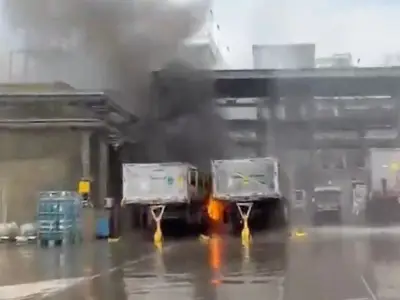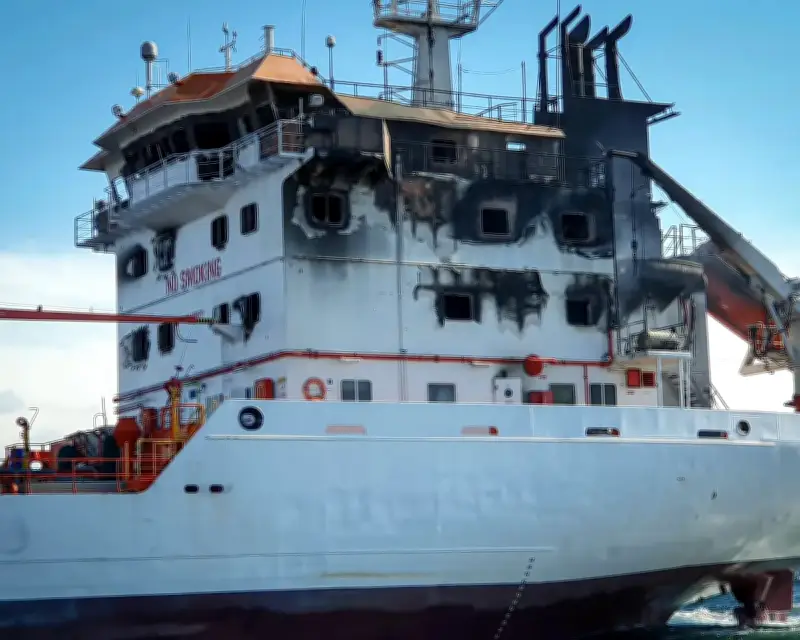
Six ships were attacked in 10 days by suspected Russian drones in the Black Sea, marking a dramatic escalation in the maritime conflict that is pressing on Nato's borders. The attacks, which included the sinking of the Turkish-owned Alfa Watan and the deaths of 11 crew members on the HS Dignity, have brought the war closer to Nato shores.
Attacks on merchant vessels intensify
The first indication of an attack on a cargo ship in Bulgaria's exclusive economic zone came in the early hours of 6 October, when the crew of the Bulgarian ferry Dioscuria heard a distant explosion 70 miles off the coastal town of Byala. The Alfa Watan, heading for the Romanian port of Sulina, had been struck by suspected Russian air and naval drones. When Dioscuria arrived, it found an overturned lifeboat and lifejackets in the water, but no sign of the crew of 10.
Six days later, drones struck another ship off the coast of Bulgaria, the HS Dignity, killing 11 crew members. By Thursday, the attacks had encroached on Romania's airspace and territorial water, with two chemical tankers, Wine Trader and Yara J, attacked and left burning. Seven more sailors were missing.
Escalation in the Black Sea
The attacks on six ships in 10 days – including the Able and Chelsea-3 – marked a dramatic escalation in a maritime conflict that is pressing on Nato's borders. While global attention has focused on the risks for sailors travelling through the strait of Hormuz, the Black Sea has emerged as the more dangerous passage, with more sailors lost in a week and a half than US service members killed in the entire Iran war.
The maritime insurer and risk analyst Ambrey has warned that there is no end in sight to the threats to Black Sea cargo shipping, including grain and oil, and that insurance prices for passage of the waters have rocketed. Tomas Alexa, a senior analyst at Ambrey, noted a sharp increase in the tempo of attacks beginning in July, with Russian forces estimated to be responsible for 80% of them.
Impact on shipping and trade
The recent loss of life has been exacerbated by "double tap" attacks involving aerial and surface drones, the latter often carrying up to half a tonne of explosive payloads. Smaller vessels that primarily use the Danube canal system have sunk rapidly. "While attacks against merchant vessels in the Black Sea are not new, we are seeing an escalation both in terms of the number of attacks and in the geographical scope," Alexa said.
The profile of vessels being attacked – that is, ships trading with Ukraine – had not changed, he added. "The Russian intent is clear, which is to degrade the export of Ukrainian grain and agricultural products." The result has been a precipitous fall in the number of vessels visiting Ukraine, with insurance rates soaring and seafarers and operators becoming increasingly reluctant to operate in the Black Sea basin.
Nato and international response
The vast majority of the more than 60 fatalities of seafarers in the Black Sea since Russia's full-scale invasion of Ukraine in February 2022 have occurred in the past year. In September, the Joint War Committee, representing the London insurance market, moved to extend the high-risk areas of the Black Sea to include the whole of the basin, excluding the territorial waters of Turkey, Romania, Bulgaria and Georgia.
Ursula von der Leyen, the European Commission president, said after the sinking of the Alfa Watan: "Commercial ships – and innocent crews – are being targeted, with lives already lost at sea." In a statement at the Organization for Security and Co-operation in Europe, Col Joby Rimmer, a senior British military adviser, said: "Attacks that fail to distinguish between military objectives and civilian vessels, or that are expected to cause excessive incidental harm to civilians and civilian vessels in relation to the anticipated military advantage, may violate international humanitarian law and the UN convention on the law of the sea."
On Thursday, Mark Rutte, Nato's secretary general, met Radev and Nicușor Dan, Romania's president, to discuss security in the Black Sea. Rutte said: "Nato will continue to work closely with our allies in the Black Sea, adjusting our deterrence and defence posture as needed." Another consequence of the escalating attacks is the renewed danger of a global food crisis, as Ukraine and Russia are major exporters of grain, as is Romania.