Researchers have warned that AI summaries could push fringe claims about ancient Kimberley rock art into the mainstream, according to a new paper in Australian Archaeology.
The study analysed the extent to which popularised fringe narratives are displacing science-based and Indigenous knowledge-informed archaeology online, and the further dangers posed by AI summaries absorbing those narratives.
Traditional owner Warren Barunga, a Worrorra man and Dambimangari Aboriginal Corporation director, said he is angry that people are misusing his people's sacred rock paintings.
False claims about ancient figures
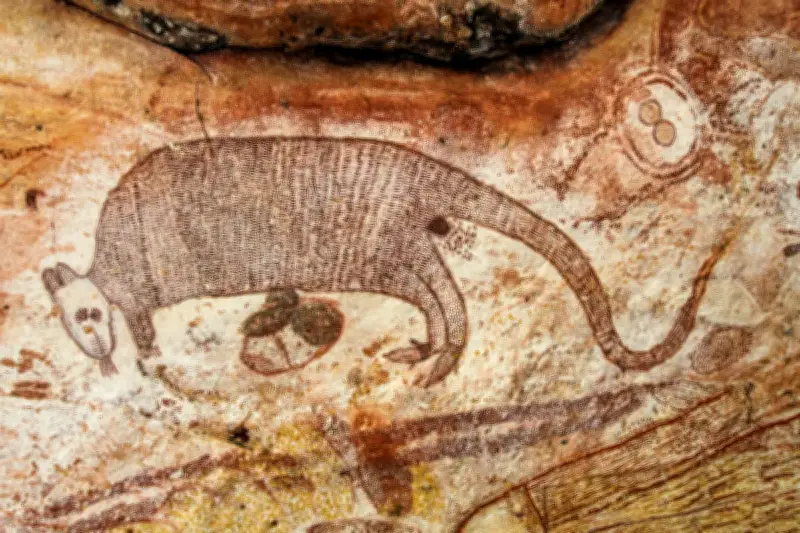
The ancient Gwion Gwion and Wandjina figures, found in the Kimberley in Western Australia, have long been used in false claims that they were created by aliens or vanished civilisations. Countless social media accounts, some with tens of thousands of followers, falsely claim the figures were painted by a different or "superior" race, and possibly aliens.
The Gwion Gwion paintings, which feature tall, thin people with intricate details such as complex headdresses, were introduced to Europeans by the pastoralist Joseph Bradshaw in the 1890s. They are about 12,000 years old, and are often flanked by Wandjina, which are up to 5,000 years old.
Barunga says the Wandjinas are the core of his people's existence, from the Lalai or Dreaming. "It is our kinship system … our cultural heritage … our way of life," he says. "We garden this country, we look after Wandjina. When I hear about these misinterpretations, it not only saddens but it angers me." Of the Gwion Gwion, he says they are "the first people, our ancestors. They were here; we are the children that belong to them."
History of pseudoarchaeology
The researchers, from various Australian universities, looked at examples in the Pacific as well as the Gwion Gwion paintings. These examples "have all been subject to fringe ideas about a 'superior race' that dissociates descendant Indigenous peoples from their pasts", they wrote.
The use of pseudoarchaeology to make false claims about the paintings and other ancient artefacts has a long history. The "'lunatic fringe' of prehistoric archaeology rose in Germany in the 1920s and 30s, essentially as an "ideologically motivated misinformation scheme", the researchers write. "Pseudoarchaeology often favours white nationalist imaginings of the world and therefore disempowers Indigenous histories."
Speculation about a "non-Aboriginal origin" of the Kimberley figures started in the 19th century and re-emerged in the 1990s, in the context of Mabo and native title. The myth was spurred by amateur archaeologist Grahame Walsh, who claimed they were painted by a pre-Aboriginal group.
AI and social media concerns
The researchers say the rise of social media and AI as primary sources of information for many raises concerns about "how the outputs will influence how the past is written for mainstream audiences".
The paper's lead author, Dr Michelle Richards, a University of Melbourne archaeologist, says academic research struggles to get into the public realm and has to compete with "fringe narratives, pseudoscience, even just made up stories … they have that promise of mystery, dramatic revelations".
The researchers found ChatGPT gave "largely non-harmful answers" when asked about the origin of the Gwion Gwion figures. The OpenAI chat bot said definitively they were painted by Aboriginal Australians and reflected a "long, continuous cultural tradition". But Richards says she is worried that could change, and it's important to "keep on top of it".
When Guardian Australia asked ChatGPT about them, it said they were "most likely" painted by the ancestors of Aboriginal people and that there had been "considerable debate about their origins", but that answer varied when different variations of the question were asked. Richards says: "I think we still have a chance to stay on top of it, but we do have to pay attention."