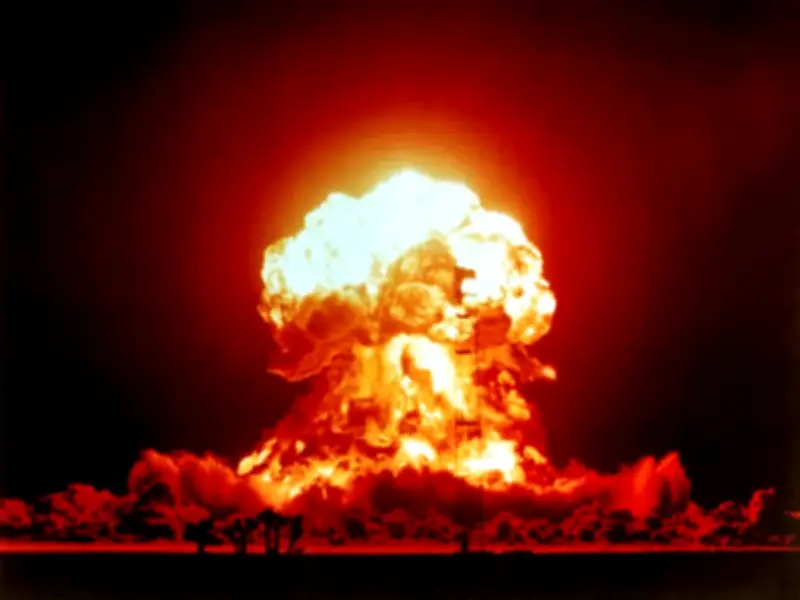
A single nuclear detonation in space could destroy roughly 98 per cent of the more than 13,000 satellites in low-Earth orbit within a week, according to a new study from researchers at the University of Wisconsin-Madison and Princeton University. Sat-navs, mobile networks, weather forecasts and bank card payments would all be disrupted, potentially for years.
Model of a one-megaton blast
The researchers modelled the fallout of a one-megaton explosion 310 miles (500km) above the South Atlantic. James McKeon, Vice President of Nuclear Philanthropy, described the scenario: "It would be bad. Very bad. Very, very bad. We must do everything we can to prevent this from ever happening."
Humanity has carried out such a test before. On July 9, 1962, the US military conducted the 'Starfish Prime' test, detonating a 1.4-megaton warhead 248 miles (400km) above Johnston Atoll in the Pacific. That blast blew out streetlights and jammed phone lines in Hawaii, while creating man-made radiation belts that wrecked satellites for over five years.
Denser orbital environment today
With space now far more crowded than in the 1960s, researchers say a repeat event would be far more severe. Writing in their study, published on the pre-print server arXiv, lead researcher Zachary Peterson and his team said: "A comparable event today would occur in a much more densely populated orbital environment."
The experts simulated everything from the initial burst of X-rays to satellite breakdowns, atmospheric drag and orbital smash-ups. They found that radioactive debris would trap electrons inside Earth's magnetic field, forming a deadly artificial radiation belt that repeatedly fries passing spacecraft until nearly the entire network is dead within a week.
Debris and replacement risks
The dead hardware would spark around 20 major space crashes over the next two years, leaving behind lethal radiation and shrapnel that would stop replacement satellites from being launched. The researchers added: "Replacement satellites could remain exposed to radiation and debris for years. A single detonation could devastate orbital infrastructure and support efforts to prevent the deployment and use of nuclear weapons in space."
Fears over orbital warfare have ramped up since 2024, when the US claimed Russia was developing a nuclear anti-satellite weapon – a move Moscow denied before vetoing a UN Security Council resolution reaffirming the ban on placing nukes in space. Such a device could be launched on a missile or secretly parked in orbit as a payload to be triggered at a later date.