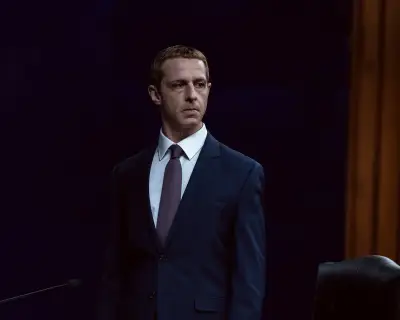
Nasa administrator Jared Isaacman hailed the creation of 'Earth's first starfleet' on Tuesday as he unveiled the Artemis III crew and outlined the next stages of the agency's mission to return humans to the Moon. The announcement took place at Houston's Johnson Space Center.
Artemis III Crew and Mission Details
The Artemis III mission, a two-week test flight to lower Earth orbit scheduled for next year, will feature an all-male crew of four. Italian astronaut Luca Parmitano of the European Space Agency (ESA) will serve as pilot, testing lunar landers from private companies Blue Origin and SpaceX. The other crew members are Americans Andre Douglas, Frank Rubio, and Randy Bresnik, who will pave the way for the first human lunar landing in 56 years on Artemis IV in 2028.
Isaacman addressed the crew: 'We wish you Godspeed on the journey ahead; you carry the fire of exploration from generations past, the confidence of this agency, the support of this nation, and the dreams of millions who will be cheering you on.'
Spacecraft and International Collaboration
The Nasa chief listed the numerous rockets, capsules, landers, and support spacecraft required for the test flight, the construction of a permanent Moon base, and future missions including Artemis IV. He noted, 'Think about how many spacecraft, all of which will eventually carry human beings, will be in orbit at the same time, from Dragon, Shenzhou, Soyuz, possibly Starliner, Starship, and Blue Origin landers,' referencing spacecraft from Russia and China.
Unlike the Artemis II astronauts, who looped around the Moon in Nasa's successful April mission to test its Space Launch System rocket and Orion crew capsule, the Artemis III crew will remain close to Earth. They will test docking procedures and life support systems for the two landers competing for the Artemis IV contract: Blue Origin's Blue Moon and SpaceX's Human Landing System.
Challenges and Optimism
John Couluris, Blue Origin's senior vice-president of lunar permanence, acknowledged the 28 May launchpad explosion in Florida that destroyed the company's New Glenn rocket, designed to carry its lander. However, he expressed confidence that New Glenn and the launchpad would be ready for next year's flight. 'As you know, we had a significant anomaly,' he said. 'The response from Nasa, our partners, and customers has been extraordinary. We're making excellent progress on the investigation and pad cleanup. We'll begin rebuilding once cleanup is complete.'
Jeremy Parsons, Nasa's acting deputy associate administrator for the Moon to Mars program office, shared that optimism: 'While we recognize there are questions about how Blue Origin's recent anomaly impacts our plans, setbacks are a learning opportunity. We are confident that New Glenn will be ready for Artemis III, together with Blue Origin, but Nasa is stepping in and bringing all of our expertise and capabilities to bear. We are working hand in hand with them to meet our commitments to return our nation to the Moon. Let me assure you, Nasa is taking an active role with all of our partners, contractors, and vendors to help solve the problems that are here today and ensure the right outcomes are achieved.'
Crew Backgrounds
The biggest cheers at the Houston event came when the Artemis III astronauts were revealed, along with their support crew member, Bob Hines of Nasa. Mission commander Randy Bresnik, a marine colonel and former International Space Station commander, is a veteran of the space shuttle program. Nicknamed 'Komrade' by fellow astronauts, he has over 7,000 hours of flying time and is one of only two astronauts to have a child born while they were in space.
Luca Parmitano nearly 'drowned' in space in 2013 when his helmet filled with liquid during a spacewalk from the ISS. A fighter pilot in the Italian air force, he has an asteroid named after him and was the first disc jockey in space. Frank Rubio, an army Black Hawk helicopter pilot and flight surgeon, holds the record for the longest single spaceflight by a Nasa astronaut at 371 days. Born in California, he considers Miami, Florida, his hometown. Andre Douglas, a systems engineer and Coast Guard reserve officer also from Miami, has no previous spaceflight experience but trained alongside Artemis II astronauts as part of their backup crew.
Isaacman concluded: 'Nasa astronauts, alongside our international partners and tens of thousands of the best and brightest across the agency and industry, are ushering in the golden age of discovery. They are carrying forward the hopes and dreams of the next generation, just as the Apollo astronauts did for so many of us.'