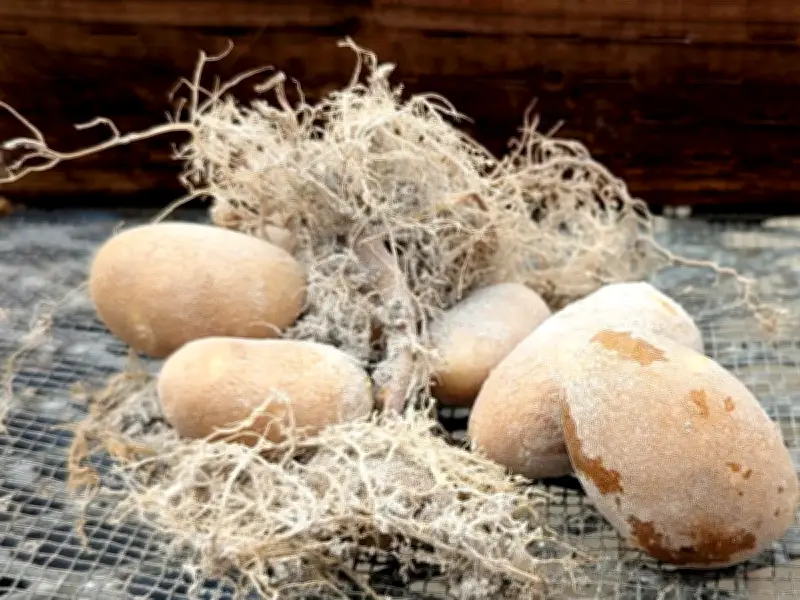
Potatoes grown in simulated lunar soil are safe to eat, according to a NASA-backed study, raising hopes that crops could one day be cultivated on the moon.
Research funded by NASA found that potatoes seeded in simulated lunar soil and supplemented with organic material grew as well as they did in Earth soil. The study also deemed them safe to eat.
Study findings
Study leader Professor Aymeric Goyer said: "We found that potatoes can complete their entire life cycle in simulated lunar soil when supplemented with organic matter."
Prof Goyer, from Oregon State University's College of Agricultural Sciences in the US, added: "That's an important step toward developing reliable food production systems that could support long-term human exploration of the moon."
The findings, published in the journal npj Microgravity, support NASA's goal of establishing a sustained human presence on the moon through its Artemis programme. Achieving that goal will require producing food on the moon rather than relying on costly resupply missions from Earth.
Growth in lunar regolith
One of the key questions is whether crops can be grown in lunar regolith, the layer of loose rock and dust that covers most of the moon's surface and contains very low levels of organic matter.
The research team said that, in the future, astronauts could take a small amount of organic matter - such as vermicompost, a nutrient-rich organic soil amendment produced by using earthworms to break down organic matter - to the moon. Then they could create more by converting food scraps and plant waste into more organic matter, reducing the need to transport growing materials from Earth.
The research involved a variety of potato called Modoc, characterised by its red skin and early maturity. The humble potato is one of the most valuable crops on the planet and a good source of starch, vitamins, minerals and fibre.
Vermicompost levels and nutritional quality
Prof Goyer and his colleagues at Oregon State, supported by NASA funding, tested whether potatoes could successfully grow in lunar regolith simulants amended with different levels of vermicompost. The researchers found that potato plants grown in regolith simulants containing 30% vermicompost matched the growth and development of plants cultivated in Earth soils.
By comparison, plants grown without the organic amendment were "severely impaired" with stunting and underdeveloped roots. Those grown with 5 to 15 percent vermicompost showed only partial recovery.
Because lunar regolith varies across the Moon, the researchers tested five regolith simulants representing both lunar mare and lunar highland regions. They also included soil from Hermiston, Oregon, a region known for the highest potato yields in the world.
Heavy metals and future research
The researchers explained that lunar regolith poses several challenges for plant growth, including containing elevated levels of heavy metals. The team believe the organic matter helps protect plants by binding heavy metals, reducing their ability to damage roots or interfere with growth.
Doctor David Handy, a postdoctoral researcher in Prof Goyer's lab, added: "We believe the compost helps balance some of the toxicity we see in lunar regolith by reducing plant exposure to harmful compounds."
The research team also found that potatoes grown in lunar regolith simulants maintained their nutritional quality. There was no statistically significant increase in glycoalkaloids, naturally occurring potato toxins that often are associated with green discolouration beneath the skin.
Researchers selected potatoes for the study because they produce more calories per unit of land than many crops, offer substantial nutritional value and are considered a practical staple food for long-duration space missions. The work is continuing with a forthcoming paper due to report results from experiments evaluating 10 potato varieties grown in lunar regolith simulants, helping to identify which types may be best suited for lunar agriculture.