The Sinister Rise of the Tradwife: From Online Fantasy to Cultural Obsession
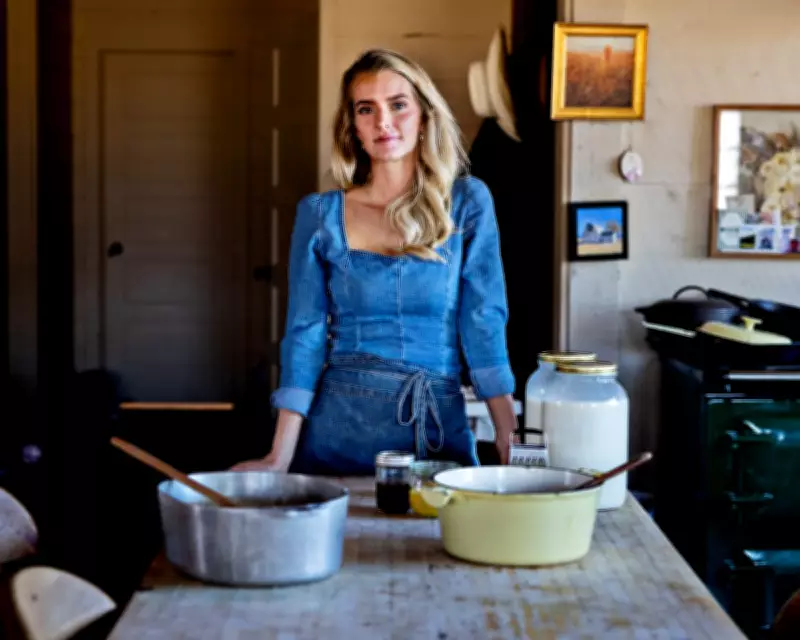
Social media star Hannah Neeleman frequently posts idyllic content from Ballerina Farm in Utah, where she lives with her husband and their nine children. Her life, depicted in gingham dresses and linen aprons, epitomises a growing online trend. Yet, as novelist Caro Claire Burke reveals, this aesthetic masks a far darker reality. With her debut novel Yesteryear being adapted into a film by Anne Hathaway, Burke delves into the sinister truth behind the so-called tradwife movement.
Frilly Word, Grim Origins
Tradwife is a deceptively whimsical term, one that belies its troubling beginnings. Media coverage has often been breathless and feminised, ironically overlooking that the concept originated in the murky depths of online incel forums. Here, anonymous users propagated a vision of a wife who would manage the household, bear children, provide sex on demand, and ask for nothing in return—a fantasy born from resentment towards real women.
Most people, however, are unaware of these grubby origins. Instead, they associate tradwives with influencers like Hannah Neeleman and Nara Smith, who have transformed pre-existing wealth into eight-figure empires by broadcasting home births and crafting homemade items while dressed in couture. Their curated performances of domestic bliss have captivated millions, but Burke argues this is merely a surface-level distraction.

From Warning to Blueprint
In recent years, Burke has engaged in countless conversations about tradwives, both as a media professional and as an author. A recurring question is: How long will this cultural trend last? To understand its persistence, one must look back at symbols of feminist resistance. A decade ago, Margaret Atwood's The Handmaid's Tale served as a powerful warning against regressive gender politics, with its imagery adopted by protesters during the Trump era.
Yet, the tradwife represents a sinister evolution. Where the handmaid was a cautionary tale embraced by the resistance, the tradwife was designed as a blueprint by the oppressor. She is programmed not just to submit, but to consent to her own submission. This distinction has left the mainstream liberal movement struggling to subvert her image, as evidenced by the diminished power of handmaid costumes at modern protests.
A Grim Reminder of Narrative Propulsion
The escalation in gendered violence in recent months underscores a chilling narrative logic, akin to Chekhov's gun: if a gun is onstage, it must eventually fire. Similarly, reimagining a political framework where women exist solely to please men inevitably leads to the suppression of those who dare suggest alternatives. From this perspective, the tradwife phenomenon is not a benign trend but a metaphorical gun to the head—a creation born from a desire to erase real women.
Burke notes that discussions about tradwives often steer towards superficial aspects, like milkmaid fashion or apron-heavy designer lines, avoiding the harsh realities. When she attempts to address tragedies like the shooting of Renee Good by ICE agents, she is encouraged to pivot, as if connecting such violence to the tradwife narrative is a stretch. But Burke insists it is not; the tradwife is an advertisement, a curated performance meant to remind women of a prescribed purpose: serve, smile, procreate, and purchase.
Broken Women and False Choices
The tradwife did not emerge because women were at a breaking point trying to balance work and personal lives; it arrived after they had already been broken. By the time influencers like Nara Smith and Hannah Neeleman gained prominence, systemic issues had long been festering. The wage gap had stalled since 2002, and the childcare crisis reached a critical point in 2025, with over 450,000 women dropping out of the US labour workforce—the steepest decline on record. Polls consistently cite caregiving responsibilities as the primary reason, highlighting a lack of choice rather than a voluntary embrace of tradwife ideals.

This reveals the true aim of the movement, if it can be called one: to normalise women's silent disappearance from public life. The goal was never to have more women become tradwives, but to reinforce an idealised way of yielding to societal pressures with a smile. Burke wrote Yesteryear to subvert this world, exploring what happens when a tradwife is thrust into the past and forced to confront her reality. The novel, published by 4th Estate, challenges readers to look beyond the aesthetic and recognise the propaganda at play.