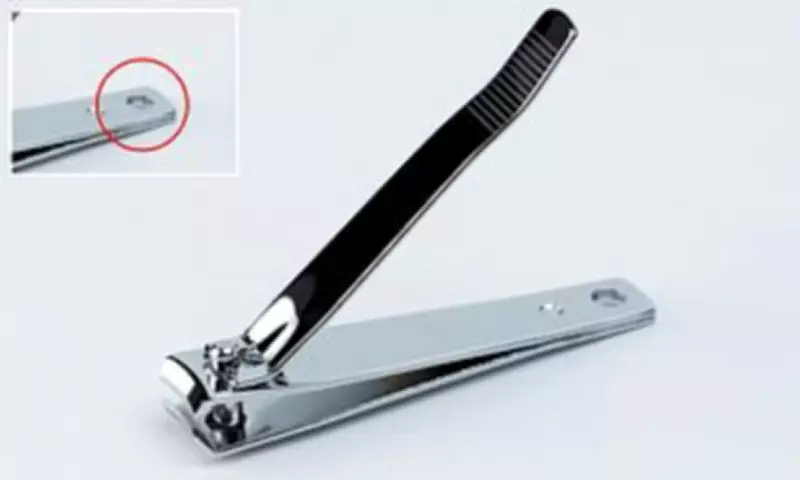
A viral social media post has ignited a frenzy of discussion after revealing the little-known function of a common household item. The online debate centers on the mysterious tiny hole found on most standard nail clippers, with many users expressing shock and amusement at its practical purpose.
The Viral Revelation That Sparked Widespread Debate
A popular parenting influencer shared a video on Facebook Reels confessing that her mother-in-law laughed at her for not knowing what the small hole in a nail clipper was designed for. "Now I'm wondering... am I the only one who never knew this?" she asked her followers, prompting hundreds of responses from social media users weighing in with theories and personal anecdotes.
Social Media Users Share Surprising Reactions
The comments section quickly filled with humorous guesses and genuine revelations. One user joked that the hole served as a "pimple popper," while another admitted they had never noticed the feature before. The truth emerged through multiple knowledgeable commenters: the tiny hole is specifically designed to attach a ring or connector, allowing the nail clipper to be conveniently hooked onto a keychain for easy portability.
Some social media participants expressed astonishment at this revelation, while others boasted about their long-standing awareness of the feature. "Keychain. Known this for 40 years. And I'm 45," wrote one commenter confidently. Another user clarified, "It's the rivet that holds it together and to put on a keychain," highlighting the dual structural and functional purpose of the hole.
Practical Applications Beyond Nail Trimming
While attaching a nail clipper to a keychain might seem unnecessary at first glance, several social media users explained the surprising convenience of this setup. One detailed comment noted, "They're super handy to have on hand for frayed bits on clothing, annoying tags, all sorts of things. If they have the flip-out file, you can use it as a screwdriver in a pinch. They're a great multifunction tool of desperation."
Another practical suggestion involved using the hole for organizational purposes: "I like to tie a long colorful ribbon or yarn to it through the hole to make them easier to find in bathroom cabinets." This creative approach demonstrates how the simple design feature can enhance everyday usability beyond its intended function.
The Historical Evolution of Nail Clippers
The current discussion has prompted interest in the historical development of nail clippers. According to historical records, metal nail clippers first appeared in China around the 10th century, featuring a design with two metal blades that were squeezed together. For centuries before this innovation, people typically used knives or scissors to trim their fingernails and toenails.
The modern nail clipper underwent significant evolution through multiple iterations. The first patent for a contemporary nail clipper design was registered in 1875, marking a pivotal moment in personal grooming tool development. Spring-loaded fingernail clippers began emerging in the 1920s, eventually evolving into the common mechanism familiar to users today.
Generational Knowledge Gap Exposed
Many commenters humorously noted the generational divide in awareness about the nail clipper's keychain hole. Several pointed out that older models of nail clippers often came with small chains already attached, making the function more obvious to previous generations. This observation sparked lighthearted teasing about the original poster's age and awareness of historical design features.
The viral social media discussion has revealed how even the most mundane household items can contain hidden design elements with practical applications. The nail clipper's tiny hole serves as both a structural component and a functional feature for attachment, demonstrating thoughtful engineering in everyday objects that often goes unnoticed until highlighted through digital sharing and collective curiosity.