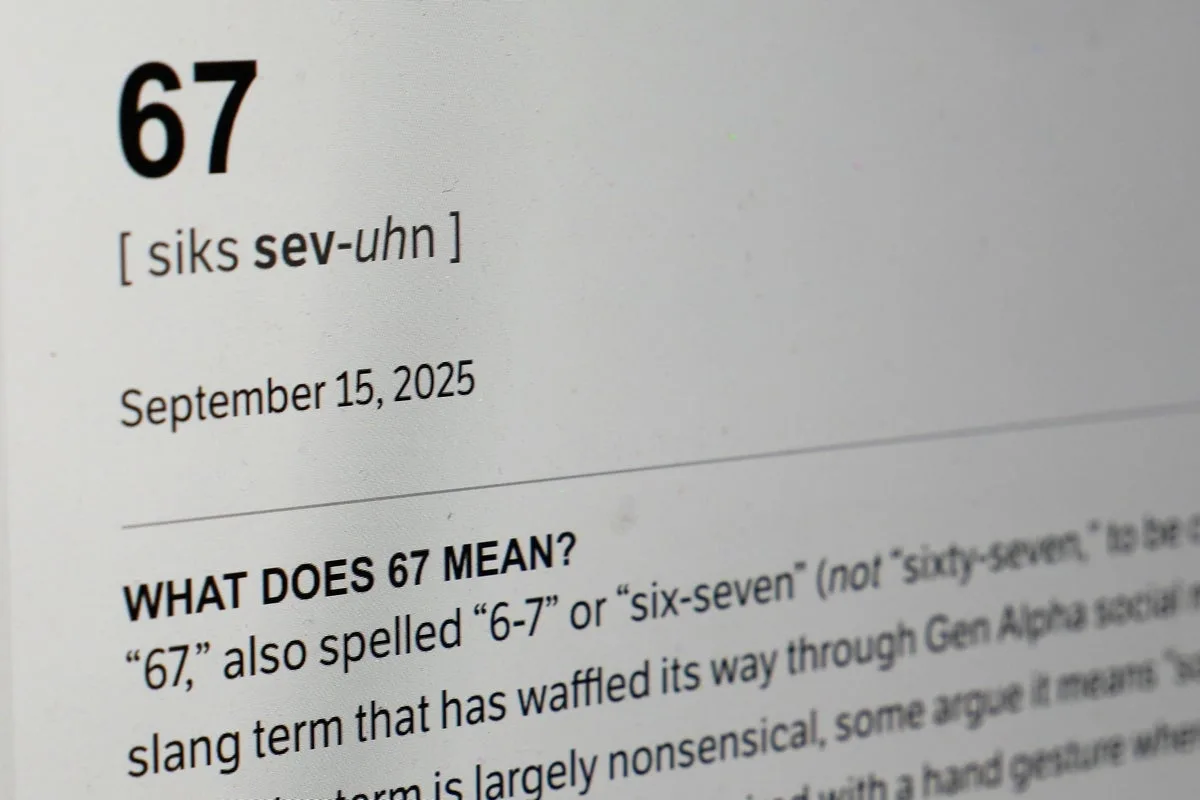
The '6-7' trend, which swept across schools, sports events, and even Halloween costumes last year, has left many adults baffled and frustrated. But according to linguists, the phrase's lack of conventional meaning is precisely the point.
While '6-7' carries no semantic meaning—it does not refer to a quantity or any specific concept—it serves a crucial social function. Sociolinguists explain that the expression conveys solidarity and belonging, marking users as part of an in-group versus those who 'just don't get it.' This is known as 'social meaning,' which adds information about the speaker's attitude and identity.
Adolescents, particularly those aged 11 to 14, have adopted the trend as a way to navigate intense social development. The teenage years are a period of linguistic innovation, where young people use slang to differentiate themselves from younger children and adults. The '6-7' phenomenon, with its exclusive social meaning, fits this developmental stage perfectly.
Unlike typical words that combine semantic and social meaning, '6-7' relies solely on social meaning—a rarity in language. This makes it a powerful tool for adolescents to signal their place in the world, even if it appears meaningless to outsiders.
So, while adults may dismiss '6-7' as 'brain rot,' linguists argue it is a natural and developmentally appropriate form of expression. As the trend continues to spread, it highlights how language evolves to meet the social needs of its speakers.