Two kitchen cupboard staples – bicarbonate of soda and white vinegar – can help eliminate unwanted odours and bacteria in washing machines, according to home safety expert Neil Mckenzie of Halton Stairlifts.
Over time, residual washing powders, liquids and detergents can accumulate inside the appliance, creating an unpleasant stench. Because the machine constantly handles moisture, a damp smell can also linger in the drum or drawer.
Monthly cleaning routine
Mckenzie recommends running the machine on its hottest cycle, at least 60 degrees, with the drum empty. Add a washing machine cleaning tablet or two tablespoons of bicarbonate of soda directly into the drum, and a cup of white vinegar into the detergent drawer. Let the full cycle run.

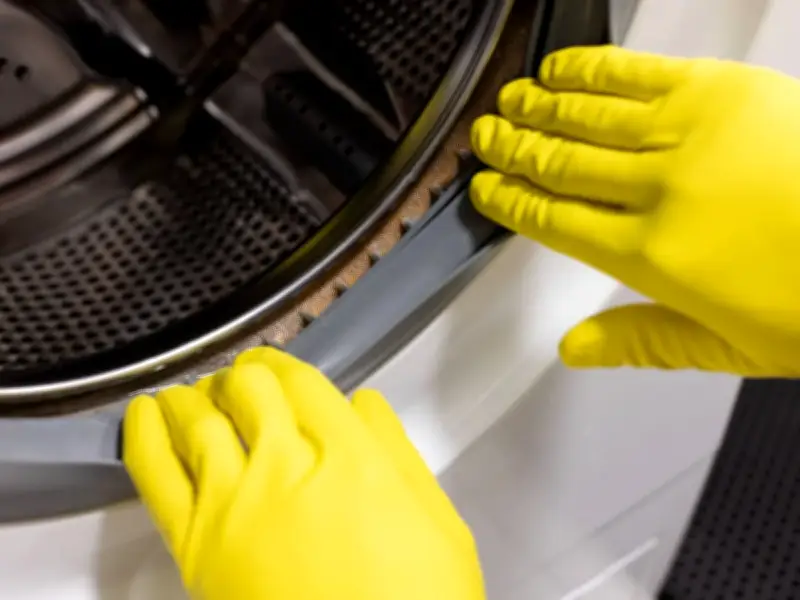
Once it finishes, wipe down the rubber door seal with a damp cloth, paying attention to the folds where moisture and lint collect. Leave the door open for at least an hour afterwards.
Detergent drawer and filter care
The detergent drawer should be removed and rinsed under a tap monthly, as built-up conditioner and powder can block the channels that feed into the drum.
If the machine is prone to holding water, it is worth manually draining it via the filter at the bottom. Unplug the machine first, place a towel or tray underneath, and release the water slowly. This removes stagnant water that can lead to odours and bacteria over time.
Common causes of smells
Dampness is a primary culprit. Shutting the door immediately after a wash allows water to linger in the drum and rubber seal, fostering a humid breeding ground for mould and mildew. Keeping the door and drawer slightly open between washes helps moisture escape.
Detergent residue is another factor. Many households use more detergent than required, and the surplus sticks to the drum, drawer and internal pipework, building up gradually and emitting a damp odour.
Washing at lower temperatures – popular for reducing energy costs – does not reach sufficient heat to eliminate bacteria and remnants left from normal cycles. Over time, this forms a layer of organic residue that fabric softener cannot disguise. While 30 or 40 degree cycles are fine for clothing, the machine itself requires higher temperatures to remain hygienic.