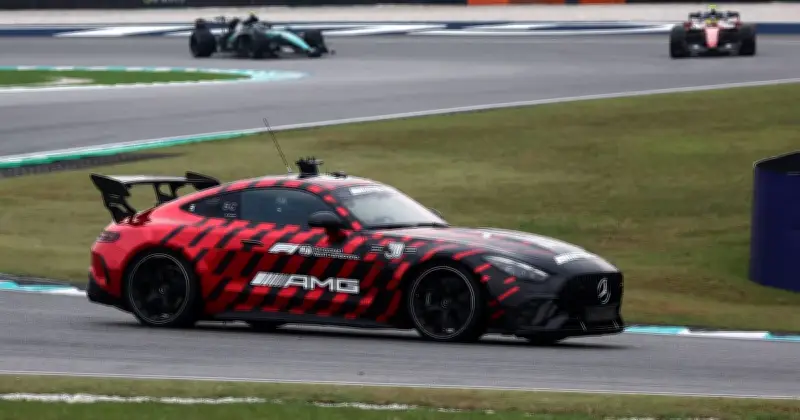
Formula One is set to hold talks with teams and drivers after a software glitch caused major problems during the formation lap of Sunday's Bahrain Grand Prix. The race, which was staged in Malaysia due to the ongoing conflict in the Middle East, was heavily criticised after several cars were left struggling to move because of an undetected bug affecting their wet-weather engine maps.
Drivers affected by glitch
Lewis Hamilton was forced to completely restart his Ferrari while still on track, while Max Verstappen compared the cars' slow speeds to 'Lego' racing, with some unable to exceed 20mph. The race was subsequently suspended, with FIA software engineers taking around 40 minutes to develop a workaround and distribute updated software to all the teams.
George Russell said the incident "didn’t feel very F1" and criticised the 2026 power units for being "too complicated", while Charles Leclerc admitted the situation was "scary".
Warning and promised debrief
Red Bull team principal Laurent Mekies admitted the incident should serve as a warning to F1, with the sport needing to ensure its increasingly complex systems do not become unmanageable. "It’s a good reminder for all of us that we should probably make sure that complexity doesn’t get out of hand and that we keep things as under control as possible," Mekies said on Monday.
According to The Telegraph, FIA director of single-seater racing Nikolas Tombazis has promised a 'full debrief' into the incident, with the matter being treated seriously. However, finding a long-term solution is unlikely to be straightforward. There are said to be 'probably some small things' that could be addressed in the short term, potentially as early as this weekend's Singapore Grand Prix. However, no major changes are expected, with power unit regulations for 2027 and 2028 already agreed.
Power unit balance changes
The changes will alter the current near 50:50 balance between internal-combustion and electrical power. The split was agreed around six years ago, when road-car manufacturers were pushing for greater electrification. Under the original plan, the balance would have shifted in two stages by 2028, reaching a ratio of 60% internal-combustion power to 40% electrical power. There will also be an increase in fuel flow next year, allowing the internal-combustion engine to generate more power.