A young single woman desperate to become a mother has revealed how she found a sperm donor through Facebook. Alannah Dunn, a residential support worker from South Wales who was 22 at the time, carried out an at-home insemination using a kit containing syringes and sterile containers. She had started researching single motherhood on Facebook and TikTok while living in New Zealand in 2021.
Alannah said: “I have such a big hole in my heart that needs to be filled, and it just keeps getting bigger. It would be a dream come true to become a mum, it’s my purpose in life, I’m desperate.” She added: “I could have gone down the formal, legal route, but I was part of a Facebook group for people doing it independently, including donors, and wanted to do it that way, without any delays.”
Through the group, Alannah began messaging a local man who wanted to donate his sperm after previously doing so for a friend and seeing the challenges people face when trying to conceive. She added: “We met up, had proper conversations, and he didn’t seem like a dodgy person. I felt very safe.”
The pair signed a contract agreeing that he would have no parental rights if a pregnancy resulted, and that no payment was involved. Alannah said her family were “very supportive” of her decision and understood how much she wanted to have a child.
She added: “I get a lot of anxiety meeting new people, and I tried dating apps but just didn’t meet the right person. I realised: ‘Why am I waiting for a relationship to have children, when all I really want is a baby now?’ I’m not writing off a relationship, but having a baby is what I’m prioritising.”
Alannah fell pregnant after the second DIY insemination in August 2022. However, she miscarried five-and-a-half weeks later, leaving her “heartbroken”. She continued with at-home insemination once a month for 18 months but did not become pregnant again.
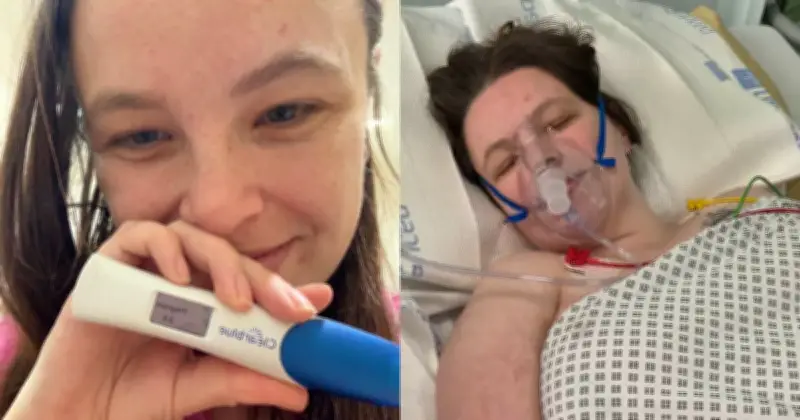
After discovering that the waiting list for IVF in New Zealand was around three years, Alannah moved back to the UK and began the process at a private clinic in June 2025. She donated some of her eggs and was left with three viable embryos and became pregnant in November of that year.
Alannah said: “It was fantastic, but fear immediately took over. I was so scared something would go wrong after the miscarriage.” The mum-to-be experienced light bleeding early in the pregnancy, but scans at six and 12 weeks appeared normal. However, doctors struggled to visualise the baby at her 17 and 20-week scans and Alannah was referred to the foetal medicine unit.
There, she said it was discovered there was little to no amniotic fluid and her daughter, Effie, was not developing as expected. Doctors said the baby was unlikely to survive if born and gave her the option of terminating the pregnancy. Alannah said: “My world just crashed. They said they couldn’t see her bladder, kidneys or urinary tract, and she wasn’t producing amniotic fluid, meaning her lungs wouldn’t develop.
“Her chest had a bell shape because there were no lungs, and they said she could be compressed due to being underdeveloped. Her skull was also being compressed and had not fused together, it was in fragments, because of the low amniotic fluid.” After a few weeks of consideration, she decided to proceed with the termination, saying she could not watch her “baby girl die”.
Alannah underwent a procedure at 24 weeks where doctors stopped the baby’s heartbeat. She was given medication to halt pregnancy hormones. Two days later she was induced, and her daughter’s body was delivered on April 24 2026. Alannah said: “I held her because I don’t think I could live with myself if I didn’t.”
Alannah suffered a severe postpartum haemorrhage and had to be rushed to hospital to have a retained placenta removed. She added that doctors said she “nearly died”. Alannah said: “It was just so brutal, I was in a cycle of grief, and felt just awful.”
Alannah, from Merthyr Tydfil, now has one embryo left and is fundraising £5,000 for another transfer. She said: “It would mean the world to me. It’s all I’ve ever wanted.”
A spokesperson from the Donor Conception Network said using unregulated sperm donation “carries significant legal, practical and relational risks that are not present, or are reduced, when undergoing treatment in a licensed clinic”. They added: “We recommend that anyone considering this route should proceed cautiously, think carefully about the long-term implications for the future child, seek specialist counselling and legal advice, and recognise that online donor arrangements operate without many of the safeguards provided by regulated fertility treatment.”