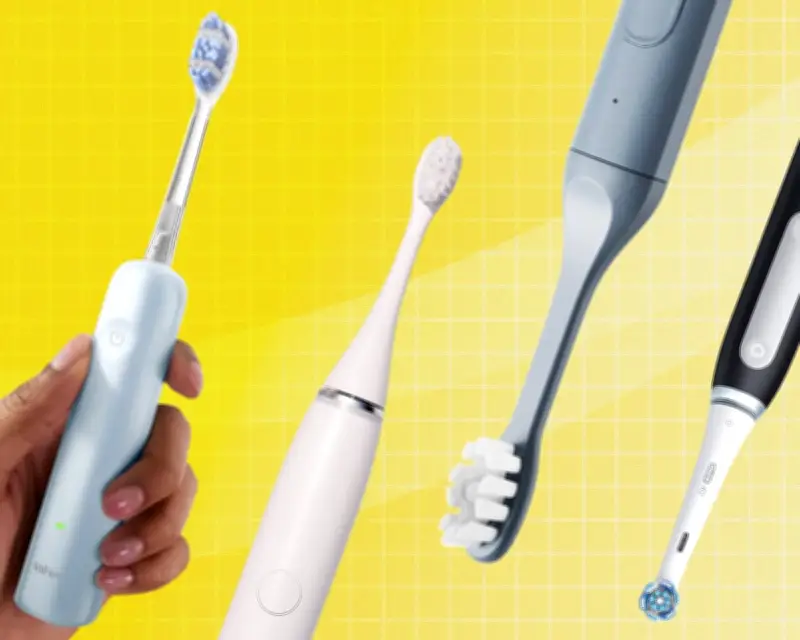
After testing 29 models over 18 months, the Laifen Wave Pro emerges as the best electric toothbrush overall for 2026, combining powerful sonic and oscillating actions at a competitive price. The Odonta PowerPlus offers exceptional value at £29.99, while the Suri 2.0 leads for sustainability.
Best Overall: Laifen Wave Pro
The Laifen Wave Pro delivers a unique hybrid brushing action, vibrating at up to 66,000 BPM while its neck oscillates up to 60 degrees. This combination left test teeth feeling cleaner than any other brush tested. The accompanying app allows customisation of three modes (daily, deep, custom) with controls for vibration intensity, oscillation range, and speed. A pressure sensor provides real-time feedback. Downsides include a slippery handle and increased drooling during use. Battery life is rated at 70 days. Replacement heads cost £26.99 for six. Price: from £84.99.
Best Budget: Odonta PowerPlus
At £29.99, the Odonta PowerPlus undercuts many rivals while including a pressure sensor and five cleaning modes at 42,000 BPM. Its bristles are made from bio-based Nylon 1010 derived from castor oil, offering a more sustainable option. Battery life is about three weeks, and it charges wirelessly. The only drawback is difficulty reading the mode indicator during use. Replacement heads cost £14.99 for four.
Most Intuitive All-Rounder: Spotlight Sonic Pro
The Spotlight Sonic Pro, founded by sibling dentists, offers four modes from 30,000 to 50,000 BPM, a pressure sensor, progress lights, and a tongue cleaner. Battery life reaches up to 70 days, and it comes with a travel case. The non-Pro version (£54.99) lacks the pressure sensor and polish mode. Price: from £64.99. Replacement heads: £19.99 for three.
Best for Sustainability: Suri 2.0
The Suri 2.0 addresses previous model issues with a new wireless charger and pressure sensor. Its eco-friendly credentials include 100% carbon offsetting and compostable head recycling. Heads are made from cornstarch and castor oil bristles. However, its 33,000 BPM vibration feels less powerful than competitors. Price: from £78.74. Replacement heads: £14.99 for three.
Best Premium: Philips Sonicare Smart 9400
With up to 62,000 motions per minute, the Philips Sonicare Smart 9400 is the most powerful sonic brush tested. It features a novel glass charger, four modes (clean with three intensities, deep clean, gum health, white+), and an app that tracks brushing and can auto-order heads. Battery life is limited to 14 days due to Bluetooth. Price: from £169.99. Replacement heads: from £17.69 for two.
Best Oscillating: Oral-B iO3
The Oral-B iO3 uses the same motor as higher-end iO models but omits extras like a screen. It offers three modes (daily clean, sensitive, whiten) and an excellent pressure sensor with green/red/white lighting. Battery life is up to 18 days. Replacement heads cost £15 for two. Price: from £59.99.
Testing Methodology
The brushes were tested over 18 months, with notes on mouthfeel, grip, cleanliness, features, and annoyances. Plaque-disclosing tablets were used but proved unhelpful as even cheap brushes removed dye well. Brushes were ranked on performance, features, feel, stamina, and value for money. RRPs are often aspirational; actual prices vary.
Expert Advice
Caitlin Miller, head of hygiene and therapy at Bupa Dental Care UK, explains that electric toothbrushes are generally better than manual ones because they require less dexterity and provide more power. She recommends holding the brush at a 45-degree angle, half on gum and half on tooth, and moving slowly. Pressure sensors are advised to prevent brushing too hard. Brush heads should be replaced every three months. Interdental brushes are preferred for cleaning between teeth, followed by floss and water flossers.
Oscillating brushes move in a circular motion; sonic brushes vibrate. A meta-analysis found a small advantage for oscillating brushes, but the difference is unlikely to be clinically noticeable. Old toothbrushes should be recycled via e-waste bins or retailer take-back schemes.