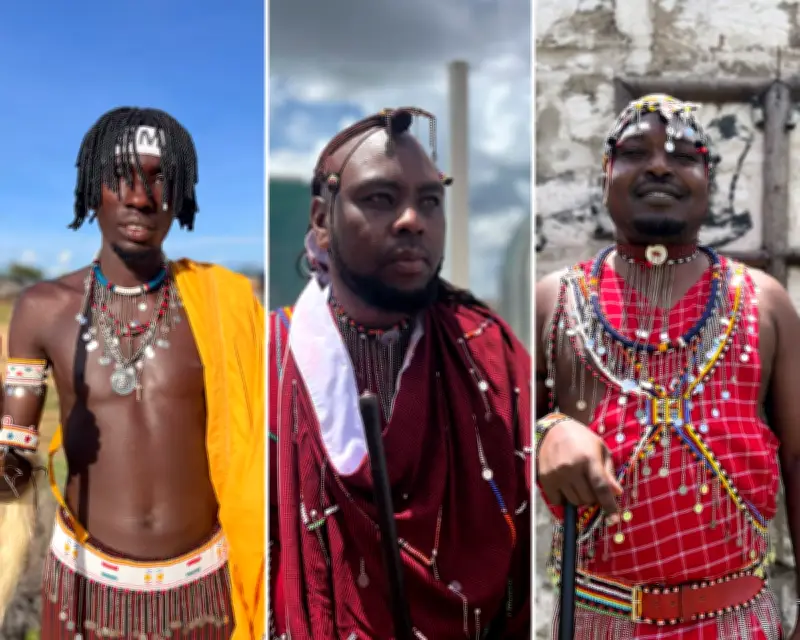
As the sun sets over Kenya's Mau Forest, a goat leg sizzles on the fire, and Julius Kesier, known as Kamurar Maasai, watches himself on a smartphone screen. 'Nowadays, Maasai shoot with cameras, not spears,' his manager remarks. Kamurar, a musician and community mentor, carries a spear purely for show at his manyatta settlement.
Digital Renaissance for Maa-Speaking Peoples
In recent years, Maa-speaking peoples such as the Maasai and Samburu have leveraged improved internet access and cheaper smartphones to bring their music to social media. This new generation of musicians is updating traditional patterns and reclaiming cultural pride. 'Music always played a central role in retaining Maasai history,' says Meitamei Ole Dapash, a Maasai leader and activist. 'Not only as expression, but as a living archive of identity, memory and social relations.'
Technology has been used for activism and pastoralism, but now it crafts, shares, and archives contemporary traditional music, tying together isolated communities from the Tanzanian border to Lake Turkana.
Urban Students Fuel Revival
Kahindi Imana, a lawyer and director of Nomad Creatives in Maralal, notes that university students have been instrumental since the mid-2010s, spreading songs via WhatsApp and playing them at parties. 'The new generation is more in touch with their tradition, sometimes even choosing to move back to their home regions to help develop them,' he says. Imana founded Nomad Creatives in 2020 to help Samburu artists transition to the mainstream, collaborating with leading Kenyan artists and blending genres like Konpa, Amapiano, or Bongo Flava.
Most artists have day jobs, but some retain pastoralist lifestyles. Wisekid Samburudollar lives in bandit-prone Samburu county and has lost seven friends to gunfire in two weeks. 'Banditry forces him to regularly slip back into his guardian role of the moran [warrior] to retrieve stolen cattle,' Imana explains.
Songs of Cows, Peace, and Unity
Many songs promote unity and denounce intertribal conflict. Kamurar Maasai's 'Osingolio Loongishu' convinces estranged community members of the benefits of semi-nomadic life. 'Since I started singing songs on modern beats concerning cows, a lot of Maasai are coming back to their culture,' he says. Jeyster Aindera, known as Jeyster Music, adds: 'Maasai sing mostly about cows … and peace. They praise their cows like others praise God.'
Commercially successful Maasai music is often rooted in Christian gospel, despite traditional spirituality centered on Enkai. Singer Nkaiwuatei Superpower says: 'It is a fight to keep secular music alive, since the church funds and mentors people to sing gospel only.' Dapash adds: 'Secular music reaches out to young people and educates them about their own culture.'
Modernizing Sound to Preserve Tradition
Ng'otiek Nelson convinced elders that digital production would enhance authenticity. 'Despite an initial backlash, I insisted on using digital beats so that we wouldn't lose our music. If we don't update our roots, our songs will be forgotten,' he says. Producer Bridgeton Munene, known as Shen Vibes, runs a mobile studio in Maralal. 'Samburu music hasn't really been tapped into yet,' he notes.
Emmanuel Oduor, known as LakeMan in Isiolo, has produced 8,000 songs in 10 years. Most producers are self-taught via YouTube. 'I have no qualms using AI software like Suno once in a while,' he laughs. Artists combine music with video, using drone footage to showcase landscapes, dances, and cattle, sometimes with subtitles in Maa or English.
Economic Challenges and Smartphone Pitfalls
Despite growing clicks, videos generate little money. YouTube monetization is limited by viewer location, meaning musicians in developing countries earn lower ad rates. Social media platforms like Facebook and TikTok foster direct fan connections but are not lucrative. Samburu singer Jalven Brave says: 'You don't need to bribe a radio presenter any more, you can share and promote your music yourself on TikTok.' Live performances remain the main income source, at weddings, circumcisions, or campaign rallies.
Smartphone use has also brought distractions. 'Some people spend the whole day staring at their phones and get so distracted that they'll find cows eating their maize,' laughs Nelson. 'I received 2,000 reaction videos to my last TikTok dance challenge.'
Despite these issues, Maa speakers use these tools to take storytelling into their own hands. Dapash concludes: 'Because of low levels of literacy in our community, we can only advance Maasai culture through music. It's not just entertainment for us, it brings our people together.'