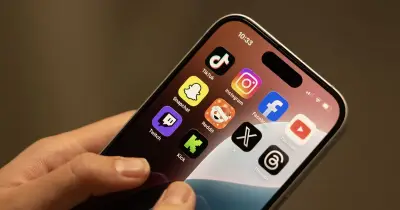
Banning social media for young people could drive them into darker, less regulated places online, experts have warned. Sir Keir Starmer announced on Monday that apps and websites like Facebook and Instagram will be banned for under-16s by next year. The measures, which will be brought into force by 2027, will also include restrictions on game platforms, livestreaming apps and AI chatbots. This will all be done in the name of child safety, Sir Keir said, comparing banning social media to how minors cannot legally drink.
Experts Question Blanket Ban
Yet, cybersecurity and child wellbeing experts told Metro that a blanket ban isn't the answer to stopping children from stumbling on potential harms. Pieter Arntz, a security intelligence researcher at the software company Malwarebytes, worries youngsters will browse the dark web instead.
What is the dark web?
Sometimes called the dark net, the dark web is an encrypted and relatively hidden corner of the internet. There's nothing inherently bad about it – it's designed so people can browse with peace of mind, especially in countries where the internet is restricted. But the deepest recesses of it include drug marketplaces, criminal chat rooms, illegal pornography and hacker groups selling stolen data.
Social media isn't much of a thing on the dark web, says Arntz, other than the popular anonymous question-and-answer forum, Hidden Answers. 'But as soon as people realise there is money to be made by setting up dark web social media, because teens no longer have access to their regular social media, others may come about,' he adds. 'Facebook does have a .onion address but, for now, that's just an alternative way to reach the platform.'
Accessing the dark web isn't as simple as opening up Google Chrome, however. You need a special browser, like Tor Browser, that almost acts like a web version of a burner phone. It cloaks your location, doesn't save your history, and removes most tracking using encryption technology. It's also really, really slow to load and breaks a lot of websites, making them difficult to read.
'The dark web concern is real but overstated for the majority,' says Dr Yusuf Oc, a marketing lecturer at Bayes Business School, London, and a parent. 'Getting onto the dark web requires a level of technical intent and effort that most teenagers simply won't bother with. A small minority might go there, but it is not where the bulk of under-16s will end up.'
Instead, listless teens may try chatting on the privacy-first communication app Telegram or on web forums far from the police's radar, experts say.
Children won't rush to 'play sports' after ban
Children and teens have fewer ways to spend their days: hundreds of youth centres, high street shops and public parks have closed over the years. These closures are digital, too. Popular ways outside of social media for children to hang out, such as the web-game community Club Penguin or Microsoft's MSN Messenger, have long been shuttered.
'Some children will find ways around the ban and some will find alternatives: they won't en masse start playing sport outside,' says Tim Levy, the managing director of Qoria, parent company of digital safeguarding firm Smoothwall. 'Young people do not simply disengage from social media or the wider digital ecosystem when restrictions are imposed.'
Levy says the UK must learn lessons from Australia, which became the first country in the world to impose an under-16s social media ban. While millions of social media accounts belonging to teens have been removed, evidence shows so far that the law has largely failed. Seven in 10 parents whose children already had an account said the teens were still on age-restricted services, according to the government agency tasked with enforcing the law, the eSafety Commission. Teens have also been upfront about how they've been able to easily outsmart the ban – drawing wrinkles in their faces, using a parent's ID or making a new account with a fake date of birth.
This is what George Bevis, the co-founder of online child safety app Safetymode, means when he says a ban isn't a 'silver bullet'. As much as he backs a ban, young children still want to connect and technology isn't going away anytime soon.
'Social media restrictions should be viewed as a starting point, not the finish line,' Bevis says. 'Real online safety means protecting children wherever they spend time online, whether that's social media, messaging apps, gaming platforms or the next app that hasn't yet entered the public debate.'