The new leader of a Reform UK Merseyside Council was once a PhD student who enjoyed the benefits of the European Union's flagship programme that supports education and training for young people abroad.
George Woodward's Rise to Power
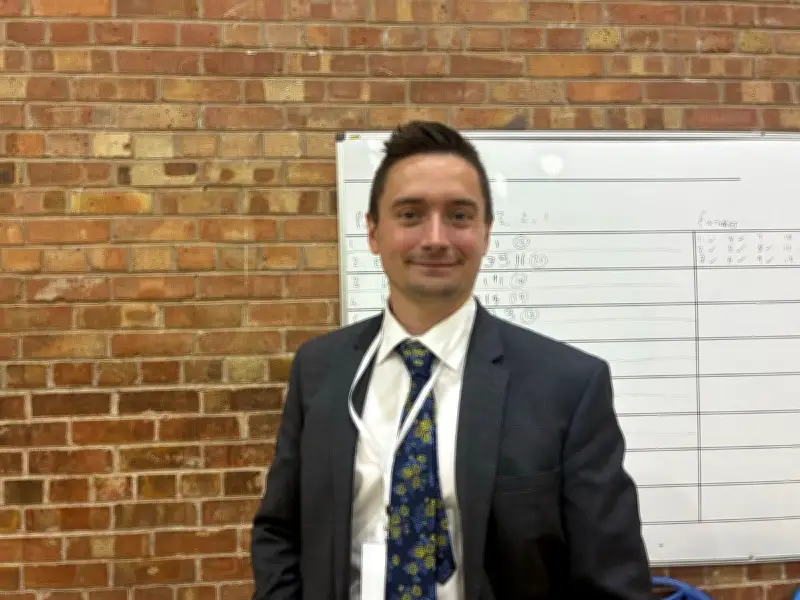
Cllr George Woodward was recently installed as the leader of St Helens Council after he and his Reform UK Party swept to power in the local elections, dominating the Labour Party who had long ruled over the borough.
Cllr Woodward, who is Scottish, has already made a number of headlines since his rise to power after a number of high-profile and deeply controversial decisions.
The first of these was to announce that his council would be withdrawing support and funding for planned Refugee Week events in the town this month. Organisers involved said they were 'heartbroken' at the decision.
Then Cllr Woodward followed this up with an announcement that the local authority he leads would also be withdrawing any support for LGBT Pride events, which are also taking place in the town this month. It is also understood the council has demanded the removal of any references to Pride events in St Helens libraries.
Cllr Woodward received strong criticism for his statement, which said: 'We don't consider celebrations of sexuality, especially those with left-wing political leanings such as Pride, to be appropriate for the council to dedicate valuable officer resources.' He added that he was 'deeply concerned that Pride has become affiliated with harmful transgender ideology'.
The statement was met with a major backlash, including from St Helens two Labour MPs.
Background and Erasmus Participation
More details of Cllr Woodward's life before he rose to prominence in Merseyside politics have now emerged. His full name is Ronnie George Woodward and according to media articles, he previously went by Ronnie, before adopting his middle name more recently.
Cllr Woodward was previously an engineering student at Strathclyde University.
It may surprise some, given the stance his party has towards the European Union, to know that Ronnie Woodward, as he was then, was a proud and enthusiastic participant in the EU's flagship Erasmus program.
The European Union scheme provides grants for students, apprentices and educators to study, work or volunteer abroad, with placements based in EU member state countries and associated nations.
In a 2016 BBC article entitled 'How might Scottish universities change outside the EU,' Cllr Woodward, who spent time in Sweden as part of the programme, is quoted as saying: 'I've experienced so many different cultures, I've got so many international friends. Even just two weeks ago I had French mates over who I met through Erasmus. It's different as well seeing a different style of teaching.'
Since Brexit, of which Reform UK leader Nigel Farage was a key champion, the UK has not been part of the Erasmus+ student exchange programme as it is now known. Instead the UK government launched the Turing Scheme which provides funding for students to study and work globally.
In April of this year, the UK and EU finalised an agreement to bring the UK back into Erasmus+ from 2027.
Cllr Woodward's Current Views
When asked by the ECHO if the Reform UK council leader had changed his views towards the European Union programme, given his party's anti-EU stance, Cllr Woodward said: 'My views on Erasmus and Turing scheme still stand. They're great schemes for going abroad and immersing into a very different culture.'
'I made great friends there and would definitely recommend it to any student. Luckily, foreign exchange experiences aren't limited to, or contingent, on being members of the EU.'
'This is evidenced by students from hundreds of countries around the world partaking in various forms of exchange - outwith (sic) the EU.'
'The Turing scheme has been lauded as, allegedly, a superior replacement as it allows for extra-EU travel - but it's not something I've personally experienced as it came about after I'd finished my undergrad.'
Cllr Woodward confirmed to us that his full name is Ronnie George Woodward and said it is 'rather common' for politicians to use their middle name as a first name.