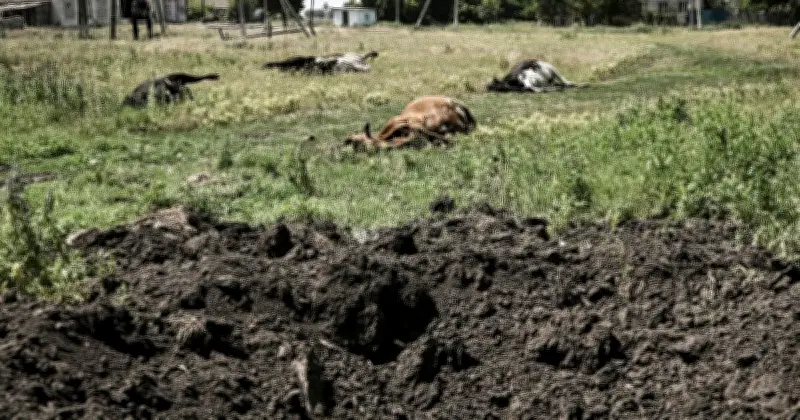
Allegations of Biological Warfare on the Front Line
Ukrainian intelligence has accused Russian forces of deliberately dumping cattle carcasses infected with anthrax near water sources in an attempt to spread the deadly bacteria to civilians and Ukrainian troops. The tactic, described as a form of germ warfare, is believed to have been employed by Vladimir Putin's forces amid heavy casualties in the ongoing war that began in 2022.
Anthrax is a bacterium that can survive for thousands of years as spores in soil or on the remains of infected animals. When humans come into contact with the bacteria, it can cause flu-like symptoms and severe skin lesions with black centers. The most dangerous form is inhalation of spores, which is fatal in approximately 90% of cases.
Psychological and Toxic Impact
Jerry Smith, a former UN weapons inspector, told The Sun that the Russian tactic has both toxic and psychological effects. “It’s not so much the toxic nature of the weapons, it’s more that it becomes a psychological weapon… it’s the fear of breathing something in and choking,” he said. “The malicious use of anthrax is essentially salting the earth.”
A military source stated that the Russians are “crazy enough” to use anthrax to devastate areas of Ukraine if forced to retreat. Anthrax can survive in water for up to two years, potentially allowing the infection to spread rapidly.
Symptoms and Risks
According to the UK Department for Environment, Food & Rural Affairs, anthrax symptoms in humans begin with a flu-like illness followed by respiratory difficulties. Direct contact can cause raised boil-like lesions on the skin that develop a black center. While skin infections typically respond to early antibiotic treatment, inhaling spores can cause lung damage that is often fatal.
Conventional Attacks Continue
In a more conventional form of warfare, Russia launched waves of missiles and drones at Ukraine on Monday, killing at least 22 people. All ballistic missiles struck their targets, as Kyiv reported a shortage of US-made Patriot interceptor missiles. Fifteen people were killed in Kyiv, the main target, and 56 were injured, according to administrative head Tymur Tkachenko. Another seven people were killed in the wider Kyiv region, with 29 injured, according to Ukraine's emergency service. Emergency workers searched for survivors in the rubble of residential high-rises that suffered direct hits.
Moscow has stepped up attacks on Kyiv in retaliation for Ukraine’s recent long-range strikes, which have caused severe fuel shortages and pressure on President Putin. On Thursday, a Russian strike killed 31 people in Kyiv, the deadliest attack in the capital this year.