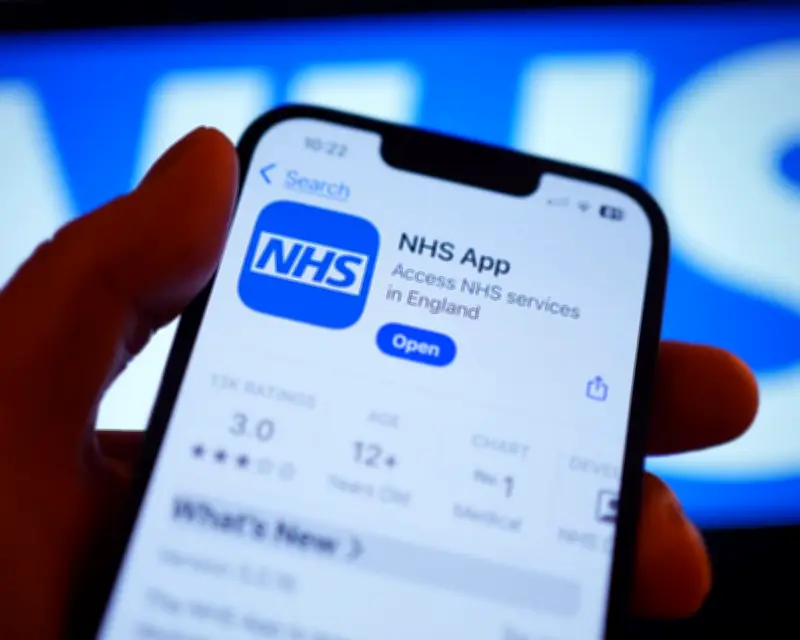
The National Health Service (NHS) will begin using artificial intelligence on its app to direct patients to appropriate services, the government announced. The tool will triage patients and determine whether they should be allocated a general practitioner (GP) appointment. Depending on the severity of their condition, some patients may be advised to attend a pharmacy or local accident and emergency (A&E) department instead.
Rollout and Targets
The update is expected to reach approximately 200,000 patients over the next year and become available to all users by April 2028. This initiative is part of a £10 billion government funding package designed to overhaul technology and data systems within the health service to improve efficiency. Ending the so-called 8am scramble for same-day GP appointments was a central Labour manifesto promise before its 2024 election victory.
Initial Trial Results
A trial at Wealden Ridge Medical Partnership, which operates surgeries across Sussex, led to a 29% reduction in the number of patients queuing for a GP appointment on its phone lines, according to government officials. The NHS also plans to use AI to record patient consultations, aiming to reduce note-taking time. A trial led by Great Ormond Street Hospital across nine sites in London found that staff spent 25% more time interacting with patients when using the tool.
Official Statements
Health Secretary James Murray said he was "certain" that new technological advances would "get patients to the right care faster, free our brilliant clinicians from mountains of paperwork, and help drive down waiting times." However, health leaders have called for a broader long-term strategy regarding AI use across the NHS. Concerns include limited evidence of productivity improvements, potential compromises to patient privacy, and the risk of disadvantaging those less confident with technology.
Expert Reactions
Lynn Woolsey, chief nursing officer at the Royal College of Nursing, described the app rollout as "an important step in upgrading technology in the NHS" but warned of "growing concerns about overstated, overly optimistic assessments of the productivity benefits from AI." She added, "We cannot have situations where it increases bureaucracy through the need to correct flawed or inaccurate work. Patients must be reassured that any new systems handling their information, such as ambient voice technology, are accurate and properly protect confidentiality."
Tim Horton, deputy director of policy at the Health Foundation, called the announcement a "positive recognition of the sustained investment needed to transform the NHS into a 21st-century service" but stressed that "these plans are part of a broader blueprint for reshaping how care is delivered." He noted, "The missing piece in the transformation puzzle is a broader long-term strategy for guiding the use of AI across the health system, where important questions remain about the approaches and safeguards needed, and how more organisations can be supported to benefit from AI. Without this, the NHS risks piecemeal adoption of AI, struggling to achieve benefits at scale."
Ciarán Devane, chief executive of the NHS Alliance, emphasised that the key issue is how the £10 billion investment translates into practical support and funding for local NHS leaders. "There should be a general principle of maximising the discretion of local leaders to invest in the technologies and solutions that make most sense for their local populations and communities," he said. "Health leaders need clarity too on which elements will be mandatory for adoption and what expectations will be placed on organisations. It is vital that this funding is not whittled away as we have seen all-too-often in the past when the squeeze for savings has landed on NHS capital budgets. That would be a very damaging, false economy."
Pritesh Mistry, a fellow at the healthcare charity The King's Fund, said, "For patients, the real test will be whether these investments make care feel more joined up, more convenient and more empowering. People should find it easier to have support at the right time and in a way that best suits them, digitally or physically. And this means the NHS will need to keep a strong focus on ensuring that people are not digitally excluded as clinical services become increasingly reliant on technology."