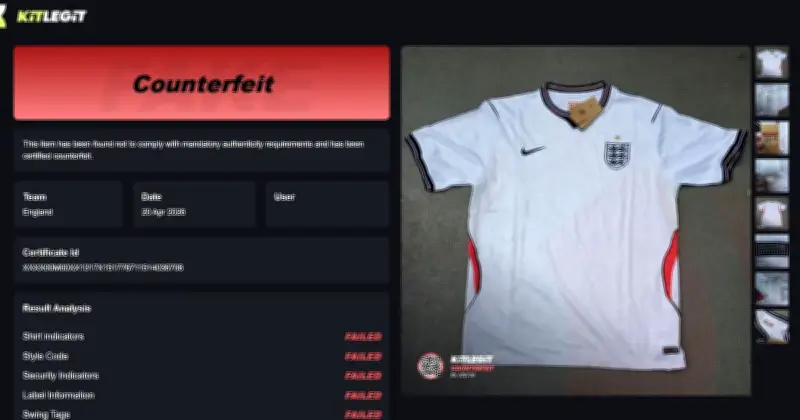
KitLegit, a UK-based company, is using pioneering AI authentication technology to protect football fans from buying over-priced fake shirts. As World Cup fever rises, the firm’s tech allows fans to easily verify the authenticity of vintage or second-hand kit, ensuring they pay a fair price.
Fighting a £9 Billion Fake Goods Market
In a global counterfeit sector worth £9 billion, KitLegit is taking the fight to fraudsters. Its proprietary technology and standalone tools create a safer marketplace for consumers and commercial clients, including fans, resellers, sports clubs, and law enforcement agencies such as police, Trading Standards, and customs agents.
Simple Verification Process
Users download the relevant app and upload images of their item. The tech then authenticates it in seconds by analyzing details like stitching, badges, and design patterns. Each check, costing from £1, provides a digital certificate with a unique code for reselling or refund claims. Checks can be purchased as tokens or via subscription.
Company Background
Chief executive and sports merchandising specialist Alex Protsenko founded the business three years ago with two partners. “There has been a rise in demand for retro and sports fashion while the cost of living crisis has fueled the growth in fake merchandise. We quickly realized what customers wanted was authenticity and peace of mind,” says Protsenko, who is overseeing Version 2, which filters out poor quality images and increases provenance.
Impressive Detection Rates
“We’re the first AI-based authentication for sports merchandise, can check back to the year 2000. Buying without checking is risky — we’ve found 38 percent of our 25,000 kit checks across 105 countries are fake,” adds Protsenko.
Growth and Expansion Plans
KitLegit’s annual turnover was £10,000 during its proof-of-concept phase, but it now expects a 200% uplift following successful club pilots with Brentford, Watford, and Sporting Lisbon, plus tournament boosts like the World Cup. After £50,000 of self-investment, it plans to expand its team of seven and launch a pre-seed funding round of £250,000 to £450,000. Angel investor expertise in consumer sports and fashion will be sought, and a certification scheme for small independent sports retailers has begun, starting with one in Cambridge.
Future Horizons
Rugby, Formula 1 Racing, American football, and baseball leagues offer further applications. A big partnership with an NFC tag provider of stickers, cards, and key fobs is in the pipeline. “We’re sitting in the middle of the ecosystem connecting it all,” says Protsenko. “We’re very well positioned.”