Driving an electric vehicle (EV) is a tangible way for Australians to make material emissions reductions while cutting household costs, according to a recent article. With more sub-$40,000 options now on the market, EVs are state-of-the-art machines with fewer parts, less noise, and are incredibly fun to drive. However, once you decide to join the thousands of Australians who have escaped the tyranny of the petrol pump, there is an initial learning curve in owning and driving an EV. Here are helpful tips on how to prepare.
What is the 80% rule for EV batteries?
The way you operate and drive your vehicle will change, so take time to understand how your battery works. Unlike petrol cars, EVs use more energy at high speed on long, flat highways and less in traffic thanks to regenerative braking. You won't generally run the battery all the way down and fill back up as at a petrol station. Many drivers prefer to keep their battery between 30% and 80% – known as the 80% rule – as it is thought to help battery health and allow fairer use of public stations. When not charging at home, you will generally top up while doing other tasks like grocery shopping, seeing friends, or going to the movies.
How does EV charging actually work?
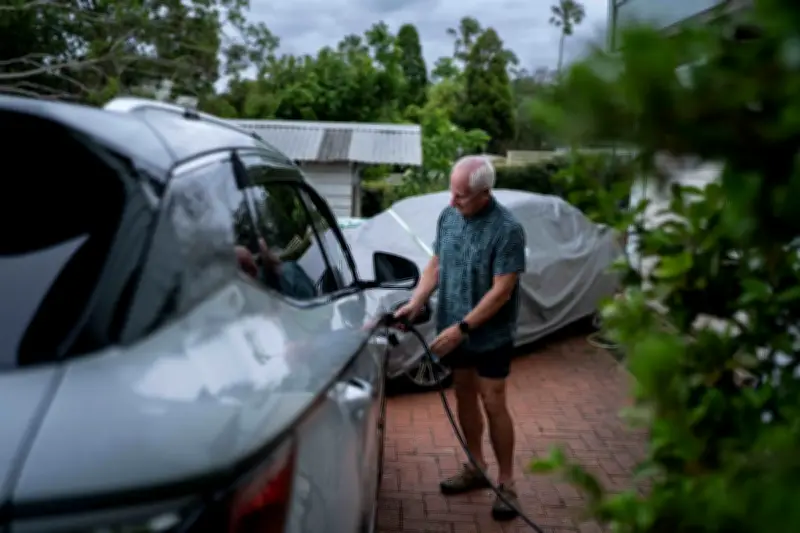
You can charge your EV anywhere you have access to a normal wall socket. Trickle charging, as it's known, is better for your battery health but takes more time. If most of your trips are short distances to and from work or household tasks, with occasional longer trips, most people can get away with topping up from a wall socket in the evening or overnight, like their mobile phone, supplemented with occasional public charging. Do not plan to rely on extension cords, connect through power boards, or use imported adapters to increase draw from the wall socket, as they can be fire hazards.
Do I need an EV wall charger at home?
Wall chargers can cost upwards of $1,500 for the unit and installation, assuming you don't need to upgrade your home's wiring. Most Australian homes are wired for single-phase power only, although newer houses may be wired for three-phase power that accommodates the fastest chargers. Updating your switchboard for ultra-fast chargers can be costly and may not be necessary. A more affordable option is to install a dedicated 15-amp, weatherproof power point and isolation switch near where you park your car at home to enable more effective trickle charging. If you go this route, ask your electrician to install high-capacity cabling in case you upgrade to a wall charger later. The cost will rise the further the power point is from your main switchboard. If you need to charge much more quickly, investigate advanced wall boxes, many of which are compatible with solar systems.
What if I rent?
Sometimes charging at home can be a pain when you rent or live in an apartment complex and have to thread cables through flyscreens or can't get approval for shared infrastructure. The good news is you can get by on public chargers. Familiarise yourself with what is available in your area using the PlugShare app. Most public charging stations will charge a small amount, but some are free.
What cables do I need?
Your car will come with a cable that plugs into a wall socket, but this is not always the most advanced and you may want an upgrade. Alternatives can be bought from Bunnings or EVSE. Avoid AliExpress or Temu, as these electronics may not be rated for Australian standards. Most public charging stations have their own tethered cable, but some don't. To access the others, you will need your own Type 2-to-Type 2 charging cable. It is worth spending a little extra to get a 22kW cable, as the amount of power your cable can transfer will limit how fast it will charge under best conditions. A larger cable will still work with a lower flow, but a lower-capacity cable won't go higher than its maximum.
What apps do I need?
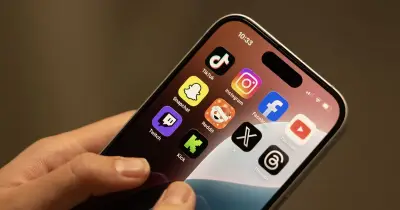
When it comes to EVs, there are apps for everything and it can be frustrating at first. Take some time before picking up your car to download and consolidate the key apps. PlugShare has a directory of every charger across Australia, while A Better Routeplanner will help you plan longer trips. To access public charging stations, you generally need the operating company's app. As two of the bigger operators, it is worth downloading the Chargefox and Evie Networks apps, along with any others in your area, and linking them to the Chargefox app, or another of your preference, to turn several apps into one. You should order a $10 RFID card from Chargefox or Evie Networks and link it to all your accounts. This lets you operate any public charging station if you forget your phone or there is poor reception, like in a regional area, underground car park, or large concrete structure.
Anything else?
If you plan to charge at home, shop around for electricity plans that better accommodate EV charging during certain times. You can also check social media for any owners groups for your car, as they will often be a source of useful intel and support and can answer any specific questions.