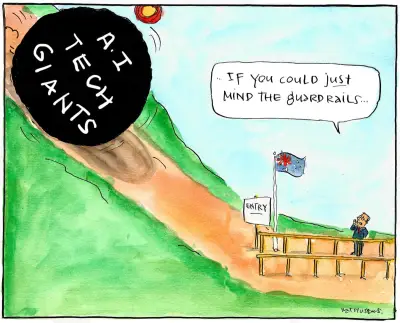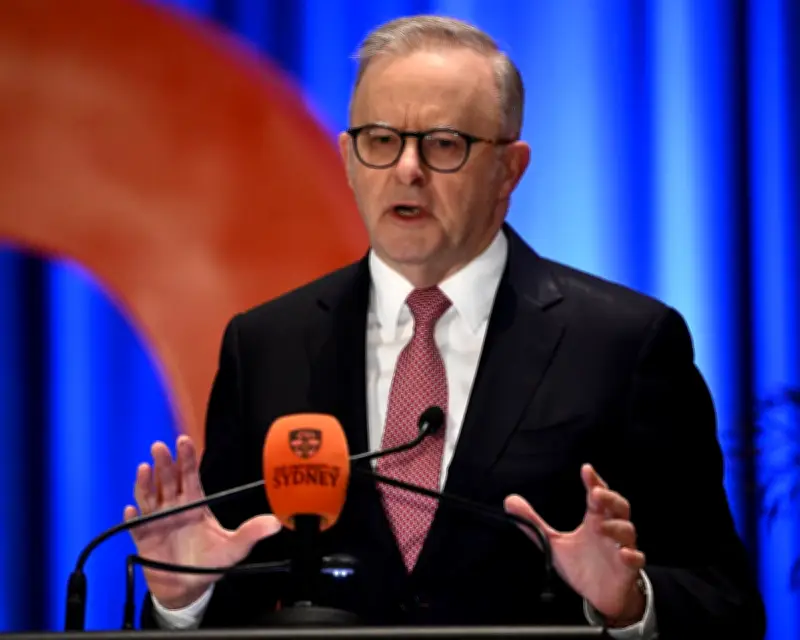
Anthony Albanese's landmark speech on artificial intelligence signals that the Australian government is taking the technology seriously, but experts warn that bigger questions about sovereignty, security, and public benefit remain unaddressed. According to Julianne Schultz, the speech was a good start, but Australia must now confront deeper structural issues.
AI Reaches Tipping Point
In the past six months, artificial intelligence has crossed a tipping point toward ubiquity, measured by billions of dollars in investment and urgent declarations from world leaders, including presidents, prime ministers, Nobel laureates, and the pope. Schultz describes AI as the most transformative technological change since electricity, touching everyone and everything as companies monetize collective human knowledge.
The John Curtin Research Centre's May review raised concerns about Australia becoming a 'cloud hostage'—physically hosted, legally governed, and operationally controlled from abroad. Demis Hassabis of Google DeepMind compares AI's impact to the Industrial Revolution times 10, at 10 times the speed, while Anthropic's Dario Amodi predicts half of all entry-level jobs will disappear in a few years.

Personal Encounters Highlight AI's Reality
Schultz recounts personal experiences that brought AI's impact home. A colleague revealed her workforce now includes more AI agents than humans—agents with names and personalities who send emails and analyze data, requiring no pay beyond tech support. In her business, the threshold question before hiring a human is whether an AI agent could do the job; often the answer is yes, and better.
A retired academic found Anthropic Fable to be an extraordinarily efficient research assistant, distilling and comparing four government-commissioned reports on racism. AI suggested that uneven distribution of power—where those with cultural and economic power succeed—explains why little has been done to implement findings.
Albanese's Vision: Promising but Incomplete
Prime Minister Albanese's speech on Wednesday outlined processes to avoid past mistakes, emphasizing sovereignty and the need for AI investment to create good secure jobs beyond datacentre construction. 'We cannot settle for a short-term boom in capital expenditure and construction; we must create a new generation of good secure jobs,' he said.
However, Schultz notes that most attention has focused on datacentres and intellectual property protection. Bigger questions remain: Is Australia prepared to develop sovereign data capacity and unique expertise? Can it protect sovereign security in defence, infrastructure, and communications? Will AI improve quality of life and public services for all citizens? Are there plans for public AI infrastructure to support local researchers?
International Examples and Ethical Challenges
Canada and the UK have announced multibillion-dollar investments in strategic AI capacity, using public money to fund local ventures that protect data sovereignty. Albanese's speech skated over these debates, but they are alive globally. Pope Leo has described moral challenges of AI, and ethical concerns are leading AI workers to unionize or resign as companies cut deals with the military-surveillance complex. In the US, there is discussion of developing sovereign wealth funds to help displaced workers, possibly funded by government equity in trillion-dollar AI corporations.
Schultz concludes that these structural questions must be taken seriously. As Albanese said: 'If we hang back, or stand still, this will run right over us.' The next six months will be busy turning vision into legislation. Opposition response from Angus Taylor, who claimed the only jobs created would be in the prime minister's office, missed the weight of the moment and the huge risks of getting it wrong.