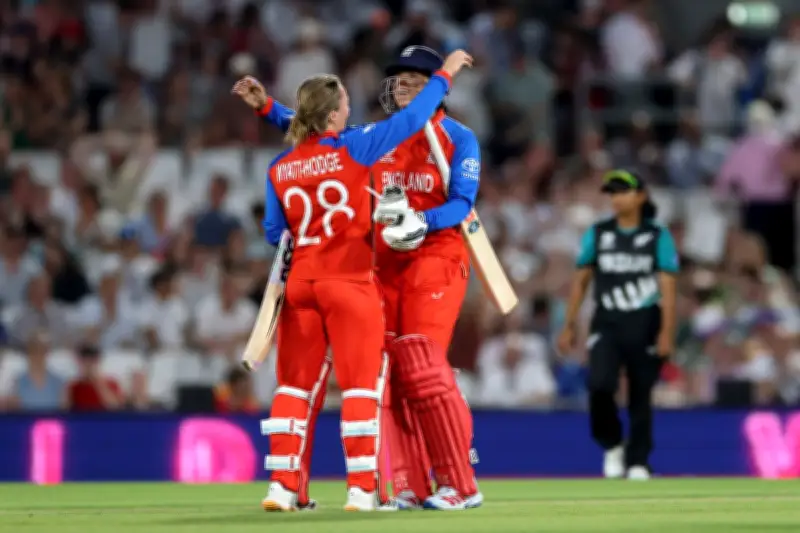
England will play South Africa in the Women's T20 World Cup semi-final on Thursday, after Australia face West Indies on Tuesday. The tournament has seen record-breaking attendance, with crowds doubling the 2017 event, but financial inequalities remain a pressing issue.
Record Attendance and Memorable Moments
The double-header at Lord's on Sunday drew 27,000 fans, and overall attendance has reached around 160,000 — double the 2017 tournament. Record crowds were recorded at Edgbaston (18,814 for India vs Pakistan) and the Oval (21,018 for England vs New Zealand). The final at Lord's on Sunday is a sell-out. Ticket touts outside St John's Wood tube station for the women's game, last seen during the 2017 World Cup final, marked a significant milestone.
Tournament director Beth Barrett-Wild said: "It's been incredible. We set out on a mission to break women's cricket into the mainstream and over the course of the last three weeks we've seen record-breaking crowds. I feel like we've definitely delivered."
Competitive Cricket and Centuries Galore
This is the first edition of the tournament where more than one century has been scored: three so far, from England's Danni Wyatt-Hodge, Sri Lanka's Chamari Athapaththu, and South Africa's Tazmin Brits. High-scoring chases have become common, with totals over 170 frequently chased down. Ireland ended a 12-year wait by beating West Indies for their first World Cup win, and Scotland nearly beat Sri Lanka.
Barrett-Wild noted: "It's been really pleasing just how competitive the cricket has been. Coming into the final weekend with everything still on the line in both groups is brilliant and just testament to the growth and development of women's cricket globally."
England's Dominance and Scheduling Challenges
England have won all their group games despite the absence of captain Nat Sciver-Brunt due to injury. Barrett-Wild praised head coach Charlotte Edwards: "As tournament director, I'm not allowed to have favourites. But speaking with the ICC, everybody is recognising the power and the impact of the home nation getting into the later stages of the tournament."
Scheduling was complicated by Indian broadcasters' demands: had India qualified, they would have played on Tuesday afternoon for a primetime slot in India. England's semi-final opponent was unknown until Sunday evening, despite their earlier qualification.
Financial Disparities in Women's Cricket
While England thrive, smaller teams struggle. Scotland cannot afford to host bilateral cricket, and their women's team had no sponsor for this World Cup. The Netherlands are amateurs, with players like Caroline de Lange quitting her job as a doctor to play. Netherlands coach had to give up her job to guide her country.
The ICC expanded the World Cup from 10 to 12 teams, but revenue distribution remains uneven. As the article notes, "he who pays the piper calls the tune" — referring to the Board of Control for Cricket in India's financial influence. Until the ICC spreads revenue more evenly, the gap between winners and losers will persist.
Looking Ahead
England may win their first silverware in nearly a decade on Sunday, but the tournament has highlighted the need for global financial equity. As the piece concludes: "England may yet secure their first silverware... bringing untold riches to Sciver-Brunt and her team. But until the International Cricket Council begins to think globally, there will always be more losers than winners."