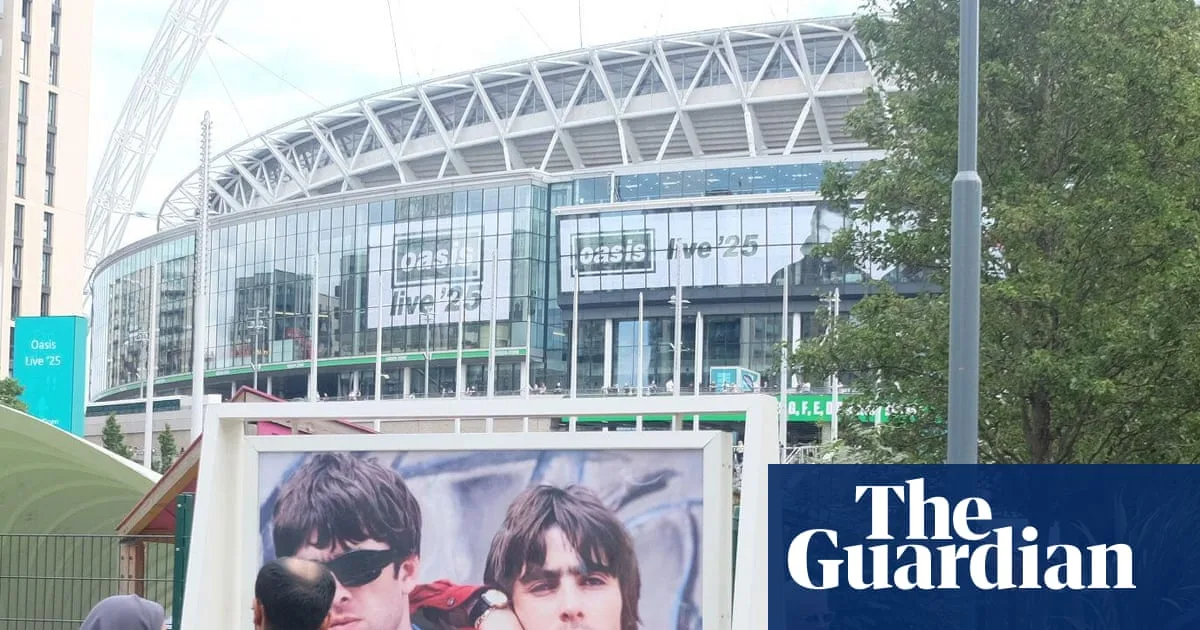
Witnesses at an Oasis reunion concert at Wembley Stadium have raised concerns about alcohol consumption and security arrangements following the death of a man in his 40s. The man fell from the upper tier of block 511 onto the aisle between blocks 211 and 210 at approximately 10.19pm on Saturday. The Metropolitan Police have informed the Health and Safety Executive.
Emma, 40, from Liverpool, who was sitting nearby, described the incident as traumatic. 'It happened directly behind our right shoulders. If he had fallen where someone was sitting, it would have killed both people,' she said. Her partner, Mike, who works in health and safety, noted that beer was being thrown throughout the concert, making the floor slippery.
John, 52, a delivery driver from Oxford, observed fans leaning over the balcony in block 511. 'There were loads of people who just kept going down to the front and leaning right over. One guy was stopped but after that no security came down. The security was so lax,' he said. He also criticised the volume of alcohol sold, calling it 'quite shocking'.
Wembley Stadium responded, stating it operates to a very high health and safety standard, fully meeting legal requirements. It added that it works closely with event stakeholders, local authorities, the Sports Ground Safety Authority and the police to ensure safety. The fifth concert on Sunday went ahead as planned, with two more scheduled in September.