Tennis Hindrance Rule Controversy: Draper's Defeat Sparks Debate
Jack Draper's Indian Wells title defence ended in dramatic and controversial fashion as he suffered a quarter-final defeat to Daniil Medvedev, reigniting intense debate surrounding tennis's hindrance rules. The British number one became the latest player embroiled in drama surrounding one of the sport's most contentious regulations.
The Decisive Moment
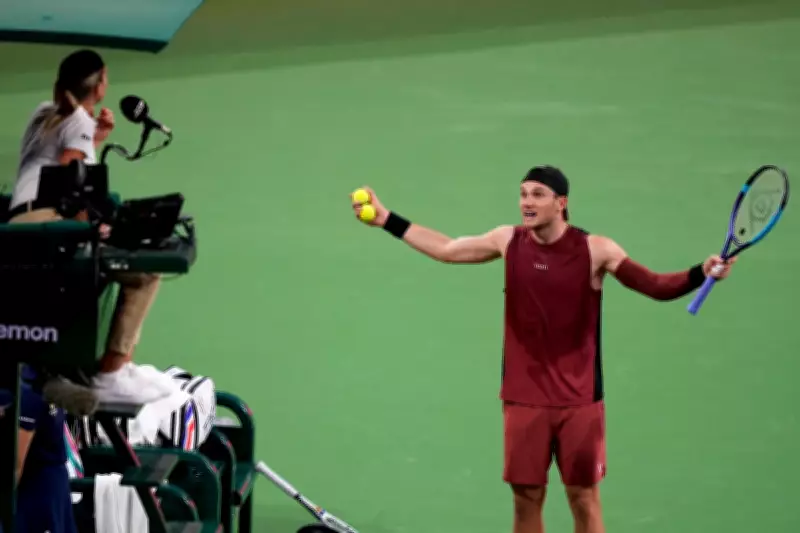
The crucial incident occurred at 5-5 in the second set, with Draper already trailing by one set and facing 0-15. After Medvedev hit a backhand into the net, Draper appeared to have leveled the score, only for the Russian player to immediately appeal to umpire Aurelie Torte, claiming hindrance.
Medvedev had taken issue with Draper raising his arms during a disputed line call midway through the point. Following video review, Torte determined that Draper had indeed distracted his opponent and awarded the crucial point to Medvedev, allowing him to break serve.

The California crowd made their displeasure clear, booing Medvedev at the change of ends and after he sealed victory. During their post-match handshake at the net, the players engaged in a lengthy conversation, with Medvedev saying, "If you're mad at me, I'm sorry," and Draper responding, "I'm not at all - but I don't think it distracted you enough."
Understanding the Hindrance Rule
The hindrance rule in tennis exists to prevent players from affecting their opponent's shot. According to Rule 7.22(F) of the ATP Tour's 2026 Rulebook, hindrances can be classified as either inadvertent or deliberate, with each category carrying different consequences.
Inadvertent hindrances include unintentional actions such as:
- A ball falling from a player's pocket
- A hat falling off during play
- Involuntary sounds or exclamations
- Verbal reactions to injuries
These unintentional offences typically result in a let (the point being replayed) and a warning, with umpires advising that repetition will lead to loss of point.
Deliberate hindrances, however, result in immediate loss of point without warning. The ATP specifies that for an offence to be deemed deliberate, "the player meant to do what it was that caused the hindrance or distraction." This can include speaking during a point or waving arms in a distracting manner, as was ruled in Draper's case.
Notable Historical Examples
Controversy regularly surrounds deliberate hindrance calls due to their subjective nature, often leading to pivotal points being awarded differently. World number one Aryna Sabalenka experienced this during her 2026 Australian Open semi-final against Elina Svitolina, when umpire Louise Engzell deemed her trademark grunt a hindrance as Svitolina attempted to return the ball.
Medvedev himself has been at the centre of hindrance drama previously. During the 2021 Toronto Open against Alexander Bublik, Medvedev said "sorry" while the ball was still in play after hitting a smash close to the net. The umpire ruled this a hindrance and awarded the point to Bublik, prompting Medvedev's memorable protest: "Can you imagine how stupid this call is? He's laughing at you! This is unbelievable what you have done!"
Inadvertent hindrances typically generate less outrage, though they still spark controversy. Dan Evans called for the rule to be changed after his 2023 Australian Open match against Jeremy Chardy, when a ball fell from Evans' pocket during play. Umpire Miriam Bley didn't notice until after Chardy netted his shot, leading to accusations of dishonesty from the French player.
Evans later argued that the rule itself needed scrutiny, stating: "If a ball comes out of your pocket, it's your own fault." This incident highlights how even unintentional hindrances can create contentious situations in professional tennis.