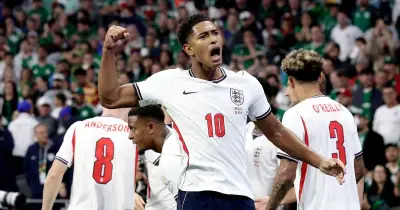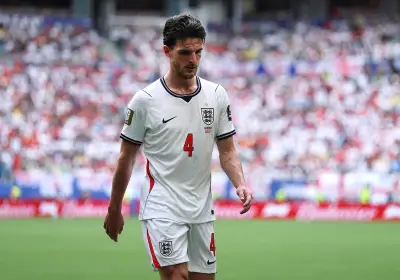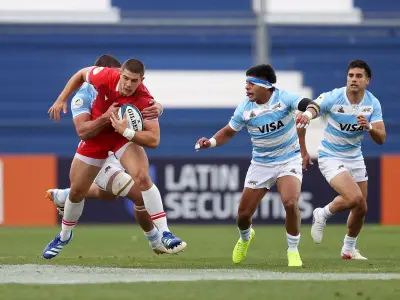
On the day before Argentina and England met in the group stages of the 2002 World Cup, then-England manager Sven-Goran Eriksson sat inside an eerily quiet Sapporo Dome. "It is strange but it is beautiful," Eriksson said. "I think it is the future of football."
The Sapporo Dome: A Futuristic Venue
The Sapporo Dome was not the first football stadium with a roof, but it was the first many had visited, including many England players. Back then, to the English press, it was space-age. As England prepare to face Argentina in Atlanta's 75,000-seater, £1.5 billion covered stadium, that Sapporo Dome now seems quaint.
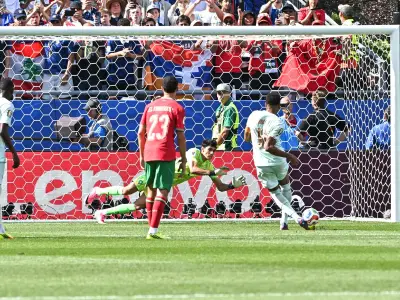
In the £250 million arena on June 7, 2002, fewer than 36,000 spectators saw David Beckham's late first-half penalty give England victory over Argentina. It would be rewriting history to suggest there was a febrile atmosphere inside the dome; there was not. But the build-up to the match had a familiar edge.

Political and Personal Narratives
Heavily featured in the pre-game narrative were Beckham's opportunity for revenge after his red card at the 1998 World Cup and, unsurprisingly, the Falklands War. Argentina's goalkeeper, Pablo Cavallero, said before the game: "Maybe you should not mix things like football and the war but it is really hard not to do. It is the match that any Argentine wants to play, especially if you lost friends or family in 1982."
Argentina's captain, Juan Sebastian Veron, then earning his living at Manchester United, added: "This match is about more than the men on the pitch - it is also important in a historical context." Argentina's manager, Marcelo Bielsa, tried to downplay that narrative, but the die had already been cast.
Beckham's Fitness and the Penalty
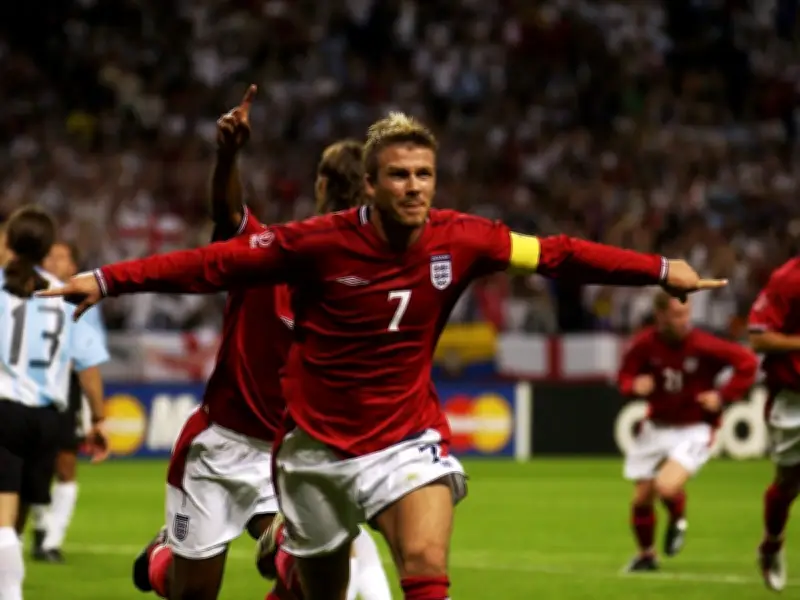
The Beckham revenge storyline was not as vigorously pursued as one might imagine. Reporters were more concerned with Beckham's fitness. He had been a doubt for the entire tournament after suffering a fractured metatarsal but started the opener against Sweden before being substituted midway through the second half. Beckham played the entirety of the Argentina match and executed the key moment, beating Cavallero from the spot, even though it was a pretty unconvincing effort.
Beckham's celebration - tugging at the front of his shirt with both hands - was probably the most memorable moment of a decent but unspectacular game. Michael Owen had induced the penalty out of Mauricio Pochettino, and referee Pierluigi Collina's decision was correct. Apart from the penalty award, Collina had a fairly uneventful game, booking only three players: England's Ashley Cole and Emile Heskey, and Argentina's Gabriel Batistuta. Considering the rivalry was supposed to be so bitter, it was hardly brutal.
Group of Death Implications
England had to withstand some late pressure but were good value for their win. Nicky Butt, in particular, had a very good game, which may be why Pele later singled him out as one of the tournament's best players. The meeting with Argentina - a thousand miles from England's base on Awaji Island - had historical significance that was more than matched by its significance in the context of a Group of Death. In their first game, England had only drawn with Sweden, who then beat Nigeria. Argentina had beaten Nigeria in their opener. It was pretty much a must-win for Eriksson's men.
England finished Group F with a goalless draw against Nigeria, while Sweden and Argentina drew 1-1, meaning Bielsa's men went home. In retrospect, that made the win over Argentina even sweeter for the English.
A Surreal Post-Match Incident
One abiding memory from that occasion 24 years ago came back at the plush Sheraton Sapporo Hotel, where the Argentinian squad found themselves billeted with the English media. Their post-match meal was more subdued than ours, and a few hours later, when both parties were leaving, one of our number - the late John Curtis, a brilliant and much-missed reporter for the Press Association - got on the wrong coach. It was not until the Argentinian team bus was about to leave that Batistuta and Veron realised there was an unwitting imposter on board. It was a surreal end to a surreal couple of days.