Wimbledon Final Set Tiebreak: The 10-Point Format
Wimbledon's final set tiebreak rules have been updated to prevent marathon matches. Since 2022, when the final set (fifth set for men, third set for women) reaches 6-6, a 10-point tiebreak is played. The first player or doubles team to reach 10 points wins the match, provided they have a two-point lead.
This replaced the previous rule, introduced in 2019, which used a 7-point tiebreak at 12-12 in the final set. The change was announced in 2022 to shorten matches and reduce physical strain on players.
How the Tiebreak Works Step by Step
The tiebreak begins with the player whose turn it is to serve. They serve one point from the Deuce (right) side. After that, service alternates every two points: each player serves two consecutive points, starting from the Ad (left) side then the Deuce side.
Players change ends of the court after every six points played (e.g., when the total score is 3-3, 6-6, 9-3, etc.). The winner must win by at least two clear points, so scores like 10-8, 11-9, or 15-13 are possible.
Historic First Use of the Tiebreak
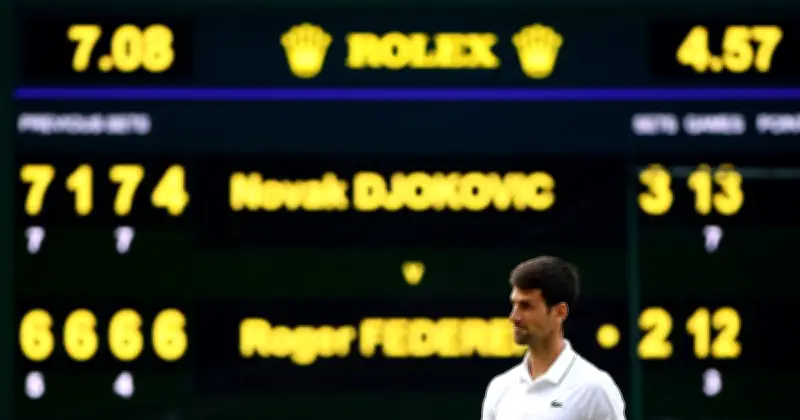
The first fifth-set tiebreak in Wimbledon history occurred on July 14, 2019, during the men's singles final between Novak Djokovic and Roger Federer. That year, the rule was a 7-point tiebreak at 12-12. Djokovic won 7-6, 1-6, 7-6, 4-6, 13-12 (7-3).
According to the All England Club, the change to a 10-point tiebreak at 6-6 was made to "create greater certainty" and reduce the likelihood of extremely long final sets. The rule has remained in place for subsequent tournaments.
Key Differences from Standard Tiebreaks
The final set tiebreak uses a 10-point target instead of the usual 7 points. This is often called a "match tiebreak" or "super tiebreak." All other rules—two-point margin, alternating service every two points, and side changes every six points—remain the same as a standard tiebreak.
Wimbledon 2026 will follow these rules. The tournament runs from late June to mid-July, and fans can purchase VIP tickets via Seat Unique.